Mysticism and Politics

Michael Williams - Tag Galleries

76 Almanac by Michael Williams

Oh, oh. Now we are headed into dangerous territory. Nothing, with the possible exception of religion, is more divisive than politics. But, we live in a world saturated with it, and as enlightened Christians, we have to have an understanding of politics, one that is reasonable, effective, and fair. In other words, like mysticism, our politics have to be based on principle and not merely what we like. The challenge is to integrate our mystical experience into the world, because the only sustainable way to get to heaven is to bring it down to earth.

Enlightened politics is based on mystical principles. Here are some of them:

The good of all

Caduceus

Unless everyone benefits, no one benefits. Like the human body, the world and its people comprise a whole system. You cannot neglect one part without adversely affecting the rest. Mysticism recognizes the oneness of the human race and the natural systems that support it; it supersedes partisan agendas and competitive interests. Generally speaking, there is nothing superfluous in the human body or the body of the earth. Acting as if there were can only bring disaster.

The rule of law

Principal among the foundational myths for Western Mysticism are the Arthurian Legends. In them we find the phrase, “Right is might, not might is right.” No one is above the law. Not everything that can be done should be done. The New Testament admonition to only use “righteous judgement” points to adherence to the spirit of the law and the absence of malice as the guiding principles in vindicating a person accused of wrongdoing. In order for the law to evolve, we must look to the spirit that informs it.

Respect for the individual

Holy Grail

The Holy Grail

The highest form of government is self-government. It is not enough to obey the rules. What is in our heart matters more than merely refraining from acting out. We are more than intellectual/instinctual creatures; we have the capacity to place principle above self-interest. This is the “continue unto death” – the laying down of one’s life (ego/survival instinct) for the sake of the good. In the first and final analysis, we are answerable to God alone. But, in between we are answerable to each other.

.

.

The dynamic balance between competition and cooperation

The human nervous system has two competing elements, the sympathetic and the parasympathetic. One speeds up, the other slows down. Health depends on their dynamic balance. Business thrives in a competitive market, but only when there are adequate regulatory laws and enforcement of those laws. If either gets too far ahead of the other, system failure is inevitable. Vibrancy is key. The surest sign of life is movement.

Spiritual gender
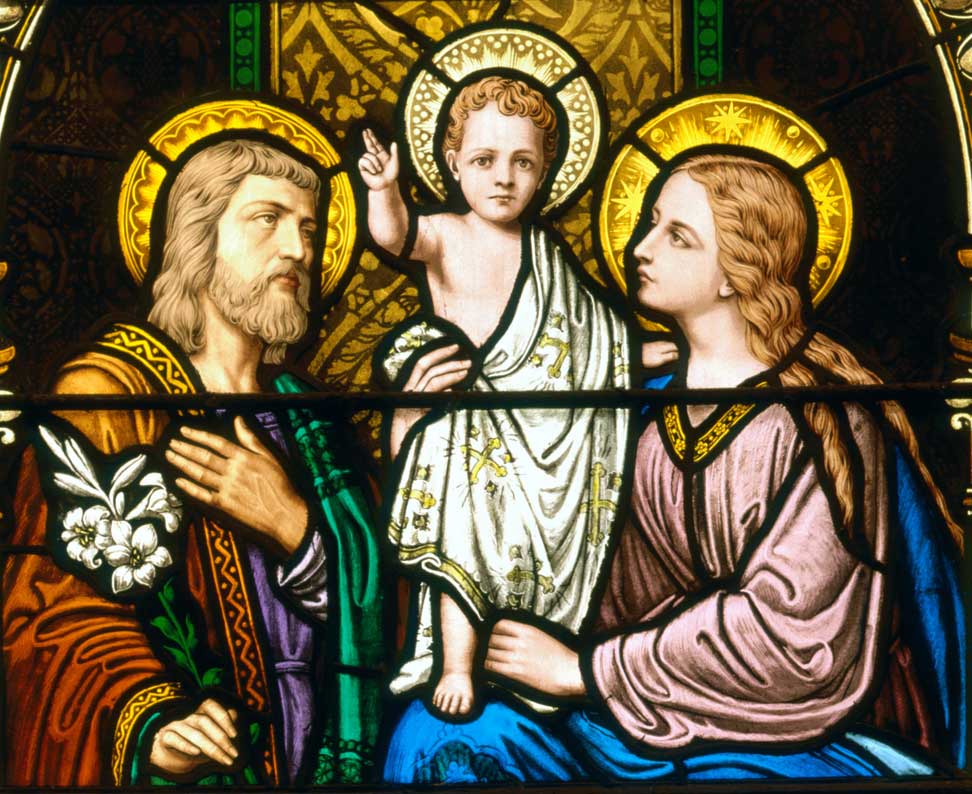
Holy Family

Intuition and intellect – the interior and exterior modes of knowing – form the basis of epistemology in science, religion, and the arts. It is what we are here to learn. Some say that the only worthy goal is to escape the world altogether, but Christian mystics know that The Redemption depends upon integration, not escape. One can read the iconography of Christ on the cross as spirit affixed to matter, holding the tension of the opposites, the birthing of the new out the squaring of conflicting energies. This is the via dolorosa, the Way of the Cross, the mystery of the Rebirth. Out of two comes one, and together they make three. The Holy Family. This is the driving force behind all evolution.

Politics is a difficult subject. But reasonable people with differing opinions can bring about changes that neither could imagine without the other. It is only when dialog ceases, when gender turns into polarization, that trouble begins. Civil society is a work in progress, and it depends upon letting the creative juices flow. When one side thinks it knows all the answers, we begin the downward spiral into certain destruction. Christian mystical understanding is the balance point.

Posted in Lessons | 10 Comments

Quick Read – Who Are You Listening To?

Intelligence is everywhere. Anywhere there is organization, there is thought. It may be frozen, as it is in rocks and other inanimate objects, or it may be vibrantly active, as in your brain. But sometimes, thinking can get out of control – an electrical storm with lots of flashes but no coherency – more like a schoolyard cacophony than a reasoned dialogue. It is at these times that we need to pay attention to other parts of our intelligence rather than our brain.

Thoughts are loudest in the brain; knowing, however, is quiet and resides at the center of our being. And there is a big difference between what we think and what we know. Knowing has a different pace of thought, but it can be heard if we adjust our listening to it. If the mind sounds like sixteen howling monkeys, it usually means that our listening is misplaced. The louder the chatter, the more you can bet that something else is trying to be heard. But we cannot hear what we do not acknowledge. The body is full of intelligence that is continually interacting with the world. Each part has its own voice. Listen to it. What is it saying?

Optimistic Heart Hopeless Mind by Ryan Hoge at Taggalleries.com

Posted in Lessons | 2 Comments

Blessed Are the Poor In Spirit

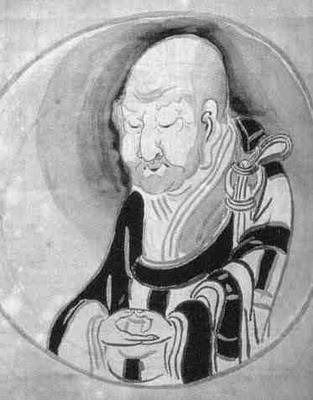
The old Zen Master knew that the young man standing before him wanted very badly to be admitted to his monastery, but he questioned his motive. For three days he had interviewed him at the appointed time, and now on the third day he was getting at the truth. It wasn’t that the teacher’s sight was faulty, for the truth is not hidden so much by deception as it is by self-deception. Youthful sincerity can fool even the most astute observer.

It was normal for a prospective disciple to try to impress the teacher, parading his knowledge and abilities as though they were what the teacher wanted, believing that these would qualify him for entry into the school. But the teacher was looking for something much more important. How willing was this boy to learn? And how much did he think he already knew? The old Zen Master was quickly drawing his conclusions.

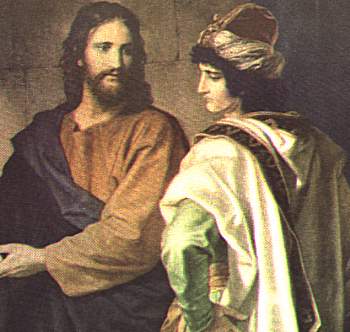
The young man was indeed impressive. Born of a noble family, well-educated, a keen eye for detail, refined in his dress and demeanor – all the qualities that one seeking an apprentice could appreciate, if he were looking for that sort of thing. But there was an air about him, somewhat vulgar, like a business man coming to broker a deal. His attitude seemed to say, “Take me as your student. I would be a great asset to you and your school. For I am knowledgeable and may even be a teacher myself one day!”

The teacher did not want to be cruel to the young man, for he obviously had led a virtuous life and had followed all the rules. He had, to the best of his understanding, been an upright person, devoted to his family and mindful of his civic responsibilities. The old Zen Master offered the young man a seat at table for a cup of tea. He wanted to break the news to him kindly, without blunting his zeal for the virtuous life he had chosen. He would let the right moment reveal itself and then tell him his application would not be accepted.

As they sat there facing each other, the teacher grasped the teapot by its handle and raised it over the young man’s cup. The moment was silent and seemed to linger indefinitely. His eye fell upon the white porcelain of the inside of the cup, and a haiku began to form in his mind.

Waiting to receive

The teacup stands empty

Like the moon

Caught in his reverie, the old Zen Master failed to notice that he had over-filled the cup, much to the the young man’s dismay. “Sir! Can’t you see that my cup is full?” he exclaimed. Astonished at the revelation unfolding before him, the teacher said with great humility, “Why, yes!” He took the teapot and set it back down carefully and deliberately, then looked the young man straight in the eye and said, “And so are you. You have read all of the great books; you have received the finest upbringing; you are a model citizen and the pride of your family. You don’t need me. Go back to your community and serve with honor.” The teacher’s words cut through the young man’s pride cleanly, without destroying his self-worth. He stood, bowed deeply, thanked the old Zen Master for his hospitality and kindness, and departed the monastery with all the best parts of him intact.

The teacher sat and contemplated what had just transpired. The emptiness he had seen in the cup reflected the emptiness he felt within himself. Through that emptiness, the words he spoke to the young man had come with easy precision, perfect and simple. They came as though from his own teacher, who was also empty like the teachers before him, all the way up the line. This thought hung about him like an opening in the early morning mist. He sat with it for an hour, marveling at the perfection of it all.

Posted in Lessons | 3 Comments

Blessed Are Those Who Mourn

We have to talk about Easter. It is the high holy day of Christian Mysticism. It is, you might say, what Christianity, true Christianity is all about. And while the purpose of the spiritual path is to bring one into a perpetual state of light, life, and love, there is a gate toll, and this is typified in the story of the death and crucifixion of Jesus.

Let us put aside for the moment whether Jesus actually died on the cross and went through all that suffering. This is a discussion about Christian Mysticism, so we have to be real about the meaning of Jesus’ life and the events of it. And the first principle is this: Jesus is you. The whole story is about what you will go through on your way toward enlightenment. And while this is not the whole story, unless you get this part of it, all the rest will be of no use to you whatsoever.

Wheel of Karma

Mystical teachings are timeless and place-less, which is to say that they happen here and now. The problem with conventional Christianity is that it is all about the there and then, with an added emphasis on what will happen later. This is unfortunate. Mystics see themselves in the story, and they recognize that the entire cast of characters – Jesus, Judas, Galilee, Rome, Jerusalem, Pontius Pilate, the Apostles, et al – are aspects of themselves. What happens in the story is what happens within the individual who embarks upon the Way (all of this will happen to those who do not embark upon the Way, too – it will just take a lot longer).

Mourning is about death. And central to the teachings of every spiritual path is the death of the ego. “He who loses his life will find it.” In this context, physical death is absolutely meaningless – dying does not make you more spiritual. But dying whilst caught in the thrall of physical concerns can be, shall we say, hell, though not the literal place of fire and brimstone. Let’s just say that entering the afterlife with unresolved issues can be overly rigorous. Rather, the death we are talking about here is the letting go of our mistakes – not just forgetting about them but pulling them up by their roots.

Sermon on the Mount

While “blessed are the poor in spirit” addresses our pride, “blessed are those who mourn” addresses our negative pride – our shame. These are the first two teachings Jesus gives in his Sermon on the Mount, and it is not without reason that they are at the top of the chart. For just as surely as pride will keep us locked away in the tomb of materiality, so will shame convict us in the court of our own opinion and block our way to enlightenment. They are two sides of the same coin. Egotism is the attachment to beliefs about oneself, whether those beliefs are good or bad.

“Hey, just let go of it!” doesn’t work. That is an attempt to sidestep an important part of the process. At this point, the path is straight and narrow – there is no sidestep. The sentence we have handed down to ourselves must be faced squarely and nakedly. We must render unto the world that which belongs to the world – we have to acknowledge our humanness and the suffering it inevitably incurs. And while part of us will abhor and jeer at our weakness, another part will lovingly and mercifully walk with us in our travail, until every last assessment has been laid to rest.

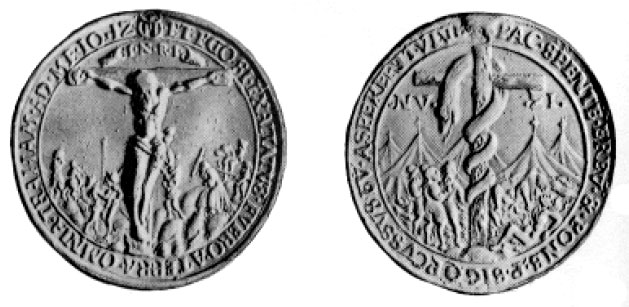
“Make a fiery serpent, and set it on a pole; and every one who is bitten, when he sees it shall live.” – Numbers 21:4-9

But while our true nature is spiritual, which leads us to let go of the things of the world, our true nature is also physical. We cannot simply float to heaven. What we have put into our life must be excised out, and this by our own hand, though we are helped along the way. And how can we let go of a thing unless we truly appreciate it for what it is? When we admit to our mistakes, knowing fully and deeply the damage they have caused, how can we not feel sorrow? The stain of sin, as some would say, can only be washed out with tears. We mourn the most that which is closest to us – our wretched self-assessments!

Posted in Lessons | 1 Comment

Quick Read – God Is Not a Puppetmaster

When asked how he could play the saxophone like that, Charlie “Bird” Parker said, “First you learn your instrument really well, then you forget all that [stuff] and wail!” You have to be able to do something before you can do nothing. God cannot create skill.

Inspiration comes best with perspiration. Make up your mind what you want to do, then let go and let God lead you there. Doing God’s Will is more of a dance than a puppet show. God seeks partners, not slaves, or even subjects. God is a creative and loving being, not a punishing ruler.

Beware the person who says he only does what God tells him to do, especially when the instructions he’s getting are for you! Run from that person and don’t look back.


Related articles:

Free Will – What’s Up With That?

What Is the Will of God?


Posted in Lessons | 1 Comment

A Quick Read – Handling Stress

If you find yourself in that “perfect storm” of demands coming at you from all sides, when it feels like you are in a sink-or-swim situation and that one misstep can lead to disaster, remember that there is only one mind and that your stress is going to affect your entire world in unseen ways.

When you emit stress in the mind, all the links in the chain of your circumstances are going to feel it. To keep the weakest of those links from snapping, take control of your thinking. Don’t let your fears get the best of you. Slow down – breathe – open the windows in your mind and let the cool breezes come in.

If things do start to break, let them. Usually, they are the things that cannot withstand the increased energies in your life. When you turn up the juice, weak circuit breakers are gonna pop. Let go. Just as surely as the old gives way, the new will come in to take its place. Be patient – above all, be patient.

Posted in Lessons | 4 Comments

Extreme Meditation


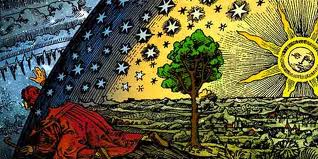
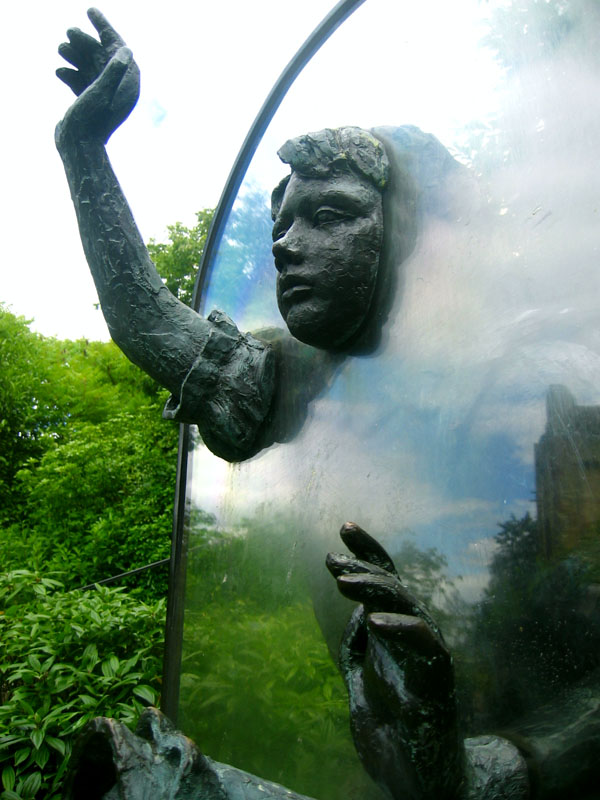
Alice at the Looking Glass

Extreme meditation. Sounds catchy, right? Something new, something next, something…extreme. Well, there is nothing extreme except perhaps the level of intention one brings to the task. Because there comes a time in your practice when it seems that your search for God, reality, It – whatever the word is that you use to describe the Thing you are looking for when you look within – there comes a place where it seems you can go no further. It is like a wall, a barrier between you and that ultimate something that you believe is there but cannot quite touch.


Most people do not even know there is such a place. I am not being elitist or egotistical when I say this – it is simply the fact. For most, the world we live in – the world of sight, sound, smells, tastes, and sensations – is the only world there is. Around the edges of that world, there may be intuitions, hunches, and maybe even some quaint superstitions, but for the most part, the world of everyday experience is the only “real” world; anything else is not only “unreal” but delusional. And this is what separates such people from mystics. Mystics know there is more. They may not have experienced it yet to their satisfaction, but the knowing is what drives them in their search.


Piercing the Veil

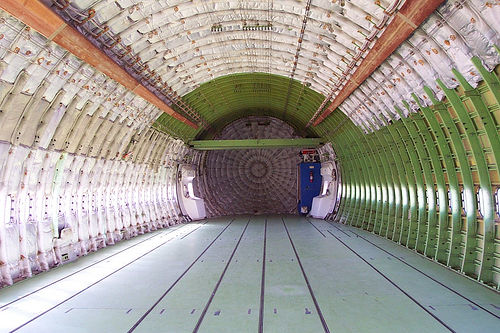
There is a story by the science-fiction writer, Robert Heinlein, that illustrates this difference beautifully. A spaceship carrying thousands of people has left Earth on a voyage that will take many generations to accomplish, ostensibly to explore the worlds around the nearest star, Alpha Centuri. What the astronaut population does not know is that the journey is a one-way trip, sort of like the forced migration to Australia in the 1700’s – they are the literal outcasts of the world they are leaving behind. Along the way, there is a failed mutiny, and the rebellious ones flee to the upper decks, which due to the cylindrical shape of the vessel have less and less gravity the closer one gets to the core. Once there, they could travel to the far end of the cylinder to the observation deck, the only place in the entire spaceship where outer space is visible.


Unfortunately, all those old enough to remember where they were from were killed in the fighting, leaving the children to grow up on their own knowing nothing of the nature of their mission or the craft they inhabit. They struggle for mere survival. Their world consists entirely of decks, hallways, cabins, common rooms, and steel bulkheads. The outermost bulkhead, the one past which there are no others, is simply the end of reality for them. They not only accept it as such, but the very notion that something might exist on the other side of the hull is beyond the capacity of their imagination. The question is un-askable.


Hero's Journey


But one of them finally and with great trials and tribulations, makes his way to the upper decks, is taken in by the inhabitants (called the Muties because of the mutations they suffered from radiation during their exile) who appear as hideous and frightening creatures to our hero. He is escorted in a kind of initiation ritual to the observation deck. There he is confronted with reality for the first time, an experience so overwhelming that it sets his mind reeling and his body into nauseous convulsions. But once he is acclimatised to the truth, he sets out to return to his own people, those who have never seen what he has seen, nor have they even wondered about the forbidden zone he has explored. The story ends with a kind of integration of the two populations, the inner and the outer, those who have seen and those who have not seen. And for the first time their destiny not only becomes apparent but is to a much greater extent within their control.

The bulkhead. This is what we encounter if we persist in our meditation practice, and it appears impenetrable to our gaze. Something within us tells us that there is something on the other side. But try as we might, we cannot even imagine what that “something” might be. What we do not yet know, but what saints and sages both ancient and modern have told us, is that the “something” within us that compels us to find out is the same “something” that is on the other side of the barrier. And it is by a certain kind of spiritual osmosis that the two “somethings” are drawn together. But in order to make the journey, the hero has to go “deeper in and higher up,” as C.S. Lewis said in his Chronicles of Narnia, into the heart of the ship and straight up its core to the place of vision where the truth is unveiled before him.

What the mind cannot fathom, the mind should leave well enough alone. This cannot be figured out. Knowing, on the other hand, is deeper than the mind and is fully capable of turning your world inside-out. Joseph Campbell once said, quoting a yogi, that unless a man is as eager to find Nirvana as one whose hair is on fire is eager to jump into a pool of water, do not attempt this. Jesus said, referring to this same journey, not to begin a task that you are unwilling or unable to complete. In other words – preparation is key!


Alice Through the Looking Glass

So, the point of this article, which I am reaching by means of pointillism (one dot here – one dot there) is that there is no such thing as extreme meditation; there is only your intention and how much will power you put behind it, how persistent you are in knowing that something lies on the other side of the wall. It is there, and you are seeking it because It is seeking you. Or, as the Sufis are fond of saying, “That which you are seeking, you are seeking with.” And St. Paul said, “We love because He first loved us.” If you know long enough and hard enough, that which you know will be made manifest.


Posted in Lessons | 4 Comments

Current Events

News of late has been electrifying. From Wisconsin to Japan, it has been one shock after another. Stunning political events, horrific natural disasters, nuclear meltdowns – the circuits of the mind are straining with the overload. And though this seems like an extended metaphor, it is more real than you might think. Thoughts and emotions are energy, and this energy is racing through the collective consciousness like an electrical tidal wave.

Psychic energy surges cannot be ignored – they must be dealt with. We can either react to them or we can redirect their current and use their momentum constructively. How do we redirect the energy? If it were electricity, we would send the surge to ground, where it would be spent harmlessly. But a psychic surge is a spiritual event and must be dealt with by spiritual means. And as usual, spiritual events are the mirror-image of their physical counterparts – where electricity must go to ground, spiritual or psychic energy must go up.

Before you poo-poo the idea of “up,” consider this: we live in a coagulative universe. Matter and energy tend to compact themselves into dense spheres; the more it packs together, the stronger the gravitational force becomes. The more you move toward the center, the denser it gets, and not just in terms of material but energetically as well. Redirecting psychic energy, therefore, is plugging into an area of mind that is less dense, more rarefied, more peaceful, away from the area of higher density and toward an area of lower density – away from the center. Instead of spiraling inward, we release outward. This action is called “letting go.”

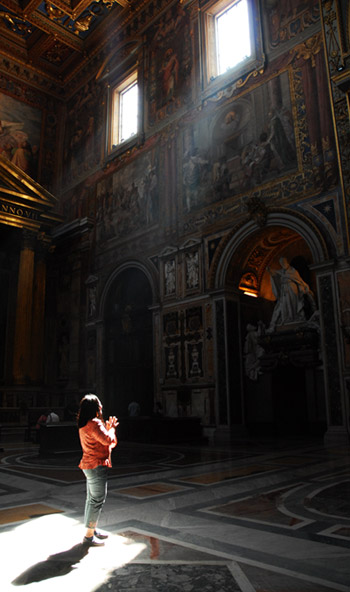
Some people sense this area of lower density as an opening in the ceiling, through which congested energy can pass harmlessly, just as an electrical buildup can discharge to ground. It can also be sensed as the sky, as in Mediaeval concepts of heaven. Whichever way you perceive it, its main characteristic is light. Yes, all those pictures of saints gazing up into shafts of light really do have their basis in reality. Lifting your eyes toward “heaven” not only means raising your vibration, it also means looking up, albeit spiritually. As above, so below.

Some prefer to redirect negative energy to nature, to “ground” themselves by touching the earth, a tree, or a body of water. And while this works, it misses the opportunity to connect with higher consciousness, the consciousness of heaven. If we form an energetic loop with the earth, we will derive our spiritual nourishment from the earth only, and we will miss the opportunity to partake of the “manna” from above, which is the transformative element. Earth energies consolidate, which is useful at the right time and place (what you bind on earth…); heavenly energies transform (what you loose on earth…). Because they transform, heavenly energies appear destructive, as in fire, but only because they bring about change. As the saying goes, “Tell the truth – it changes everything.”

As you experience reactions to events in the world, recognize them for what they really are – energy buildups  in your mind and body. You can either release those in reactive ways, such as anger or addictions, or you can “offer them up.” As a mystical Christian, your function is to do just that. You are one of God’s safety valves. Instead of reacting, you take action. By doing this, you help to bring equilibrium into the world. Negative energies tend to compound themselves in vortices of trouble. Releasing them calms the waters and brings peace, not just in you but in others as well.

Be an enlightened Christian. Take action. Spiritual action is far more effective than physical reaction. Releasing negative energy in the way described here sets the stage for calm, focused awareness, which is the true basis for effecting positive change in the world.

Posted in Lessons | Leave a comment

Pretend You’re a Lightbulb

Meditation is a mental activity. What is not generally understood, however, is that the mind connects with the body in many different places and is not confined to the brain. Scientists who say that the mind is a product of the brain have it exactly backwards. Mind and consciousness, in a spiritual sense, are all that exist; the physical world and everything in it is but the reflection of the Mind of God. As that mind thinks, the world moves. This is basic metaphysical knowledge.

When we sit in meditation, we are endeavoring to make ourselves available to that Great Mind – to know It even as It knows us. But if we think that the brain is the only part that connects with that mind, our spirit tends to get intellectualized, and the energies in our life get out of balance. We start to imagine many things that have no basis in reality and that have no practical use in the world. We become opinionated and thereby lose our ability to adapt to the ever-changing environment in which we live. And our physical body starts to reflect that: we begin to grow old.

When I was a kid, I grew up close to the mountains that surround Lake Tahoe. Skiing was a big part of my life, and I will always be grateful for having had that experience. One thing that I learned through skiing was how to think with my hands and my feet. Most people call that kind of perception “feel,” as in he has a feel for it. But in reality, it is the mind working through the body and not just through the brain. Other sports and activities offer this same kind of perceptual enhancement. Dancing, martial arts, painting, singing, acting – almost anything you can think of offers us the opportunity to “get out of our head” and into the feel. I use the word feel instead of feelings in order to distinguish the experience from emotion. Though moving across the dance floor can make your heart swell with passion and exuberance, the feel of moving your body without having to think through the motions has an ecstasy all its own. In our best moments, we become the conduit through which the Great Mind touches the earth; we are not merely dancing – we are being danced.

Meditation gives us the opportunity to let the Mind of God enter into us and make Its adjustments to the vehicle It has made for Its own expression. That vehicle is our body. Normally driven by a deeper software built into it for the purpose of our immediate physical  survival, the software we call instinct, it is also set up as a platform for higher realization – the ability to connect with the energies of nature and of the cosmos. This potential for “Cosmic Consciousness” is what we are working to develop when we practice meditation. Paradoxically, we are going deep within ourselves in order to expand outward into the universe, to become one with all that is.

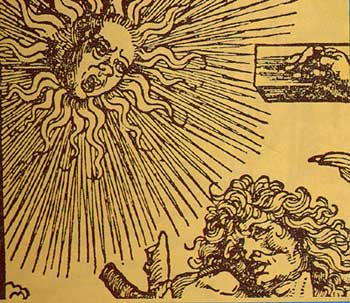
As the greater consciousness enters into our awareness, we experience it as light. A great Hindu swami once said that energy, awareness, and will are all the same thing. Light is energy. As we focus our awareness through developing our will, and as we open up to the consciousness in which we have our being, light will flood in, and we will see it just as surely as we see the sun in the sky. Only it won’t be out there somewhere, but rather it will be emanating from within our own body. This is called the initiation of Illumination. It is the point of no return on the spiritual path. Once you have experienced this, you will never be able to see the world as strictly physical again.

So, just as an experiment, as you sit in meditation, pretend that you are a lightbulb – not just your head, but your whole body. The filament is close to your center of gravity in the vicinity of your solar (!) plexus, though not specifically in it. As you visualize this, feel the radiation of it, the light moving out in all directions lighting up the space around you. Once you have mastered the exercise, let go of it. Completely turn your attention to something else. Get up and do something physical, something that requires your full attention. By doing this, you allow the experience to sink in. Otherwise, you will think the energy right out of it! And then, at some point in the future, the light will occur on its own, unbidden, and when you least expect it. Then you will know that it has begun. The process of your spiritual rebirth has been initiated, and your life will never be the same again.

Posted in Lessons | 7 Comments

Consciousness Studies

A new page has been added to The Mystical Christ: Consciousness Studies. You can find it in the sidebar on the right-hand side of the page and on the Menu Bar at the top of the Home Page.

Your participation is greatly appreciated. Please help spread the word by recommending The Mystical Christ to your friends. And don’t forget to share it on Facebook. Christian Mysticism needs all the exposure it can get!

Posted in Lessons | Leave a comment