What Is Evolution?

There is no doubt that some sort of split has taken place, otherwise there would be no need to seek anything, much less seek God. Whether God is distant or “closer than hands and feet” does nothing to alleviate our frustration, as long as we engage the question with our mind only. What does it mean to say we are evolving? Is something missing that has yet to form within us? Are we “learning” on the cellular level to better adapt to our environment? If so, we had better pick up the pace, because the environment is changing faster than we are.
William Blake

William Blake

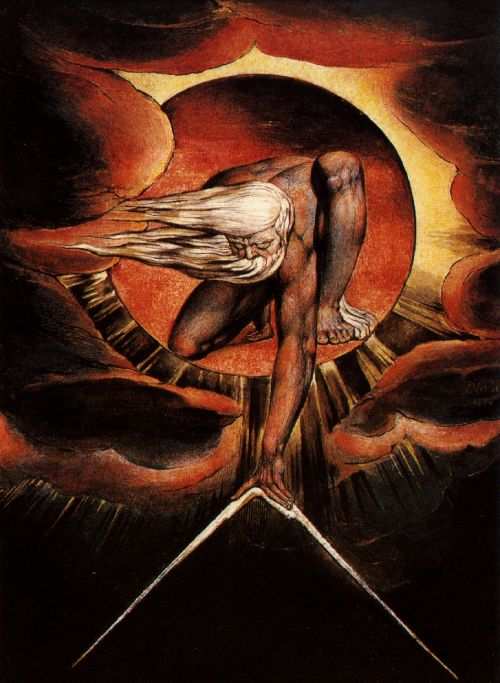
How is it that some can say that the universe was “designed” by God? If that is true, then I think He should redesign it, don’t you?

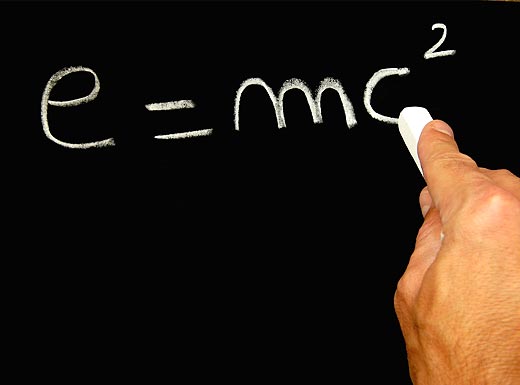
When we write a mathematical equation, such as E=mc2, are we saying that energy “evolves” into matter, or matter into energy? Is matter absent from energy or energy from matter? If it were, then the equation would not work; both sides have to equal each other – the equation must be balanced. 

If we view our lives as “deficient” in grace, or imperfect, where is the equation? How could we possibly get to that state if it were not already in us? Salvation, preached from that standpoint, is mathematically impossible.
microcosmAs a word, “evolution” is problematic. It implies getting from Point A to Point B. Spiritually, this is impossible. One cannot “get” anywhere on the spiritual spectrum. The only way we can attain spiritually is to become that which we seek. This is not a foreign concept: “Seek ye the kingdom of heaven within.” That which we are seeking is seeking us. “What you are seeking for, you are seeking with.”

No wonder fundamentalists have a hard time with the word “evolution.” Inadvertently, I presume, they are sensing their own inherent divinity (though they would never call it that) and are rejecting the notion that God is absent in their life.

So, the upshot is there is no such thing as evolution, but only in the sense that 2 + 2 “evolves” into 4.

Buddha2 + 2 IS 4, just as we ARE God.

This is not to say that we are “predestined” either. Unless having an infinite potential as your destiny gives you pause, I would say go for it! The mathematical equation we are talking about here is pretty big – way too big to fit on a blackboard.

The boundary between us and It (infinite potential) is as thick or as thin as we make it. All spiritual practices are designed to get you across that boundary. The way of the world is to reinforce that boundary by all available means. The problem with that is that reinforcing the boundary keeps us from realizing our infinite potential. And that is the root cause of all suffering.

Rather than aspiring to be spiritual, which gets you nowhere, it is far better to let go of that which you think you are. It is better to cease identifying with your problems and look within for the balanced equation that you are. Stop saying, “I’m not perfect,” unless you intend to stay stuck on one side of the equation.
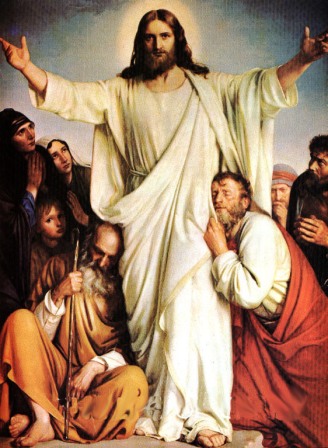
Of course, if you use that as a justification to do whatever you want, then you haven’t gotten it. That’s only the one side claiming to be the whole, which it is not. It is far safer (and faster) to contemplate the other side and let it express itself in your consciousness. This requires a bit of sublimation of every impulse that originates from this side. St. Paul said, “I die daily,” and it is this conscious act of sublimation that he was talking about.

Notice that I said a “bit” of sublimation. If you try to do this 24/7, your body and mind will rebel. Count on it. And, in all likelihood, they will win. Instead, pick a time during each day, or a day in each week, or even a day each month, and approach this the way an athlete approaches training.  Train hard with fierce intensity and total concentration – then rest. Be smart – build a pattern. Let that pattern shore up your intention. Do it in “layers,” which is to say an orderly repetition.  A layered structure is stronger than one that tries to do it all at once. “All at once” is the surest way to fail.
Posted in Lessons | 1 Comment

The Tree of Life

The Tree of Life

by Michael Maciel

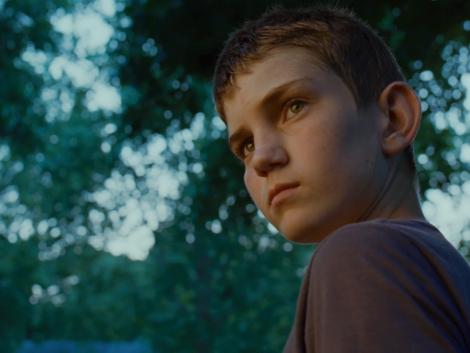
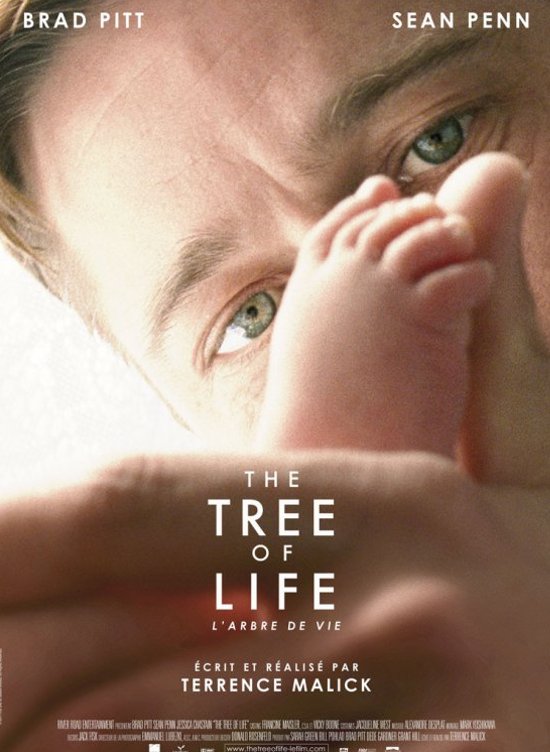
Joseph Campbell once said that people aren’t so much interested in the meaning of life as they are in having an experience of life. Terrence Malik’s latest movie, The Tree of Life, seeks to uncover that experience in us. It is an exercise in being alive in the moment. I say “exercise” because it is two hours and eighteen minutes long. You really have to want to be there. But if you are in a meditative mood and you trust Malick’s ability to show you what you’re missing whilst you’re dreaming you’re awake, this is the movie for you.

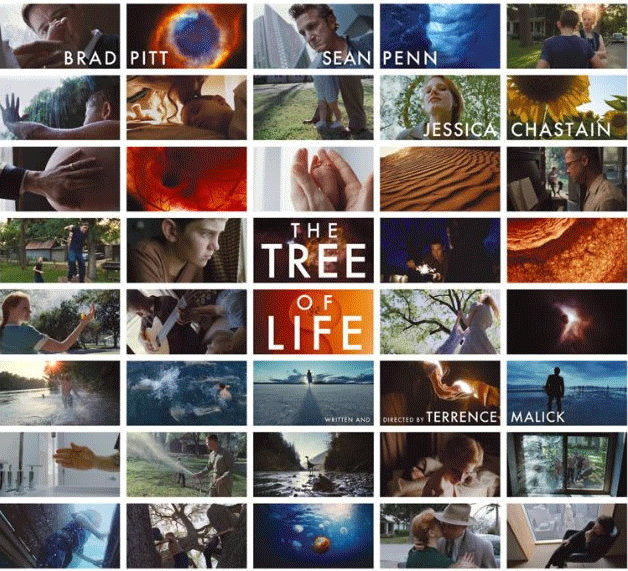
The Tree of LifeThe setting for this movie is a little difficult to describe. You might say that it takes place somewhere in small-town America in the 1950s, or you could say it spans the entire lifespan of our solar system. Either explanation would be correct, but only partially. More accurately, it is a delving into the soul, mostly that of the main character, a boy/middle-aged man struggling to understand his relationship with his father and mother and, ultimately, with God. Told through symbols and metaphor, this soulscape is the main backdrop of the story. Industrial settings are cold and vacuous, bereft of meaning, surrounded by opulence and yet utterly impoverished. Early childhood memories are shrouded in mist and fraught with contradiction and ambiguity. The father’s earthly dream of success becomes the nightmare for those who have to share the same house with it. Prehistoric battles for survival presage sibling rivalry—who will be loved, and who will not? Cosmic beginnings rumble with deafening silence, echoing in our deepest chambers the litany of fire that can either transform or obliterate.

The Tree of LifeBecause of these monumental images, The Tree of Life is one of those movies best seen on the big screen. It is artistically stunning—the best inspirations from Hubble laid out in National Geographic-style glossy detail. Interspersed throughout are visions of the dawn of creation, rendered with rich color and vivid imagination. The world feels stripped of its future—you see it without a sense of time or direction but rather like a dream drifting in its own tempo. Suns are born from gas clouds, the Earth boils with fire, slowly cooling and setting the stage for the first squigglings of life. Jellyfish billow up from the depths towards the light. A plesiosaur lies on the beach contemplating the wound that life is, while a school of hammerhead sharks swirl, searching for its bloody trail—life’s raw energy fiercely ignorant of all but its own exigent purposes.

In all of this, the arrogance of a modern perspective is swept aside, subdued by the grandeur and sheer presence of a world so remote that our own time, with all of its complexity and self-importance, ceases to exist, even as a possibility. Later, when we enter the family life of the main characters, this same mood of timelessness overshadows everything. Past is present; present is past. Even the future, as revealed in the end, shows itself as the underlying reality of all that is or ever was.

The Tree of LifeWhen we, like the characters in The Tree of Life, have to endure the travails of human existence, we look towards the heavens and ask, “Why? Why me, why here, why now?” We look at the frailty of our skin and wonder why we are made to bruise so easily, our eyes and why they must see brutality, our ears and why they are pierced by lies and the screams of the dying. Why have the ability to feel with our hearts in a world where only the callous seem to get by? Why soft feet when life is sharp and unyielding? Are we a mistake? “Who are we to you? Answer me.”—our prayer spoken for us by one of the characters. And as to Job, God seems to reply, “Who are you to ask such a question? This is big—you have no idea.”

The Tree of LifeThis movie is a slice of life that cuts to the core—profoundly spiritual and moving, a prayer, at once drenched in sorrow and lifted to the highest ecstasy. Of our childhood, we remember that which touches us most deeply. We remember what we have witnessed with the eyes of our soul, those events that shape us, that define us to ourselves, that tell us who we are. There is never a moment when our soul is not aware of the planet we live on, its place in the cosmos, the immensity of the solar wind constantly pouring down upon us the fiery graces that wear away the illusion of a separate life. We know that we are known, but we are mystified by the meaning of it all. Where are we going, what is our purpose here, why do we feel so alone? These are the questions that propel us forward into the mystery of life. And in the end, it is our connection with each other that gives us the answers. We are here together, and by accepting each other and ourselves with grace and humility, we will find our way.

Posted in Lessons | 1 Comment

LIght of Christ

Some words have been used for so long that they have almost become opaque. You would think that a word like “light” would forever keep its transparency and do what all good nouns should do, which is provide a portal into the reality of the thing being named. But “light” has been dimmed by a variety of definitions that lead us away from the spiritual reality described by Jesus and other teachers throughout time.

Perhaps the closest we get to a spiritual understanding of light is in what science tells us – radiant energy emitting from a source and radiating out in all directions. When Jesus said, “If your eye is single, your whole body will be full of light,” he wasn’t saying pay attention and you will understand. He was saying that at the center of your being there is source of light that radiates outward in all directions. Maybe it was the electric light bulb that made us think that we create our own light, switching it on and off whenever we like. But the Ancients knew the spiritual nature of light. They knew that there is only one energy in the world – the energy of God – that it manifests as light and is conscious.

Outwardly, we see light with our eyes, or, more correctly, we see it in the visual cortex of our brain. The eyes are merely the receptor organs. But inwardly we see light in a place deeper than the brain. We have an interface, a way with which to perceive light of a higher vibration than our eyes can see. This interface is the electrical nerve energy in our body. This “neural net” acts like an antenna, an energetic antenna that is more attuned to the spiritual light because it is closer to it in vibration. If we try, we can feel or “see” this neural net. We can sense it. But as we do with most everything we look at, we look at it from the outside in. We look at it. The opportunity is to see what it is seeing, what the antenna itself is picking up, an energy that is twice removed from the physical senses but nonetheless can be accessed through the neural net.

When I say “neural net,” I am not referring to the spaghetti-like structure of nerve fibers that the surgeon sees, but rather the energy that flows through them. This energy is so familiar to us that we take it for granted. Some call it life energy; some call it light. But either way, if you think of it as being the product of chemicals reacting in your physical body, you lose the opportunity to experience the greater reality, which is the great spiritual Being within which we live. Scientifically, we can understand how nerve impulses are generated, and we can measure them, but science will not acknowledge that the energy within the nerves is the stepped-down equivalent of a higher substance. This we have to study for ourselves.

When we regard the energy matrix of the body as an antenna, we can understand how God reaches into the world and animates it. Spiritual energy can be picked up by physical energy, because they are next to each other on the spectrum – not the spectrum we see in the illustrations in a textbook, but the spectrum of resonance. Just as striking middle C on a piano keyboard will cause all of the other octave C’s to vibrate, so does spiritual energy affect the nerve energy in our body. It is subtle, but because it is subtle it is very powerful in its effect. The challenge is to first become aware of it and then work with it.

When we first tune into the energy that the energy in our body is picking up, the exhilaration can be intense. The first response is to luxuriate in it, but then we tend to turn away and look for more familiar experiences. But that’s okay. Try doing this in meditation. Bask in the light. See what you can see. Be receptive to it. Above all, be receptive.

Posted in Lessons | 2 Comments

Joplin, Oh Joplin

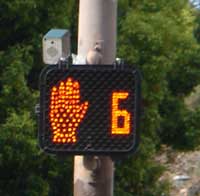
The Mystical ChristSome lessons are harder to learn than others. I lived in the Midwest for thirty years, and I know how nature’s lottery works. The year before we moved to Omaha, Nebraska, a tornado similar to the one that struck Joplin, Missouri, ran right up one of the main streets for ten miles causing more than a billion dollars of damage and taking three lives – a minuscule toll compared to Joplin’s but sobering nonetheless. Now I live on the San Francisco Peninsula where extreme weather only happens on the news. No one here says it, but you can hear them thinking, “Why would anyone live out there and put up with that kind of weather?” The reason they don’t say it is because they are living with a different kind of lottery, one that provides absolutely no warning and that can be just as destructive and much more widespread. Earthquake. The pedestrian lights on the street corners actually give you a countdown in seconds telling you how long you have to cross the street before the light turns yellow. A countdown. How ironic.

Transience is a bitter pill to swallow. There should be a sign: “Welcome to Earth – Enjoy Your Visit.” We plan, we build, we invent, we philosophize – but in the end, it all comes down. Everything in our earthly experience will come to an end. And eventually, even the planet itself will cease to be. Nothing that we can see or feel will last. Not one thing. In order to be “enlightened,” in order to be conscious, we must come to terms with this fact and learn how to be happy within its terrible context.

If you practice meditation, if you have had any contact with your inner being, if you know that life is a power and not a set of circumstances, then you know that there is a part of you that never dies. You know that that part is the real part and that all the rest is like the grass – here today and tomorrow cast into the oven. But, the spectrum of our being is not bipolar with nothing in between. Our real nature is not just physical and/or spiritual. There are many gradations, many layers of consciousness that extend deeper in and higher up. When our spirit withdraws from this world, it will extend itself back into a different one. It might (and some say that it will) bring with it something essential that it learned in its previous incarnation, the way we bring our photo albums with us when we move to a different part of the country. We “start a new life,” but the old informs the new.

found at http://newvaluestreams.com/wordpress/If we are to find our way in life, we must have an inner compass. Listen to what a Joplin resident had to say about the disorientation he and others are feeling in the aftermath of the tornado:

Gary Box, 60, the coordinator of business retention and expansion for the Joplin Area Chamber of Commerce, shared the mayor’s spinning compass. “I’ve always relied on my sense of direction and memory,” said Mr. Box, who spent 14 years as a Joplin police officer. “But I now realize I was always basing it on landmarks, and they’re all gone.”

found at http://newshealth.net/

Newshealth.net

What are the landmarks in your life that give you your sense of direction and memory? If they are external landmarks, the day will come when you will feel lost. There is no worse feeling. Wisdom dictates that we find a firmer foundation, that we locate ourselves within a higher context, that we live in heaven even as we are alive on Earth. Our actions here must be dictated by what we know to be true, not what we think we see. We must live our lives according to enduring principles, laws that serve the human spirit, not merely ones that help us get ahead. For example, why do we mourn the loss of a corner coffee shop and ignore the erosion of civil liberty? Are not our values more important than our livelihood? If we lose those things within us, the essential parts of ourselves, what does it matter if the wind blows everything else away?

We have become a people obsessed with the outer. This has to change. We must live in a way that serves our soul first and our body second. It matters more how we serve each other’s needs than how much we charge for those services. Let not the right hand know what the left hand is doing – it is more [alive] to give than to receive. If you make it a habit of always giving more than what you are getting paid for, you will be happy no matter where you are or what you own. 

Read the entire article quoted above

Posted in Lessons | 8 Comments

Becoming Spiritually Conscious

Courtesy of Art Hit Gallery

It is important that we develop our consciousness to include more than our physical body. There are other parts of us that are just as real. For instance, there is a difference between the way we experience other people when they are asleep than when they are awake. You can tell when children are pretending to be asleep and when they are actually asleep. Something is present when they are awake that is absent when they are not. And though we can theorize endlessly why this is so, it is better to recognize that the difference is a real experience. Understanding this difference is key to developing spiritual consciousness.

Think of someone you know. Ask yourself, “What would this person look like if she entered the room without her body?” Funny question, yes? Or, consider what your place of work feels like when your supervisor is present and when he’s not. What changes when he enters the room? Again, can you isolate that feeling from the experience of being in his physical presence? Developing the ability to do so develops your spiritual consciousness. You become more aware of people’s energy than you do of their body.

The range of our senses is much greater than we normally utilize. There is no such thing as “extra” senses. We only have the one’s we are accustomed to using, only we use them in a limited way. Integral to spiritual training is the development of the full range of our senses.

Knowledge is important in the development of our spiritual consciousness. When I first saw a painting in a museum by Monet, I could not grasp why it was so popular. To me, it was a huge canvas of mottled blue-green shapes, vaguely similar to a pond with lilies floating on the surface of the water. But listening to the tutorial on my museum headset, I learned that what Monet was actually painting was the reflection of the sky in the water. All of a sudden, and with great force, it sprang into three-dimensions. I was completely blown away. All it took was for someone to tell me what to look for.

Presence is a quality of being that is not subject to time. The body lives in time; presence does not. When you turn your awareness toward your own presence or someone else’s, you step out of the field of time. And by doing so, you automatically rise above the limitations of space, because time and space are two sides of the same coin. Experiment with this.

Posted in Lessons | 4 Comments

What Is Spiritual Training?

Every athlete, musician, artist, performer, writer, and speaker knows what it is to train. The word is slightly different from the word “practice,” which is how we usually describe our meditation and devotional routines. It is different in that it implies that we are training for an event – a concert, a race, an opening night – whereas the word “practice” implies a lifestyle, with no particular goal but to enrich our overall consciousness. Either word is good, but the word “training” is more specific. It is purpose-driven.

What is our spiritual “purpose?” This question speaks more to someone who feels a calling and, even more specifically, a mission. That word, mission, is somewhat problematic, because it evokes fears of fanaticism. The world has suffered greatly at the hands of those who felt it needed fixing. But the worst examples you can think of do not negate the genuine few who know they have something to do. For them, the word “practice” is not enough; “training” is a better fit, because their spiritual work is a preparation, not an end in itself.

Just as weight-training makes a lineman more powerful on the football field, meditation makes us more powerful on the __________ field. (You fill in the blank.) Many people say that their practice is its own reward, but no one loves weight-training, except for the results it gives. When we become too enamored with our practice, we tend to over-ritualize it and eventually turn it into a god. Then our purpose becomes the perpetuation of the method, not reaching the goal the method was designed to reach.

When it comes to our own spirituality, most of us are more comfortable with the word “practice” than we are with the word “training.” Practice means that we are practicing a method, which we can use at our own pace, whereas training implies the need for a coach or teacher. And although spiritual training can be undertaken without a teacher, it is not generally recommended. The ego is simply far too adept at creating distractions and reasons why we should ease up on ourselves, especially at those crucial times when a breakthrough is imminent. You know the story. Sometimes we need that impersonal nudge to get us going, and true teachers know how to do that without coming across as your personal lord and savior. If you can find one, you will make better progress toward your goal.

Tagore

Tagore

My teacher once said that you never know what your mission is for this lifetime until it is over. We have to remain open to higher guidance and not assume that we know what it is we are supposed to be doing. Oftentimes, our methods, though important, are merely steps along the way. But when they are over, we need to let them go and prepare ourselves for the next step – life is ever changing and evolving. But our training never ceases. We never lose the need for concentration, generosity of spirit, love of truth, or a quiet mind. These are generic and always part of the spiritual life.

If you want to establish the teachings, 

Make them firm in your mind. 

In the depths of mind, you will find Buddhahood. 

If you wish to visit Buddhafields, 

Purify ordinary deluded attachment. 

The perfect, excellent Buddhafield is near at hand. 

Develop diligence to practice 

The essence of the teachings. 

Without, who can gain the siddhi? 

It is hard to see one’s own faults. 

So, pointing them out to oneself 

Is a crucial instruction. 

In the end, when faults are, one by one, removed 

Enlightened qualities increase and shine forth. 

H.H.Dudjom Rinpocheby H.H.Dudjom Rinpoche

Posted in Lessons | 2 Comments

Building a House

When trying to manifest a thought or desire into the physical world, we sometimes overlook one important ingredient. We all know that visualization and feeling are necessary components, but there is something else. To understand how creation occurs, how idea becomes reality, it is easier to look to our immediate earthly experience for the pattern, rather than metaphysical philosophy. Here’s an example:

When an architect sets about designing a house, there are two things that must be present: a client and a site. The client supplies the need, and the site supplies the place. The absence of either of these elements will prevent the entire process. After all, what architect succeeds merely by making plans? The client’s need comes in the form of a vision, a spirit if you will. It constitutes the executive decision, the “this will be” that motivates the resources needed to bring the plans to fruition – the cash, the will, the consensus. The site provides the vision a place to happen, a contact point with the earth, without which the best dreams are but disembodied spirits, wandering desires, always reaching but never grasping.

All legitimate spiritual teachers give their students the same mandate: learn to concentrate. Focus. Successful people in the world don’t need to be reminded of this. It is only those of us with one foot in heaven that need help. And the physical equivalent of focus is site. Unless you bring the elements of earth together in your planning, there can be no manifestation. Pick a spot. Say to the universe, “This will happen HERE.” This is every bit as important as the now. In fact, you might say that the here is the physical iteration of the now – time and space being two sides of the same coin.

Unless “Divine Law” is detectable in the physical world, and provable, it is nothing more than a philosophy – great as entertainment but of no practical use. If you want to know how to get your prayers answered, look how you accomplish anything. See what energies you bring to the task, the resources, the will, the cash. But most important, where is your focus in the world – your site?

Posted in Lessons | 5 Comments

155 words – Be Yourself?

Instead of striving to live an “authentic” life, try getting in touch with that which is bigger than you are and let it live through you. Being authentic, or being yourself, can sometimes be an excuse to let it all hang out and is often the expression of something smaller, not bigger. Whenever we try to express our individuality, we usually wind up looking like everyone else. But when we get in touch with something that is bigger than we are and let It use us as its vehicle of expression, we really begin to live. Because, after all, that which is bigger than we are is really that part of us that we are awakening to, not something outside of us. So, by letting it express itself, we are actually living more authentically than if we were to try to stand out from the crowd. “He who would find his life must lose it.”

Posted in Lessons | 3 Comments

Becoming a Mother

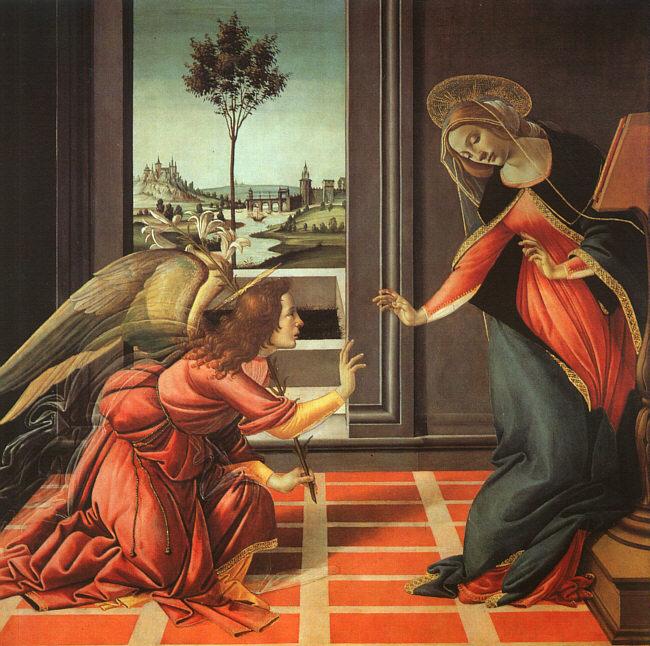
It is remarkable that some Christian Mystic men in the course of their training feel as though they are pregnant. They look normal to themselves in the mirror, but their proprioception, the sense one has of one’s body in space, is that of a pregnant woman in full term. When someone else stands too close, they back away slightly in order to guard the living being growing inside them. This experience usually happens right before the initiation of Self-realization, when the veil of matter is rent in the inner temple and one perceives the “face of God.”

The Annunciation is one of the High Christian Mysteries, called a “mystery” because it cannot be intellectualized but only experienced. It happens spontaneously, but only as a result of soul-development, whether through deep assimilation of life’s experiences or through specific training designed to prepare students to pass within and see the God Self inside them. Since it is called an “initiation,” it is the beginning of the process, not the fruition. Students experience a fundamental shift in consciousness and then begin to amalgamate that new sense of being into their everyday life and meditations. They feel as though they have been born into a new world and must relearn how to live.

The story of the Annunciation, as it is told in the New Testament, is brief. The angel Gabriel appears to Mary and tells her that a spiritual event is about to take place. She is to give birth to the Messiah, she will name him Jesus, and God (not man) will be his father. In the story, the message is drawn out in conversational form, but in all likelihood it came whole-cloth, all the particulars combined in one instant knowing.

As in all myths, the lines between spiritual and physical are intentionally blurred, not to confuse but to render the experience universal. Historical events happen at a specific time in a specific place, but mythological events happen across the entire spectrum of human life and locale. The 17th Century German mystic and poet, Angelus Silesius, said, “Of what use, O Gabriel, thy message to Marie, if though canst not also say the same thing to me?” The Biblical account of Mary’s revelation is a roadmap for mystics everywhere to prepare them for the initiation of Self-realization.

In Christian Mystical symbolism, the soul is feminine. Mary is the purified soul; Magdalene is the soul’s journey of purification, away from the corruption of the senses. In a sense, both Marys are the same “person.” Even though Mary the mother of Jesus predates Mary Magdalene in the narrative, she is the regenerated Mary Magdalene who through contrition and devotion gives birth to the Christ within her being. In myth, time is slippery; events and characters are individual principles that apply to all of us and are meant to be arranged in their spiritual order, not necessarily chronologically. The elements are laid out in a tableau without perspective so that they can be absorbed through the mind, not by it.

The familiar “Hail Mary” prayer is designed to attune us with the consciousness of the Annunciation and thus set the stage for the experience itself. It might be restated thus:

O my humble soul, womb of the cosmos, hear the Word of God. Open now, and give birth to the Sun!

Posted in Lessons | 3 Comments

A Royal Wedding

The highest form of love in Western Christian Mysticism is romantic love. Its correlate in yoga is “illicit love.” What? Yes, that’s right. Bhakti yoga, according to mythologist Joseph Campbell, has five levels of spiritual devotion, each level bringing one closer to the realization of the God Self within:

Loving God as a servant loves his master

Loving God as a friend loves a friend

Loving God as a mother loves her child

Loving God as a spouse

Loving God as a lover

Arthur and Guinevere

When one chooses to love another freely, without being impelled by tradition or the rules of the social order in which he or she lives, this is considered the highest form of love, because it is of the heart, not of the mind. The mind loves rules; the heart loves love. The mind seeks to justify its own imaginings; the heart seeks balance through union with God, to be in sync with the entire cosmos. And it is this union that brings fulfillment of life, without which there can be no spiritual realization.

Lancelot and Guinivere

Principal among the foundational myths for Western Mysticism are the Arthurian Legends. The marriage of Arthur and Guinevere is arranged by the Court. They love because it is politically expedient. The love between Guinevere and Lancelot is illegal; it is outside the bounds of the social order. The legend, whether literal or not, is a symbolic representation of the principle of romantic love. Romantic love was considered “illegal” because it could not be controlled by society and therefore threatened the cohesion of the clan or state. It posed all sorts of legal problems concerning property and inheritance, and it undermined the authority of the political leaders. Loving God as a “lover” undermines the authority of the religious leaders (even those within our own head) because it implies a direct relationship with God, not one that can be mediated by the Church. Internally, the mind wants to control the heart, allowing only those feelings that conform to its predetermined “truths.”

Written in Stone

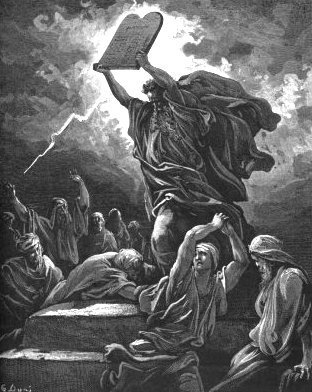
Jesus made the distinction between following the Commandments out of duty and following them out of love. Actions mean nothing if they do not arise out of the heart. When the young rich man told Jesus that he had followed all of the Commandments since birth, Jesus told him he had to let go of his ideas about what the Commandments mean, to strip his heart of the vestments of the mind before he would be admitted as a disciple. He had to want it not as an ideal but from an ardent desire.

This latest marriage of a member of the Royal Family to a commoner symbolizes this principle of “illicit love.” It has captured the collective unconscious as no fairy tale ever could, because of the way it shadows deeper symbols. The word “royal” is mystical jargon for the throne of God, the Christ. Kings and Queens symbolically represent God’s presence on earth, which is the source of their “divine right.” Mystically, it is the Christ within us, our direct connection with God, that enthrones our conscience as the highest authority in our life. This is why the individual is so important in Western Christian Mysticism. Here, a person must act in accordance with his or her highest knowing and not out of the need to conform to society’s rules. Here, we transcend the lower ego by purging it of the base metals of animal desire, revealing our true nature as Christed beings. The animal becomes human, and the human becomes God. This is the divine alchemy of transformation.

Though arranged marriages have long since vanished in the West, one has to ask whether it has merely slipped below the radar. What kind of relationship with God do we allow ourselves to have. Can we have the experience of being the object of God’s desire? Can we let God want us? The key to this is how we see ourselves. Are we commoners unworthy of love, or can we see through our limited self to the Divine Self within? What is It that seeks to express Itself through this mortal coil? And what is our relationship with It?

Cosmic Egg

Cosmic Egg

Posted in Lessons | 2 Comments