Why “Up”?

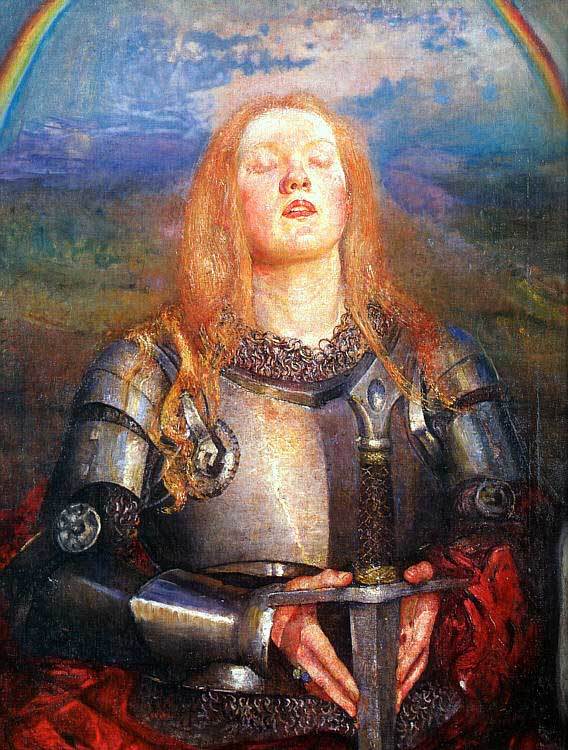
joan


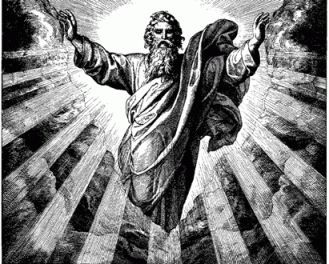
Saint Joan of Arc believed that God was up in the sky. Many of us have been taught as children that heaven is “up,” that God is up. Even in the Bible it is said that Jesus “lifted his eyes up to heaven.” Is this a metaphor? Or is there some truth to it? Is there something here that will help us in our spiritual work, in our prayer and meditation?

First, we need a working definition of the word “up.” Here on Earth—and anywhere in this solar system, really—up means “away from the center of mass.” If gravity could be seen as lines of force, those lines would all be pointed at the center of the planet, converging inward from all directions in space. This means that your “up” is diametrically opposed to that of another person’s up, if they were on the opposite side of the planet from you. And if you were looking at the moon, and someone were up there looking back at you, your up and their up would be aimed at each other. Such is the law of gravity and mass.

Though we know that our physical body is affected by gravity, we also know that there are other parts of us that are not affected by gravity at all, namely our energy—our consciousness. After all, radio waves and other forms of electromagnetic radiation are not subject to gravity, not dramatically. So, escape velocity for our thoughts is a fast as it takes to think them, which is to say instantaneous. So, let us agree for now that “up” is away from the center of mass.

I knew a ballet teacher once who taught her kids correct posture by telling them to “grow it up tall.” And Master Subramuniya, that great American Hindu teacher, would tell his students, “Lean against the power of your spine.” Even when we pray, it feels natural to raise our hands and to look up slightly, as though the object of our devotion were above us. A priest during mass will raise the bread and the wine, and whenever we are asked to come together in unity, we are asked to stand. The point is that if we take our working definition of the word “up” to be “away from the center of mass,” then there is something more here than just a metaphor, that there is a type of physics involved, and that if we want to improve our meditation and other spiritual work, we can benefit by understanding it in this way.

Sitting up straight

plumbbobSitting up straight while meditating aligns our body with “up.” This does not mean that we have to sit cross-legged in lotus posture. In fact, I once knew an American Buddhist priest who after 20 years of sitting zazen ruined her knees. Most of us find it much easier to sit in a straight-backed chair, one that allows us to rest our feet flat on the floor. And if we allow our shoulders to drop, and we rest our hands in our lap, and we keep our chin slightly tucked in, then we can sit relaxed and alert without straining any muscles. This way, the body does not distract us with its complaints, and we can more easily focus our attention on…what? Well, for now, let’s focus it on “up.”

Do you know what a plumb bob is? It’s a metal weight, usually made of brass and shaped like a round arrowhead that you suspend from a string. When still, it forms a perfectly straight line from its point of attachment to the center of the Earth. Builders use it in combination with a level to form right-angles in their constructions, making walls exactly perpendicular to the floor. The more exact, the stronger the structure will be. The human skeleton is in many ways the same. When the weight of our head is supported by our spine and not by our shoulders or neck, our posture is effortless and strong, and we are in the best position to meditate.

A royal opposition

raWhen two planets are directly opposite from each other with the Sun between them, they are said to be in “opposition.” In a horoscope, this configuration creates an energy of—an opportunity for—reconciliation. When we sit in meditation with the Sun directly over our head, we are effectively putting the Sun in opposition to the Earth. We are in the middle, and thus an alignment is formed. This alignment will energize our inner Sun, which will then begin to reveal itself at the center of our being, empowering us both physically and spiritually. Even the military knows this. An erect posture gives a person strength, and it focuses his or her attention.

We are all planets, really. Each one of us orbits the sun. Planet means “wanderer,” named so by the ancients because of the way certain stars seem to wander about against the backdrop of the fixed constellations. Spiritually speaking, we each have a unique relationship with the Sun, a direct line-of-sight at all times. To our inner vision, the Sun is always directly overhead—a kind of spiritual high noon—and we are suspended from it like a plumb bob in space. It pours down its radiance upon us, even as we reach up in consciousness to it. This is what the priest does when she raises the chalice. This is what we all do when we raise our hearts and minds to God.crown
No darkness

In 1 John 1:5 we read, “This is the message we have heard from him and declare to you: God is light; in him there is no darkness at all.” Our meditation should be on the light, never the darkness. If we meditate on darkness, we meditate on nothingness because God is all there is. We each have that direct line-of-sight to the Sun. It reaches down to us, even as we reach up to it. We are all priests—priests unto ourselves. We have no need for a  human mediator. When the center of our being is lit up, our body becomes the holy temple, and the light upon its altar is the Sun.
Posted in Lessons | 4 Comments

The World, the Flesh, and the Devil – more on the square

alone-streetcr

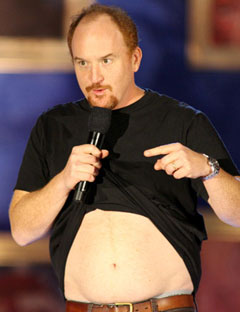
Nothing is created until it manifests in the physical world. Until then, what we conjure in our minds is little more than a vain image. The comedian Louis CK has this wonderful routine where he describes what goes through his mind whenever he sees a soldier get on a plane and has to sit in coach, while he, a mere entertainer, sits in first class. He thinks to himself how he should offer his seat to the soldier who, after all, is willing to die in service to his (or her) country. Of course, he never actually does offer his seat, and, according to him, never comes remotely close to offering his seat. But he nonetheless feels good about having thought of it. In fact, he not only feels good about it but goes on to congratulate himself for having thought of it – “Wow, I’m really a nice guy for having had such a good thought!” The great thing about comedians is that they are willing to expose themselves in ways that most people will not.

louis_ck_WI_0807_lgIt is not enough to merely have spiritual thoughts, to read spiritual books, to attend spiritual talks. These things when overdone can only hurt us in our spiritual growth. How can they hurt us? By leading us to believe that we have arrived, when in fact we are only reading the brochure.

You will hear some people say that praying for “stuff” is wrong, that you should never pray for a specific outcome, that only God knows what is good for you, and that that is what you should pray for. But in reality, which is to say energetically, unless you can manifest what you want in your life, to whatever degree you are capable, you haven’t created anything. And learning how to create is key to spiritual growth. We were created in God’s image, says the Bible. Does that mean in appearance only? Does God have a human body that looks just like ours? No. But God is a creator, and God created us to be creators – just like God. And God created us by imaging us. This is the key.

GodInTheCloudsPerhaps you’ve heard someone say that life in a physical body is a good thing, that disincarnate beings are waiting in line to be born, because only here on earth can one make spiritual progress. Let’s suppose that this is true. Why would it be? If you look, you can see a pattern – creation is a process of taking a thought from mind into the physical world, that somehow doing that, completing that, is the purpose of physical life. And since we are already bringing things into manifestation anyway, why not do it consciously and in a way that works for us instead of against us?

We are accustomed to seeing ourselves, identifying ourselves, with our physical body. This is a grave mistake, not only because the body is constantly changing (usually for the worse) but because the Self does not. So, if we identify with the body, we place ourselves out of sync with the Self. Rather, the body is something we do, whereas the Self is what we are.

We create our own devil. It’s not something we do on purpose, normally. It just happens. The more enthralled we get with the world “out there,” the more dysfunctional it looks. People look broken, spiritually speaking. And the more we see them that way, the more broken they become. We don’t create broken people; we create our perception. And since people have a tendency to play into the way we see them, they can unwittingly take on the evil we project.

000108_14This is an example of “build it and they will come.” When we build an image in the mind, the world will naturally try to conform to it. Such is the power of the mind. If enough people hold the same image, the power becomes irresistible. It becomes what “everyone knows.” We have created an evil world, created it in the mind. And an evil world requires lots of laws. The more laws, the more prisons. The more prisons, the more prisoners. Create a law, and you automatically create a criminal. Lao Tzu saw this. So did Saint Paul. But both had a hard time convincing people of it.

Here’s the technical part:

The square is by definition width and breadth. Within it we can plot out any image to any degree of resolution. In order to bring that image into manifestation, we have to consider how we turn the square into a cube. This involves time. Time exists for the purpose of creation. Genesis alludes to this by dividing the creative process into “days.” They are not literal days, of course, but cycles of any duration. The technical term is periodicity. Time can only be understood within the context of eternity, which ironically has nothing to do with time. Time is merely a way to divide up that which is indivisible, an imposition of pattern into a seamless whole. Periodicity – In the beginning was the Word.

rttri15_36728_lgTime involves sequence and repetition. These two aspects can be applied in whatever cycle you choose, whether a day, a year, a breath, or a heartbeat. The duration is unimportant, but the pattern is everything. Applying time, which includes sequence and repetition, to an image that is essentially two-dimensional – an image in the mind – is the basis of prayer and ritual. This is how it works. Add to this suitable preparation in the physical world and you have the bridge you need to bring your idea into reality.

Once the physical foundation has been laid, the creative fires start to burn, and the draft of that flame will draw the needed materials into the form. But there must be alignment between the form and the image. This is represented symbolically by the figure-eight (8 = 2 x 4 or 2 cubed). In Key 8 of the Tarot, we see a garland of flowers used to harness the forces of nature. A garland is an orderly sequence, the repetition of a pattern woven over time. Such a pattern, when completed, is indestructible, which is another way of saying eternal. The gates of hell (chaos) shall not prevail against it.

Once a pattern such as this is established, it becomes a nexus in the mind, a living thing. It begins to breathe and grow, and as it does, it draws to itself all of the substance it requires to manifest. It has to manifest, otherwise there would be an imbalance between the mind and the physical. Whatever exists in the mind MUST exist in the physical, and whatever exists in the physical MUST exist in the mind. This is the Law.

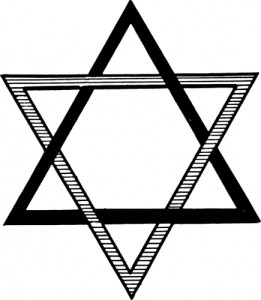
seal-of-solomon-star-of-david-t16021

also see: Authority and the Square

Posted in Lessons | 3 Comments

The Riddle of the Sphinx – how conscious are you?

by Michael Maciel

The Riddle of the Sphinx goes like this: what animal goes on four legs in the morning, two legs at noon, and three legs in the evening?

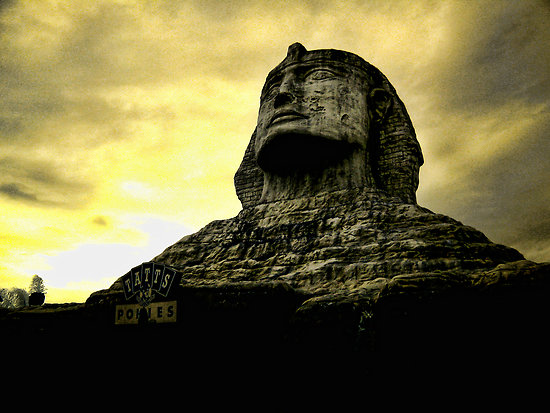
The sphinx was a creature with the body of a lion and the head and breasts of a woman. It sat above the rocky entrance to the city of Thebes in ancient Greece. Whenever someone tried to enter the city, the sphinx would demand that he first answer this riddle. If he could not answer it, the sphinx would kill him and devour his body. But, if the traveler could answer correctly, the Sphinx would throw itself down from the rocks and die.

The answer to the riddle was Man. (This is the generic man, which includes both men and women, that quality of soul that makes us both human and divine.) The answer is explained thus: in the morning of life, a person crawls on all fours, at noon on two feet, and in the evening with the help of a cane. Now, if that were the entire explanation, the Riddle of the Sphinx would only be a clever puzzle. But if we look deeper, with an eye towards symbolic meaning, we find that there is a deeper layer hidden beneath the obvious.

In symbolic stories, whenever numbers play a prominent role, it is safe to bet that something is being veiled, something that can only be interpreted by those who have knowledge of the symbolic meaning of numbers. Of course, the Riddle of the Sphinx is an ancient story. The original author wrote it for an audience that understood symbolism, those who had been trained in the Mysteries. It stood as a verbal icon, a way of preserving a teaching without speaking of it too directly. After all, it is far easier to corrupt a philosophy with opinion than it is to corrupt a story. Stories appeal to everyone and are more likely to survive through the ages intact.

The Riddle of the Sphinx is a mythical story, which means that all of the characters, along with the setting and the action, represent aspects of one person – us. It is a story about the evolution of consciousness, the natural progression from one state of awareness to another, the transitions in life that raise us to new levels of understanding ourselves and the world. When such a transition occurs, we say to ourselves, “I feel different.” Mythic stories are the maps that lead us to this higher ground.

Our consciousness evolves from the four-legged stage of a baby to the two-legged stage of an adult to the three-legged stage of the elder. What does this mean? The answer lies in the symbolic meaning of the numbers 4, 2, and 3.

Four has always meant the physical world and our consciousness of it. We can live many lifetimes fine-tuning our awareness of the environment and developing our ability to survive in it. We all know people who are good at this. Their chief concerns are home, family, and career. Their moral philosophy emphasizes loyalty to one’s immediate group, the sanctity of the bonds that hold that group together, and the strict adherence to an established code of conduct with the implicit rightness of the rewards and punishments that go along with it. The individual is expected to sacrifice him or herself to these values and to obey the letter of the law.

Inwardly, the same rules apply. When our consciousness is preoccupied with survival, we tend to adapt ourselves without question to the thinking of those around us. We believe what we are told to believe, value what others value, and speak the local language using the moral vernacular of the day. We only allow ourselves to think the thoughts that have already been articulated, seeking our wisdom from those around us, and regarding our own intuitions with deep suspicion. Our distrust of our own inner self is so severe that we regard it as evil, like a Pandora’s Box that we must never open, lest we bring destruction not only on ourselves but on our society as well. As we approach the transition between this stage of consciousness and the next, we begin to experiment with creativity and innovation. It is then that we start to refer to this inner evil as our “demons,” lending them a probationary legitimacy while we learn to swim in their unfamiliar waters.

This is the symbolic meaning of the number 4 and the stage of consciousness it represents.

Next comes the two-legged stage of the adult. The number 2 symbolizes duality and reflection – the intellect. A is different from B. In society, this is where the concepts of justice and equality before the law come in. It is also where time-honored “truths” are brought into question and we begin to apply logic to our preconceived notions of reality. Our moral philosophy expands to include the mind as an active participant in how we structure our society. Tradition begins to take a back seat to Rational Thinking, and the concept of “progress” takes center stage. No longer do we govern ourselves strictly according to precedence. Now we are open to reform. Adaptation becomes the moral imperative, and those of us who are best at solving problems are rewarded the most. Thus, intelligence becomes the highest virtue, and we shift our loyalties from the old to the new, from the past to the future.

Inwardly, as our intellect awakens and we see that there are two sides to every story, we begin to weigh the merits of our thoughts according to their efficacy in the world and not whether they conform to our assumptions. A powerful idea is an idea that works. Old gods are torn down and the new god of Rationality becomes the standard. Every truth can be ascertained through the faculty of reason, and we need not rely on faith or blind acceptance anymore. As adults, we are free from dependency on our “parents,” and we are now capable of discerning truth for ourselves. We stand on our own two feet. We stand or fall on our ability to think rationally.

This is the age of ideology. Its emphasis is on comparison, where the better of the two ideas being compared becomes the “good,” and the other idea becomes the “evil.” It is black-and-white thinking. Something is either right or wrong with very little gray in between. At best, this way of organizing our thoughts is rational and philosophical; at worst, it devolves into stubborn opinion. In either case, it is outer-directed, basing truth on what can be observed with our physical senses aided by our ability to draw logical connections between seemingly different phenomena.

This is the symbolic meaning of the number 2 and the stage of consciousness it represents.

Finally, we come to the three-legged stage of the elder. Whereas the two-legged stance of the adult signifies a full-blown, independent maturity, the waning vitality of the elder, evidenced by having to use a cane, symbolizes a shift in orientation. The new orientation is toward the unknown territory of death. In old age, we are caught in the grip of the inevitable. We move towards a new dependency, not the worldly parents of our infancy, but the other-worldly parents of a new life beyond the grave. We have no choice. We will die just as surely as we were born, and the death will be a new birth, but into a world we do not know. In the uncertainty of our existence, we see the world we live in anew. Tradition and rationality begin to lose their solidity. Everything gets permeated with an inner luminosity, and what before seemed to divide one thing from another now blends them together into a dynamic whole. First, one side rises in its prominence and then the other, seesaw fashion, each balancing out the excesses of the other. Ideologies become as night and day, phases of larger cycles, each dependent on its polar opposite for its eventual meaning.

Our inner life reaches this same stage of wisdom and dependency on the unknown. We move from certainty to uncertainty, but our uncertainty makes us wise. The smartest and wisest among us have always said that the more they think they know, the more they realize how much they don’t know. And the wisest amongst these know that real truth cannot as yet even be imagined. When we reach this stage of our inner evolution, we are less apt to come down on either side of an issue. We aren’t as ready to call one thing good and another thing bad. We see the world not only as a constantly changing, dynamic system but as a system whose inherent opposites are merely two ends of a continuous spectrum, that all opposites spring forth from a common unity. Dark becomes the absence of light and not a thing in itself. Evil is the absence of good, ignorance the absence of intelligence. We see that everything is good but to varying degrees. The world ceases to seem overburdened with strife, but rather as travailing in the birth-pangs of its own burgeoning potential.

As we let go of our dependencies on the traditions that shaped us, and we learn to think for ourselves and take responsibility for our actions, and as we eventually let go of our best reasonings and dependence on logic and what our senses tell us is real (what is the same and what is different) the more we come into the knowledge of our true selves, the reflection of the Divine that we are. Just as the ancient traveler sought entrance into the mythical city, so do we seek to enter into this ultimate knowledge of reality. But before we can do so, we have to grow up and then grow beyond our grownup-ness. We have to embrace the unknown and step out into the uncharted territories that lie within us. Only then can we open up to the reality that is larger than ourselves – that is always larger than ourselves – and enter into that world of wholeness and everlasting life.

Posted in Lessons | 10 Comments

Purity

It would be great if we could pluck the diamond of truth about purity right out of the ground perfectly cut and polished, but this gem is buried deep in semantic rubble and is going to require a bit of excavating and refining before its true meaning can be revealed.

The hard fact is that the word purity, in its spiritual connotation, has been sexualized. In its narrowest interpretation, it means NO SEX! But this is only because sex can make people irrational, and the authors of the NO SEX! rule didn’t like that. Sex is disorderly and unpredictable, which makes it hard for the thinking mind to control. And the rational mind, and those who swear by it, are all about control.

Those who deny sex and who claim to have risen above it have most assuredly found other ways to screw you. Count on it. Those who haven’t risen above it but try to suppress it are capable of being unbelievably squirrelly, always chasing their tail. Seldom do you find sexually heathy people who know when and how to express themselves. This society can scarcely tolerate such people who are usually considered too candid for polite company.

The vow of purity was instituted to raise the heart aspect above its primitive function, the Will to Survive. It is that force within us that says, “I WILL LIVE!”  Therefore, this aspect is fiercely regulated in all human societies. There are strict rules about how individuals are to conduct themselves in matters of the heart – the survival of the tribe demands purity of heart, and it has prescribed different heart aspects to men and women. And because the tribe sees physical life as its primary concern, the rules have been made highly gender-specific. They not only define appropriate sexual behavior, they define appropriate moral character, specifying different aspects for men and women.

Besides being sexualized, the principle of purity has been strangely feminized, as though sex were the exclusive province, morally speaking, of women. Rarely are men praised for their purity, but a woman can be killed if she is deemed impure. Perhaps this is because the heart in its feeling aspect is considered an exclusively feminine virtue. A warm heart is a nurturing heart, essential to the survival of a people. Therefore, feminine purity is seen as the capacity to hold a space for others wherein they can grow and develop. A woman with a cold heart, however—one who has lost her capacity to empathize due to bitterness, stunted emotional development, or simply corrupted by power—is denounced as a bitch, a serious epithet in our society, and loses her moral legitimacy.

On the other hand, the heart aspect of courage is considered almost exclusively a male virtue. Men are also counted on to sacrifice themselves for the good of the tribe but in outwardly directed ways. Courageous men are decorated as heroes. They can kill other men without letting their feelings get in the way, as long as they commit their crimes in socially sanctioned venues, such as war and criminal justice. Their ability to compartmentalize their feelings is lauded as manly behavior, sexualized again in the vernacular by a reference to the male genitalia. But, the inability to suppress his feelings means that a man is weak, or worse yet, womanly. The usual descriptor is wussy, or another word that rhymes with that, which further reinforces the way society genderizes moral principles. And like impurity in a woman, which is the corruption of the feminine heart aspect as it is socially understood, can get her killed, so can cowardice be grounds to execute a man, especially in war.

Mother Theresa

Courageous women are okay, but only if they retain their feminine demure. If not, they are de-sexualized, perhaps becoming role models, but at the price of their desirability. Courageous men, however, become more desirable. Their prowess in war is linked to their sexual prowess, thus strengthening their position as “pillars” of society. Women are automatically objectified by this point of view, seen as just another thing to be conquered.

All of these conditioned ideas about purity only get in the way. They tell us little about purity as a spiritual principle. But this is nothing new. Powerful emotions have always been stigmatized in our society. And when purity is semantically linked to sex to the point where that is all that it means, people will go out of their way to get dirty.

Posted in Lessons | 7 Comments

Evolution vs. Intelligent Design – what both sides fail to recognize

We are fascinated by the unseen. We are mystery-solvers. At least we try to be. Seeing patterns everywhere, we seek to know where those patterns come from. The biggest question is whether the complex patterns of nature occurred randomly through adaptation, or whether they were authored by some over-arching intelligence. Does nature simply favor those configurations that tend to survive, or does it reach for a pre-ordained goal? These are big questions, and they have enormous effects on how we conduct our lives. They also have huge implications for our survival on this planet.

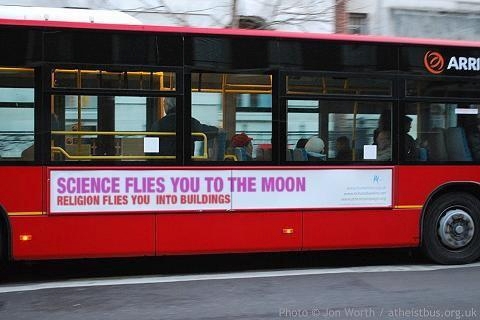
Both science and religion have been obsessed with the unseen. Science seeks to peer ever deeper into reality with more and more powerful instruments, from the Hubble telescope to the electron microscope. Religion looks for the underlying meaning of it all through its tools of Holy Scripture and myth. But both science and religion fail to recognize that the underpinnings of reality are not only unseen, but that they cannot be seen. That which generates and sustains all that is seen and unseen is itself unseeable. 

Normally, we think of that which is unseen as that which is too small (or too large) to be seen by the naked eye or even the extensions of the eye, such as telescopes and microscopes. But what about those things which cannot be seen at all and yet play a causal role in all that exists?

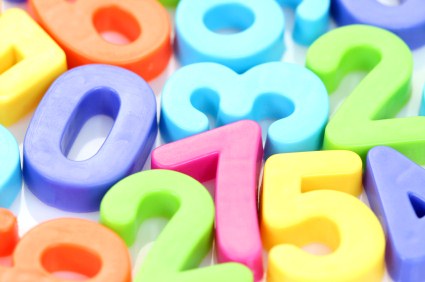
An easy example of this is numbers. We are all familiar with the numbers zero through nine. We know what they look like:

0  1  2  3  4  5  6  7  8  9

But do we know what they are. They are symbols, after all. So, what do the symbols represent?

The number 4, for instance, is normally thought of as 1+1+1+1. Four things. But can we recognize that this is the materialistic understanding of the number 4? Can we see that four things lumped together is 4’s most rudimentary expression? Are we capable of understanding 4 as a principle?

We know that 4 shows up in mythology. There are the Four Directions, the Cube of Space, the Cross of Christianity, etc., so we know that the Ancients understood this concept. But can we?

In science, we recognize the principle of 4 in molecules, in polarity, in wave forms such as light and sound, in the shape of spiral galaxies, etc., but do we see that all of these are manifestations of an underlying principle, or do we regard them as mechanistic outcomes of blind “natural” forces?

To understand 4, we have to understand four-ness. Four-ness is a principle, and as such it is absolutely intangible. It is not only unseen, it is unseeable. Is this the realm of metaphysics? I don’t think so. At least, it shouldn’t be. Rather, it is science yet-to-be. It is religion yet-to-be.

Science is loathe to go here, because principles such as these, which could probably be more accurately described as archetypes, cannot be examined apart from their manifest expressions. They cannot be separated out and studied in a lab. The only place they can be examined is in one’s own thinking, and are therefore philosophical considerations, not legitimate topics for scientific inquiry.

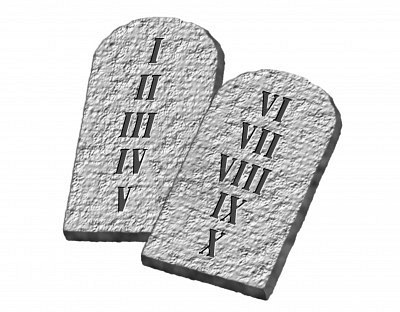
why ten?

Religion doesn’t want to go here either, because it’s just too dry and impersonal. Mention numbers, and most religionists think of either science or numerology – both foreign territories to them. They know that there are lots of references to numbers in the Bible and other sacred texts, and they know that they probably mean something, but they aren’t sure what. Only God knows, right? After all, God is the one who set the whole thing up. As long as He or She knows what numbers are, we don’t have to worry about it.

However, this is the mindset that forced science into polar opposition to religion. Scientists emphatically reject this notion of pious “innocence.” But at the same time, they have painted themselves into a corner that prevents them from considering first principles. For them, nothing is unseen. But the principles I’m talking about are to them merely elements of abstract reasoning. They have no existence in and of themselves, only as products of the human mind and therefore cannot have any causal relationship to reality. “Four-ness” does not exist, except in the imagination. The interrelationships among the numbers 0 through 9 are only the outworkings of logic, not the fundamental fabric of reality.

missing the point

Until we can make room in our thinking for existence to include the absolutely intangible, such as four-ness, and regard these “things” as powerful, active, creative causes in our universe, science will be lame, and religion will be blind, as Albert Einstein said. And since science and religion are the two forces vying for supremacy in our society today, do we really want one to win out over the other? Or do we want them both to wake up and partner up for a better world? This is not impossible. Neither is it probable. But it is essential to our survival. We have to take both science and religion to the next level, and we have to do it quickly. Otherwise, their little turf war is going to tear this planet apart.

Posted in Lessons | 2 Comments

Spiritual Basics

In spiritual work, you want to first go for control – your mind, your emotions, your speech, your actions. This is the primary goal of religious discipline.

In today’s world, that discipline can take forms most suited to your lifestyle. In other words, you can live your life pretty much any way you want, as long as you do it with integrity and without harming anyone.

But control is the main concern. Why? Consider a slow-moving airplane, like a single-engine two-seater with a top speed of 150 mph. The wings are large, the tail rudder is prominent, the landing gear is fixed and hangs below the fuselage. Everything is designed for easy flying at low altitudes and at low speeds. But, if you were to strap jet engines to the wings of this plane, it wouldn’t even survive the acceleration of takeoff. Jet planes, on the other hand, have small wings and control surfaces. At speeds of hundreds or even thousands of mph, small moves get big results.

The same principle applies in spiritual work. Meditation and spiritual exercises can boost the energy in your body in subtle but powerful ways. Your thoughts will manifest quickly. So the rules are pretty specific: make your actions, your words, and your thoughts positive and uplifting.

Never ask God to hurt you, break you, or punish you. There will be plenty of that in the normal give and take of life. No need to force the issue.

Don’t give energy to any negative or “evil” psychic forces; they only have the power you give to them.

Those who talk a lot about karma like to see other people pay for their sins. They vicariously take pleasure in seeing people suffer. This is a completely manmade concept. God does not punish. Ever.

If you feel psychic energy pressing on you, it is in all likelihood simply a buildup of forces in your atmosphere due to the normal imbalances that can occur in daily life. These are similar to static electricity or pressure differentials of various kinds, like in water containers or air pressure tanks. When something is out of balance, you have to find a way to restore equilibrium. It’s better to do it consciously and deliberately than to have it happen by “accident.”

Whenever you feel an uncomfortable energy buildup, all you have to do is offer it up to God. Reach up in your mind and form a connection between you and the Cosmos. You will know when it works by the flow of energy you will feel. Alternatively, you can reach into the earth, or even literally touch the earth, or a tree, and direct the energy that way. Either method will “ground” you and dissipate the buildup.

Sometimes, these energies are more subtle, more to do with patterns in your thinking or something you’re doing repeatedly that’s causing the problem. This can require deliberate acts of restraint, or counter-actions on your part, patterns that are opposite to the ones you have fostered. In religious terms, such actions are called tapas or penance. Jesus referred to them as “prayer and fasting.”

But while the religious terms can evoke a certain sanctity, one should never forget the simple laws of nature (physics) that underlie these phenomena. It’s just energy.

While we want to receive guidance from God, it is we who must make the decisions. People who give themselves completely to subtle forces “telling” them what to do usually wind up in an institution. Instead, set the course YOU want to follow, and then be sensitive to God’s light hand on the tiller. The reason for this is that only the actions you initiate of your own freewill will add credit to your soul. It’s what we do willingly and consciously that counts. We don’t get to heaven by living our life as though it were a Ouija board.

There is a book that I think would be helpful for you to read. It’s called The Golden Force, and you can buy it on the Science of Man website. It talks about your personal atmosphere and how to work with it. This is indispensable knowledge you should acquire.

Posted in Lessons | Leave a comment

Automatic Meditation

Sounds appealing, doesn’t it –  automatic meditation –  as though you don’t have to do anything, as if you could pay someone to do your meditating for you. The other day, I took my car to Lubes R Us, and they talked me into an engine cleaner. It came in a can, this weird looking stuff they pour into the oil spout and then let the engine run. The lube guy warned me that a plume of black smoke would bellow out of the tail pipe, but that this was “proof” that the cleaner was working. I was only too happy to believe him. When it happened, I felt comforted that the treatment was doing its job – soot and grime that could not be scrubbed out by hand was being automatically and effortlessly purged. I felt like a new man.

If only there were a similar product for our brain, something you could pour into the top of your head and then just let your thoughts idle along, while black smoke would pour out of your ears. Whatever had built up inside would get flushed out, and you would feel renewed, fresh, and ready to think clearly about anything and everything. Wouldn’t that be great.

My little fantasy at the lube place was fueled by a new approach I had been taking in my meditation, a method I had stumbled upon while wondering if the way I had been meditating was doing me any good. It occurred to me that if the body, left to its own devices, will heal itself under ordinary circumstances, shouldn’t the mind be able to do the same thing? You know, kick it into neutral and let it hum along without any interference on my part. I decided to give it a try.

The first thing I noticed was that thoughts arise on their own in a random way – thoughts out of nowhere without any provocation from me. These thoughts seem unimportant, like chatter in the background. But then they show evidence of some sort of conflict, as though they are struggling to resolve themselves by finding the right connection with some other thought. But then I realized that there are no other thoughts to which they can connect, that these are truly thought fragments loaded with an electrical charge but having no way to complete their circuit. They press on the surface of my awareness but without a useful purpose. They just roll around creating a lot of static.

Mental junk.

So, I began to observe each thought that popped up: oh, this one is about work; it feels like insecurity. This one is about bills that are due; it feels like worry. This one is about a commercial I saw; it feels like want. Whatever the thought, all I did was to identify it and let it go. That alone was enough to take the charge off of it. One by one, the thoughts dissipated into nothingness, and they were gone.

This made me wonder why these thought fragments don’t just bubble to the surface and dispel themselves. Why do they tend to persist? Why do they collect like so much mental sludge requiring deep cleaning? By watching my own reaction to them, I discovered that I was giving them life. If the thought felt like worry, affirming the worry kept the thought intact. Acknowledging it rather than identifying it and letting it go just added more energy to it. Instead of thinking, “This is a thought about money that feels like worry,” I was thinking, “My electric bill is past due!” Instead of dissipating, the thought would sink back down into sub-consciousness, from which it would of necessity reemerge the next time I tried to relax.

Glibly saying, “I am not my thoughts,” does little to keep us from identifying with them. It takes a certain amount of practice to step back from the roiling surface of our mind and see the flotsam for what it is – junk thoughts. There is a difference between identifying a thought, which is a way of canceling its electrical charge, and investing it with new life by taking it personally. One is an impersonal response, the other is an emotional reaction. We have to take the observer role, if we are to separate ourselves from the attachment these thought fragments seem to demand. Even if the thought is about something real in your life, something that is actually threatening your wellbeing, you have to be able to look at it and say, “This is a fear thought,” and then let it pass up and out.

I’m not saying that this is the only way to meditate, because it certainly isn’t. But it is a regimen of routine maintenance. It’s something we all have to do, pretty much on a daily basis. When it becomes an automatic part of our way of functioning, we will be able to spot problem thoughts when they occur, dispel them immediately, and find an equanimity in our life that was previously impossible to attain.

Posted in Lessons | 2 Comments

Meditation

.

Like the ocean, consciousness is both wide and deep and filled with life.

Meditation is the intentional appreciation of the vast width, depth, and aliveness that consciousness is.

There is nothing we can add to it that it doesn’t already have.

Our task (if you can call it a task) is to discover what is there, both under the surface and beyond the horizon, and to let its content wash over us.

We came from this ocean of consciousness, and to it we will return.

It is the great Mother of God.

.

.

.

Posted in Lessons | Leave a comment

One Mind

.

The intelligence of nature is in its interconnections – its thoughts are the currents of life.

Life evolves. It goes into itself and out of itself, exploring its own possibilities. It is always in balance but never at rest. It is dynamic. Therefore, only those who are dynamically alive can know it.

Wisdom is knowing that the mind is larger than the brain. When we hang onto what we know, we disconnect from the One Mind. Wisdom is not “knowing.”

.

.

.


Posted in Lessons | Leave a comment

Astrology


.

.

The solar system only seems large.

Its material is the inverse reflection of our inmost thought – our first thought.

Smaller than an atom, it is truly big.

We made the solar system, and then the solar system made us.

Knowing this is the beginning of peace.

The planets and the stars are within us more than they are “out there.”

.

.

.

.

.

Posted in Lessons | 1 Comment