

by Michael Maciel
The word “vow” seems antiquated, doesn’t it? It sounds so monastic, so religious, so restrictive. In my book, The Five Vows, I tried to develop the idea that vows, unlike the negative baggage they’re burdened with, are really more like states of consciousness. Instead of “taking” the vow of service, why not think of it as entering into the consciousness of service?
Entering into the consciousness of something presupposes a couple of things. One, the thing you’re entering into exists somehow independently of you and in some sense outside of you. This idea of an externality doesn’t sit well with most people, because we like to think that all things spiritual already reside within us and all we have to do is realize their presence and let them do their transformative work. But, while that might be technically true, it doesn’t really motivate us to move in that direction, whether inward or outward.
Two, it presupposes that the state of consciousness we’re aspiring to is larger than we are, that it is transcendent to our current state of being. This is very helpful because we all like something good and noble to shoot for, preferably something that is slightly out of our reach. It’s how we’re built—we naturally want to aim high. So, if we think we already have what we’re seeking, we don’t really try very hard. Plus, if we have any ambivalent feelings towards ourselves to begin with (and many people do), then why would we want something that’s part of us, flawed as we are?
No, there are very good reasons why we want to reach up and go for that which is truly greater—in every way—than we are. After all, if we were satisfied with ourselves just the way we are, why would we aspire to anything at all?
Entering into the consciousness of service has broader implications than you might think. Normally, we think of it as doing certain acts, such as volunteer work or giving money to the needy. But there are simpler, more integrative ways to live a life of service. Let’s look at one of them:
The consciousness of service is like a check valve in a pressurized water system. A check valve has a spring-loaded gate that only allows the water in a pipe to flow in one direction. Now, we all know that giving everything of ourselves all the time can’t be good for us, because we have needs, too, right? We have to take care of ourselves while we’re taking care of others, because if we don’t, we will burn out. Then no one is served.
But…WHILE we are giving to others, we want our energy to be a hundred percent giving with no thought of getting something in return. This is actually what Jesus meant when he said, “Don’t let the left hand know what the right hand is doing.” The ancient religion of Hinduism was already three thousand years old when Jesus came on the scene, and you can bet that he knew their teachings, including the one that says that the right hand is the hand of giving and the left hand is the hand of receiving. There are mudras (ritual hand gestures) that were well-known in that part of the world in Jesus’ day and they found their way into his teachings, as in “Sit, thou, at my right hand.”
So, the consciousness of service is a pure state of consciousness WHEN you are in the act of serving other people. It is an unconflicted state. There are no misgivings, no doubts on your part. You’re all in, not trying to take something out. The way you can tell if you’re capable of such purity in the act of giving is to observe whether you resist having others give to you. An experiment once showed that when strangers on the sidewalk were randomly offered a five dollar bill, most refused to take it. Why? Who knows. Maybe they were afraid there were strings attached. How many ways are people trying to hand you something of value and you turn them down? It’s worth thinking about.
Here’s the broader sense of entering into the consciousness of service. We all know the feeling of having to get up and go to work at the crack of dawn. It’s not good, not usually. We feel enslaved to our job and we feel crushed by our culture. Conformity, not money, can feel like the root of all evil. We are oppressed by it. People have expectations, and unless we live up to them, at least a little, they will make our lives a living hell.
But that’s what cultures do, isn’t it? They always have, regardless of when or where. What we don’t realize is that while our culture is hammering us into plowshares, it is also supporting us in ways that we inevitably take for granted. Life may be hard, but it is nowhere near as hard as it has been historically for humanity as a whole. Historically speaking, we live better than royalty did just two hundred years ago. By a LONG shot. We live longer, eat better, have more entertainment, more options for education, better health care, AND we have NOVOCAINE! Let us never forget that! It used to be that people tried to get rid of their teeth as soon as possible because they were nothing but a curse. The sooner they were gone, the better.
So, one of the easiest ways we can enter into the consciousness of service is to simply show up. Be a good person. Be a reliable person. Pay your bills. Pay your taxes. Drive safely. Obey the laws. Don’t steal. Don’t lie. Be responsible. Contribute to the civility of the society in which you live. Develop a skill and use it to be a productive, contributing member of your culture. It has so much to offer you.
Sure, it may act like a judgmental father, it might feel like it’s watching every move you make, it might even penalize you when you make a mistake, but by and large, it WILL help you survive. And if you go along with its program (the parts that work), it will help you survive quite well, better than you could ever manage on your own out in the wilderness struggling to stay warm while you fend off wild animals.
The consciousness of service can simply be letting go of resisting contributing to your society in ways that make it better. Because when YOU are better, society is better. But when you get pathological—when you start to lie, to cheat, and steal—you not only take yourself down, you take everyone else down with you. Instead, be a good person. Show up. The world depends on it.




 A man, on the other hand, cannot duplicate himself except by impregnating a woman. His mind, therefore, is not prone to submit to his body but to hunt for someone who will. And in order to be the first to find her, he must learn to plan and to strengthen his will so that he can execute his plan. He learns to present himself so that he will be more desirable to her than all the other males who are also seeking her. He learns to strategize. He learns to fight off contenders. And like any good hunter, he perfects his aim. He learns to narrow his focus and to stay on target. He doesn’t know this consciously, but his body does. His body needs to procreate as much as it needs to breathe—only the tempo differs. And he is willing to die to achieve his goal.


 Within this symbolic method of storytelling, male characters represent the conscious mind, whereas female characters represent the subconscious mind. This is part of the basic framework of Tarot symbology, as we are all well aware of. Nothing new here. What isn’t so obvious is the WHY part—why are male characters used to symbolize the conscious mind, and why are female characters used to symbolize the subconscious mind?
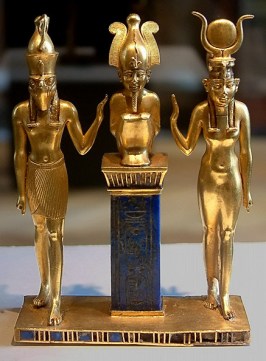 Reasonable assumption: this framework, this grand symbolic narrative, describes an aspect of psychology that is SUBTLE, meaning that it’s not obvious, nor is it understood to the extent that we can adequately articulate what we know about it.



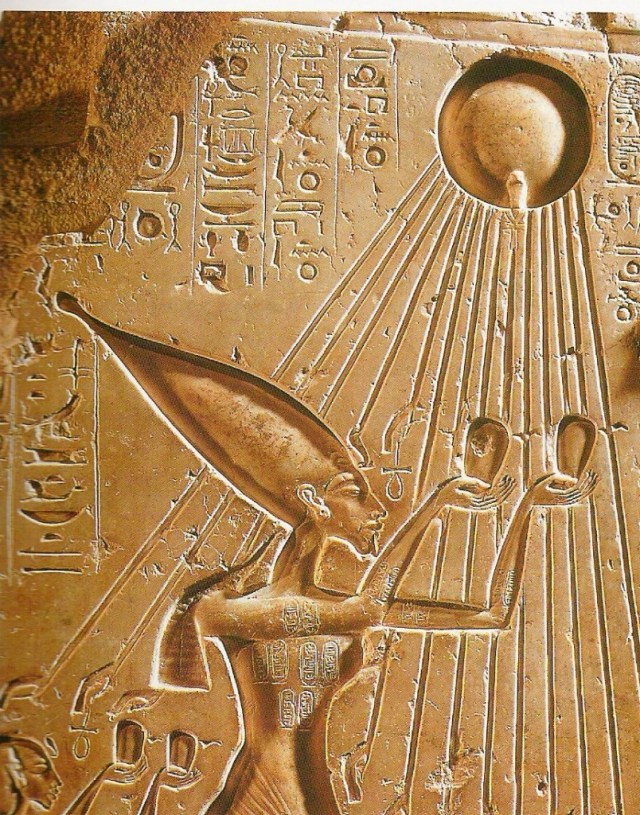
 We now know that nearly everything in the universe shares this basic architecture – a central point around which rotates a coherent structure. Galaxies, solar systems, cyclonic storms, vortex streets, cells, atoms – all of these are essentially identical in their appearance. And it’s not as though the form itself is the most real aspect but rather that it reveals the forces that cause the form to show itself. It’s as though whenever anything moves in this universe, it starts to spin.
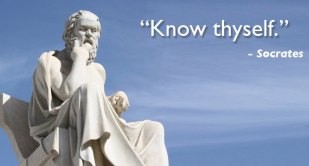 Then there’s the ancient maxim “Man, Know Thyself.” This little bit of instruction didn’t spring unbidden out of thin air. It was the answer to more fundamental questions: Who am I? Where did I come from? Where am I going? In other words, what is God? What is the nature of reality? What is human being? The answers to all of these questions were contained within this one symbol. The implication of it was pointed at in yet another saying: As Above, So Below. This was the idea of the scalability of Being. No matter how small or how large the scale, reality is the same. And this remains true for us as human beings, as well. Whether we see ourselves as individuals or as social beings, our lives follow certain patterns, and these patterns are true in the moment, the day, the year, and an entire lifetime. In other words, our lives are cyclical, and the cycles seem to repeat themselves over time.
 The Mystical Christ