Consciousness—a direct experience

veil2

by Michael Maciel

One of the problems that I see with most discussions about consciousness is that they tend to analyze it in terms of content, not consciousness as such.

Hofstadter, if I’m understanding him correctly, seems to want to classify consciousness as an emergent phenomenon formed by a web of self-referential experiences, like a hall of mirrors. I can understand that, because at a certain level, that’s what it is. But underlying this effect is consciousness as such, and THAT is entirely devoid of content.

Most people cannot fathom such a concept. The same people use the word “life” in a similar way—”My life is comprised of my circumstances, my memories, and the way I see the world.” In other words, my content. They cannot see life as anything deeper than chemical reactions, which is ironic because no one, not even the most cutting-edge scientists, have the slightest idea what life is. Life as such and consciousness as such are opaque mysteries to science and might remain so forever.

Tip of the Iceberg

I have become convinced as a result of my own inner investigations that the greater part of who (and what) we are is unknown and profoundly invisible. As the physicist, J. B. S. Haldane said, “I have no doubt that in reality the future will be vastly more surprising than anything I can imagine. Now my own suspicion is that the Universe is not only queerer than we suppose, but queerer than we can suppose,” the emphasis being on the word “can.” Like an iceberg, the bulk of our being lies below the threshold of our awareness.

This is not to say that this invisible part of us plays no part in the way our life unfolds. In fact, its role is central to everything we know and do. The only way to access it is to simply recognize that it is there. Such knowing, which religionists call “faith,” opens a channel for the influence of this “ground of being” to make itself known to us, if only in brief flashes of insights, most of which are ineffable.

This unknown and unknowable part nonetheless continually breathes the breath of life into us, a life that is purely qualitative, not quantitative. And that life seems to have a will of its own, a purpose and direction but, again, not in terms of content but in spirit. Religionists call this the “will of God.”

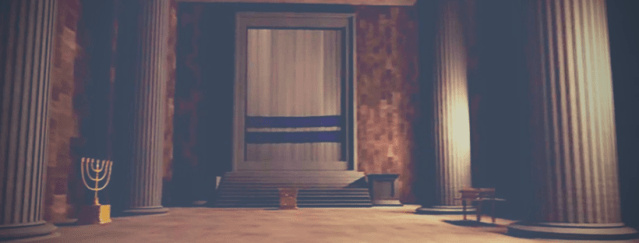
The most salient fact about this unknown, unknowable part is that the deeper we dive into it, the more universal and less personal it becomes. It’s an existential common ground from which we all derive our sense of self, even though what we sense is beyond our capacity to describe, much less define. But we can feel it. It looms in the background of our awareness as though behind a curtain—a veil—figuratively represented by the curtain separating from view the Holy of Holies in the Temple at Jerusalem.

TabernacleVEIL

That’s the thing about curtains—you know something’s going on behind them, and sometimes you can even hear it. But only the “High Priest” part of us can go in there, and then only “once a year,” an allusion to the timelessness of our most exalted states and the causal role those states play in the way our lives unfold in the realm of ordinary consciousness.

I suspect that many of the things we do not understand, such as the underlying structure of language, as Noam Chomsky talks about, and the sense of beauty, humor, and the affinity we feel with the cosmos, not only originate in the unknown, unknowable part of us but carry with them a kind of mandate, a prescribed trajectory that we must follow, one that is specific in outcome but infinite in modes of expression. It’s as though this breath of life, this river of living waters, to use metaphors from the Old and New Testaments, contains everything that is—the “All in each.”

But it’s most fundamental aspect is what can only be described as Personhood. It’s not merely mechanical. It’s not a what but a who. We know this because when we catch a glimpse of it, we have the undeniable sense that something is looking back. When we speak to it, we know we’re being heard. It’s not some kind of cosmic AI, but a living being, one that responds to our being directly and intimately. Religionists call this part of the experience the “love of God.”

Such an experience is WAY beyond our mind’s capacity to understand. The lesser cannot comprehend the greater. This is why sages and gurus tell us to quiet the mind, to still our thoughts, and to empty our awareness of all content. “Neti, neti—not this, not that.” They tell us to go deeper and deeper within, to turn away from our senses, and to turn awareness back upon itself devoid of content, and to let the experience change us, which it unfailingly does, even though we have no idea how.

To do this requires a different kind of language—a language of being, not of doing. Neither will a language of feeling, such as poetry, get us there. It might, however, if it’s entirely honest, cause the intellect to stand down, thus opening up our awareness of being Itself.

So, while intellectual discussions and poetic delvings about the nature of consciousness and its origins are interesting, they cannot substitute for the experience of an authentic inward journey, the ticket for which has an exacting price—everything. All content must be handed over at the gate. Even the slightest attachment holds us back. We have to embrace the aphorism—Let go and let God—absolutely. No half-measures will do. Unless our heart is lighter than a feather, we will be sent back to the circumstances of our lives to once again attempt to achieve escape velocity from the gravity of our mundane existence.

weighing-of-the-heart

Posted in Lessons | 3 Comments

The Ins and Outs of Consciousness

consciousness

by Michael Maciel

One of the reasons why we sometimes find it hard to connect with the consciousness of others is that we tend to think of it more in terms of content than as a thing in and of itself. Even our own consciousness can slip into that paradigm, as far as we’re concerned. But when we are able to see it as it is—without content and unbounded by space and time—then our fellow conscious beings begin to show up in an entirely different light. It becomes increasingly difficult to distinguish them from us. Then we can start to get a glimpse inside the mind of the person we’re interacting with, because essentially we are the same person. We just have two sets of eyes operating in two separate bodies.
 
This is what makes humor possible, by the way. You might say that the reason something is funny is that it exposes an unrecognized connection between people. When we give voice to the thoughts that arise spontaneously from the unconscious, people are delighted because the same thoughts are arising (or trying to arise) in them. Speaking those thoughts causes theirs to burst through the surface of their awareness, and they laugh. Laughter has a kind of effervescent quality to it, does it not? It fizzes like bubbles.
 
One thing we can say about consciousness is that it is AWAKE—wide awake. And as such, it does not impose itself upon the objects of its awareness. It simply takes them in. It’s very receptive in that way. The more we focus on this aspect of it, the quieter our minds become, because we’re focused on the receptivity, not the content. Content, after all, is subject to our interpretation, which forms a buffer between us and the thing we’re looking at. But strip away the interpretation, and we begin to perceive the thing directly, which is quite different from the way we normally see it.
 
It’s the content-free aspect of consciousness that makes us children of God—pure, unadulterated awareness. Within that state of mind, all things are possible, because consciousness—pure consciousness—has the power to evoke the thing that makes us divine, namely our ability to bring ideas into material form. We are created in God’s image, and God, more than anything else, is a creator.
 
But when the contents of mind start to outweigh the mind’s open receptivity, we cut ourselves off from reality. The world begins to look like a projection, because it is. We take our ideas about the world and paint the world with them. All we can see at that point is our own interpretation, not the world as it is. And when we see the world as it is, the vision can be overwhelming. It can appear unbearably beautiful or horrifically brutal, depending on what we believe about the nature of existence.
 
When we strip our awareness of its contents,  however, which is to say its axiomatic presuppositions, then we are open to everything we’re not seeing. In extreme cases, we might look upon an ordinary, everyday object, something we use regularly and not know what it is. Instead, we begin to see its other aspects, the one’s we ordinarily ignore, the one’s that serve no practical purpose. We begin to see its beauty, which even the most common objects inherently possess by the sheer fact of their existence. When we cease projecting our assumptions upon the world, all things become numinous.
 
Obviously, we can’t do this all the time. If we did, nothing would get done. But we can practice it so that it becomes our default setting, the place we retreat to when our world becomes overburdened by facts. We must, if we are to be truly sane, let the numinous shine out from the world. Otherwise, it becomes too dense, and our soul will start to suffocate.
 
Presuppositions, agendas, facts—these throttle our awareness. It’s not that they aren’t astonishingly useful, it’s just that we must not let them run the show. Consciousness is more than the world. It is more than who we think we are. It transcends us and yet IS us. That’s the paradox. And it’s in paradox that life emerges, like the green shoot of a flower in the cranny of a wall.

Posted in Lessons | Leave a comment

Bringing Light Into the World

dirty hands

by Michael Maciel

Bringing light into the world is a lot like house cleaning. It’s not enough to simply open the windows and air the place out. We have to actually clean up the mess, scrub the floors, and dust the shelves.

That takes will power.

I know that this flies in the face of the idea that we don’t have to DO anything, but we actually do have a role to play in the clean-up. Merely choosing to put our attention on the good is an act of will. And by doing so, we automatically negate the bad. We starve it of energy.

But just as scrubbing a stain out of a rug requires our focused attention, so do the shadows and negative thought patterns of the mass mind require that we know what they are and that they have to go. This, too, is an act of will. It takes work—lots of work—to know the truth.

We have to learn to distinguish between letting go and letting God and pretending that the evil doesn’t exist. It may not be a “thing” in and of itself, but hatred and malevolence aren’t going to magically disappear on their own. They have to be called out and made to stand in the light. Again, will power.

The default setting of the human mind is to descend into the world of matter. That’s what has allowed us to master the physical world, to harness the forces of nature, and to speak habitable order into chaos (the Logos). But it must be balanced with the ascending force of Spirit. In the minds of spiritually conscious beings, the two always go together .

If we are to help and not hinder the process of world transformation, we must not be afraid to get our hands dirty. Understanding the world’s problems is the mental and spiritual equivalent of getting our hands dirty. Cleaning up messes is a filthy job, but someone has to do it. Why not you?

Posted in Lessons | 3 Comments

The Universe as Egg

easter eggs

by Michael Maciel

It must have been amazing for our earliest ancestors to witness a live chick emerge from what was before merely an amorphous goo. It was a high mystery.
Apart from the physical attributes of an egg, the spiritual attributes are far more amazing. Symbolically speaking, the egg is the perfect embodiment of undifferentiated potential—out of nothing, something.
If the universe is an “egg,” as many mythologies claim that it is, then the primary substrate of its existence is, in fact, undifferentiated potential. This is what the quantum physicists have been saying for quite some time now—at the subatomic level, everything is in flux. This is what enables us to use the Law of Mind.
With our imagination, we are able to call forth a particular manifestation from the undifferentiated potential of the Universal Mind, the great creative intelligence we call “God.” Just as we have been able to combine and recombine the raw materials of Earth and thereby create all sorts of things that do not occur naturally, we are also able to combine and recombine thoughts and images for the same purpose. It’s how we have been doing it all along.
As far as we know, we are the only species that looks upon our world as though it were a sea of possibilities and not simply “the way things are.” We see what could be more than we see what is. This is, of course, a blessing and a curse. But it’s been mostly a blessing. We live in better health and longer than ever before in history. In every way, our lives are far better than those of our ancestors, even our most recent ancestors.
It’s up to us to keep our perspective straight, to focus on making the world and ourselves the best that we can be.

“When life itself seems lunatic, who knows where madness lies? Perhaps to be too practical is madness. To surrender dreams — this may be madness. Too much sanity may be madness — and maddest of all: to see life as it is, and not as it should be!”

― Miguel de Cervantes Saavedra, Don Quixote

Posted in Lessons | Leave a comment

More About Easter

suffering

by Michael Maciel

“I teach suffering, its origin, cessation, and path. That’s all I teach.” – Buddha
Sometimes, the best way to understand your religion is by understanding someone else’s. Because if it’s universal truths we’re talking about, then those truths will show up everywhere. No one has the corner on the market when it comes to truth.

Easter is the highest holy day in Christianity. Within its symbolism, all of Christ’s teachings can be found in a single story. But to understand those teachings, it is first necessary to see yourself in Christ’s shoes. The story of Jesus is the story of us.

This, of course, is only one level of analysis. But, it’s an important level, because it’s the one that enables us to grow spiritually. After all, he did say, “Follow me.” The inconvenient truth is that he meant that we should follow him all the way to Calvary.

It’s obvious, however, that this doesn’t mean that we should actually be crucified. Perhaps the word “follow” also means, aside from doing what he did, that we should look at the patterns of his life, as though they were a map, a map that describes the movement from ordinary consciousness to divine consciousness.

Unless we believe that the only reason to get spiritual is so that we can enjoy a heavenly afterlife, we have to admit that how we live in the world is as important as how we live in our hearts, that Jesus’ teachings are every bit as much about life in this world as they are about life in the next.

And the fundamental truth about life, as Buddha so wisely pointed out, is that we are going to suffer and die. Nothing new there, right? How then are we to consider this as wisdom? Seems more like a mundane fact, not a spiritual truth.

But, if it is indeed wisdom, then it must hold a deeper truth, one that is practical on every level, including our understanding of the nature of the world. What does it really mean, then, that we are going to suffer and die? And what is Jesus trying to teach us by mapping out in excruciating detail his (and our) journey from cradle to grave?

Is Jesus, like Buddha, trying to show us how to reduce our suffering? Is there wisdom embedded in the story of his suffering and death, a higher understanding of the nature of this world? Well, it would hardly be a wisdom teaching if there wasn’t. We can rightly expect that whatever that teaching is, it holds the answer to, well…everything.

So, what is it?

The truth that life on Earth is bounded by suffering and death is telling us that this is somehow an integral part of the structure of reality. No one is doing it to us. It’s just how it is. Everyone, no matter how rich or poor, is subject to this brutal curriculum. As the saying goes, “No one gets out of here alive.”

When we really grasp this about nature, it makes world peace possible, because when we realize that suffering and death are an integral part of life, then it’s hard to take it personally. In other words, it’s nobody’s fault. Even if someone deliberately hurts us, it’s not them that’s doing the hurting. Hurting is going to happen whether they do it or someone else. “It’s not personal; it’s just business.”

Therefore, we can’t blame them. They aren’t perpetrating violence, they are simply participating in it. Why would anyone do that? Because they, like us, more often than not, believe that someone else is causing their suffering, instead of knowing that suffering is a natural feature that besets everyone. They, as do we, want someone else to blame.

It’s as though we lived in Seattle and blamed the local government for all the rain. But, hey, it rains in Seattle. That’s simply what happens there. It’s no one’s fault. No one is purposely setting out to ruin our parade. We’re not being victimized by anyone. When we live in Seattle, the fundamental truth of reality is that rain happens.

The same can be said about this physical plane of reality that we all inhabit—if you’re here, you’re going to suffer. Period. What does it matter, then, if someone else appears to be causing it? You might as well blame them for breathing! Because, if you’re in a physical body, you’re going to cause suffering to someone or some thing. It’s as inevitable as rain.

What’s the takeaway? Stop blaming other people for your problems. It’s nobody’s fault that suffering is an unavoidable fact of life. Does this mean that when we deliberately cause suffering that we’re off the hook, that we aren’t accountable for our actions? Of course not. “Woe unto the world because of offenses! For it must needs be that offenses come; but woe to that man by whom the offense cometh!”

We hurt ourselves when we hurt others. But why would we hurt them if we didn’t first believe that they hurt us? Believing that we are victims, then, creates the sense we have that there are evil people in the world. They’re not evil; they just believe that they, too, are victims and that it’s your fault, the same as you believe about them.

We are not victims; we are simply alive. If anyone is a victim, then all of us are victims. To be here is to be a victim, a victim of a finite and fragile life. It’s nobody’s fault. It’s just how it is. When we believe that someone is evil in and of themselves, then we perpetuate…no…we create the evil we see. This is how the cycle of violence continues.

When we know this about the world, we can then set about reducing the effects of suffering altogether. But we can never fully eliminate it. Why, then, blame others for our problems? The best we can do is bear up nobly under the circumstances. If we know we live in Seattle, we buy a raincoat to protect us from the rain. When we understand that suffering is an integral part of life, our understanding will keep us from going insane.

Posted in Lessons | 1 Comment

Control vs. Going With the Flow

arrow

by Michael Maciel

You either control your own destiny or you let others control it for you.

Does the word “control” bother you? Sounds like hubris, doesn’t it, as if we have any say over what the universe does or doesn’t do. But, what’s the alternative? Going with the flow doesn’t seem to work, not when we’re in turbulent waters—our lives hardly resemble a slow-moving stream. They’re more like white water rapids punctuated by waterfalls and unexpected tributaries, some of which are dead ends. Going with the flow can be a pipe dream, can it not?

The only time going with the flow makes sense is when we set our sights on a goal and then hand it over to God to direct us to it according to divine wisdom and right action. But unless we aim at something, there is no flow, only chaos.

The word “sin” comes from a Greek word, “harmartia.” Webster’s Dictionary defines it thus:

“Harmartia arose from the Greek verb hamartanein, meaning ‘to miss the mark’ or ‘to err.’ Aristotle introduced the term in the Poetics to describe the error of judgment which ultimately brings about the tragic hero’s downfall. As you can imagine, the word is most often found in literary criticism. However, news writers occasionally employ the word when discussing the unexplainable misfortune or missteps of übercelebrities regarded as immortal gods and goddesses before being felled by their own shortcomings.”

Perhaps the biggest mistake is to aim at nothing at all but rather to drift through life “going with the flow.” It’s very easy to get lost when we don’t know where we’re going. And knowing where we’re going is key to our success, both materially and spiritually. But knowing where we’re going is also problematic because we don’t always know. Aiming too high often leads to disappointment and despair, and aiming too low quickly leads to either overconfidence or boredom or both. How do we know what to aim for? The answer is we don’t. But just as some writers are blocked from writing a novel because of the sheer enormity of the project, so can we get discouraged if we think we have to get it right the first time.

The reality of goal-setting is that as we progress towards the thing we’re aiming at, the scenery changes. The topography of our understanding begins to reveal itself in unexpected ways. So, we have to adjust our course. We might start off in an inappropriate direction, but, as it turns out, that doesn’t matter nearly as much as simply getting started. Ever try to turn the steering wheel of a parked car that doesn’t have power steering? It’s nearly impossible. But get the car moving, even a little bit, and steering it becomes a lot easier. So, if you’re stuck, it doesn’t really matter which way you point yourself. Any direction will do. The point is to get in motion. Once you’re moving, it’s easy to change direction.

Let’s say you own a company and someone comes in and asks for a job. You ask them, “What can you do?” How the person answers will determine whether you hire them, right? Well, the same goes for asking God, “God, what is your will for me? What should I do with my life?” And God answers, “What can you do?” Or, maybe it’s “What do you want to do?” How you answer will determine whether your life is successful or not. Besides, how can it be successful if you don’t have a direction, a goal? What does success mean in the absence of a purpose? Nothing. So, God needs you to have a direction, one that comes from within you, not persuaded from without, one that comes straight out of your soul, before God can help you. That’s the deal. That’s how we grow spiritually. If we can’t come up with a meaningful goal for ourselves, we will have to suffer through a lot of random circumstances until we get tired of bumping into things, making one mistake after another. Establish a direction—any direction—and the universe kicks into gear. It wants nothing more than for us to succeed. That is, by definition, the love of God.

But what if you don’t know what you want? Maybe you want a lot of things and they’re not all that compatible. This is really not a dilemma. All you have to do is ask yourself not what you want but what you LOVE. That is what you actually want, whether you acknowledge it or not. We must all be true to our first love. And by “first,” I don’t necessarily mean what came first in your life but what comes up first when you ask yourself, “What do I love?” That’s your first love. And asking the question in this way also lets us avoid having to decide whether our wants are merely our base desires, the needs and addictions of the body. I mean, it’s pointless to ask a crack cocaine addict what he wants, right? You’ll get the same answer every time. The heart, however, the keeper and recorder of your first love, is above the needs and addictions of the body. It registers the desires of the soul. And, it’s never wrong, not when it comes to that. No amount of reasoning or justification can override it. Your first love may atrophy over long periods of time if you ignore it, but it will blossom if it’s exercised in the full light of day.

We must all be very serious about being true to our first love. It’s the one thing that we will have to account for when we die. Were we true to it, or did we waste our time pursuing someone else’s agenda? This is an all-important question, one we need to revisit frequently if our lives are to have meaning—in a cosmic sense, that is.

Posted in Lessons | Leave a comment

Lenten Meditations—Week 1


queenofheaven


Thursday:

FOR THE EARTH IS NOW IN THE ASHES OF RUIN, THE SINS COMMITTED SINCE OUR LORD JESUS CHRIST WAS ON EARTH IN A HUMAN BODY.

THE RENAISSANCE OF WAR AND PESTILENCE AND UNBELIEF. O FATHER, WE LOOK FORWARD TO THE FULLNESS OF THE ATONEMENT THAT THE LORD WILL OBTAIN FOR US, AS WE AGAIN GO THROUGH THE GREAT REALITY OF THE JOURNEY TO CALVARY.

Friday:

WE LOOK NOW UPON THE GREATNESS OF THE WORLD, CREATION OF GOD THE FATHER.

WE LOOK OUT UPON THE UNIVERSE WITH EYES UNBLINKING AND FACES UNBLANCHED.

TO IGNORE TRUTH NO LONGER, AND FEAR NO FACT.

WE ARE READY AT ALL TIMES TO RECAST ALL OUR OPINIONS TO THE GLORY OF GOD.

WE ARE READY TO ENTER THE CRUCIBLE OF PURIFICATION TO EXPERIENCE NEW GIFTS OF THE SPIRIT.

NOT BUILDING HOPE ON HOPE ALONE, BUT HOPE ON A FIRMER FOUNDATION.

Saturday:

TO FORGIVE WITHOUT SEEKING FORGIVENESS, TO LOVE AND KEEP AFFECTION IN THE FACE OF MISUNDERSTANDING, I VOW TO SET MY THOUGHTS UPON THINGS I VALUE AND SPEND MY STRENGTH IN THE FULFILLMENT OF NOBLE PURPOSE, TO REVERENCE THE REVERENCES OF OTHERS RATHER THAN WHAT THEY REVERE.

Sunday:

MAY THE FAITH THAT MAKES FAITHFUL, THE HOPE THAT ENDURES AND THE LOVE THAT TRIUMPHS, BE WITH US ALWAYS. AMEN, AMEN, AMEN.

Posted in Lessons | Leave a comment

Daily Meditations for a Mystical Lent

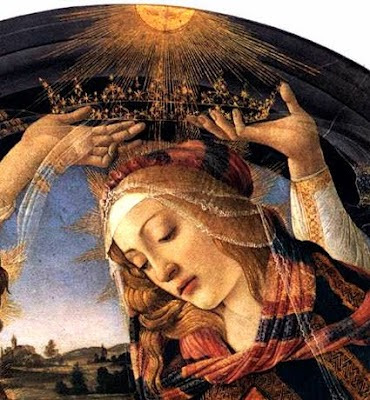
de318-8_22_botticelli_queenship

Lent is the time of the Solar Year that leads up to the Spring Equinox, when the spiritual body of the Earth begins to slough off the accumulated negativity of the previous year in preparation for the influx of the resurrected Christ energy, the great impulse of the spiritual life force as it is given once again by the Solar Christos, the Son/Sun of God.

It is a time of purification and sacrifice, wherein old patterns of behavior, ways of thinking, and emotional reactions come up for review, are judged, and then integrated into consciousness, lest they continue for another cycle and become even more entrenched in our way of being.

The following meditations are designed to facilitate this process of spiritual renewal.

Each morning, meditate on the following:

“O glorious Father, reveal within me the mystery of our Holy Mother Mary.”

And at noon every day, meditate on this:

“O Thou great Master Jesus—channel of light.”
Mary is our connection to the Great Mother, the Divine Feminine, the Womb Consciousness out of which all life comes.

Each of us carries within us the memory of the time we spent in our mother’s womb, when we slipped in and out of the pure bliss of God consciousness and slowly became aware of our new physical existence. This process takes many weeks until finally the silver cord that connects spirit and body become fully formed, and we await the moment of our birth when the connection is made complete.

To connect with Mary is to reenter that state of womb consciousness, where all we had were the memories of our soul, our personalized portion of the Akasha that travels with us from life to life. It is on the soul that the essence of all of our life experience is recorded—the patterns that not only determine the quality of our character but also the basic functions of our human body.

It is here in this ever-active source of intelligence that we now turn our attention, knowing that all of our willfulness and misconceptions, our prejudices and reactive emotional patterns, our habits of mind and attention will now come up for review. It is what we will go through when we die, only now we are doing it consciously and deliberately while we are still alive, and we do it each year during this period we call Lent.

The proper attitude as we enter these dark chambers of our inner being is one of remorse, not because we are inherently sinful but because we have made mistakes, mistakes that we now want to bring into the light of Christ so that they may be corrected, healed, and integrated. Because unless we learn from our misdeeds, we are doomed to repeat them. But if we simply try to “cast them out,” that, too, is failing to derive the lessons we need to learn if we are to grow.

The Son/Sun of God is the Great Christos, the Word by Whom and through Whom everything that was made was made. Its light fills every cubic centimeter of this Solar System. It contains within itself the intelligence and creative impulse that sustains all life. It is more real than our physical bodies and closer than our hands and feet. It is the Great Other, which is just another way of saying that it is transcendent to us. But, at the same time, it is our very being because we are extensions of it, and to it, we will someday return.

This evening, the evening of Ash Wednesday, we will spend in quiet prayer and meditation. Each day thereafter, until the final week of Lent, we will observe the same morning and noon meditations, and each day will have its own unique evening meditation.


Posted in Lessons | Leave a comment

Blessed Are the Self-Restrained

self restraint

by Michael Maciel

The trick to living in society is to be predictable. It helps when people can look at you and be able to tell instantly if they can trust you, at least to a minimal degree.

By conforming, we communicate to those around us that we are willing to cooperate and to join them in making sure everything works to everyone’s benefit.

But if we’re too much of a conformist, no one will respect us. Our desire to get along has to be there, for sure, but it is absolutely essential that, for the sake of mutual civility, we put everyone on notice that our cooperation is strictly VOLUNTARY. They have to know that we are “going along to get along,” not going along because we are afraid not to.

I have often been amazed at how much damage a 5 mph collision can cause to today’s automobiles and how expensive it is to get them fixed. For a while, I thought we should all drive the equivalent of bumper cars, the kind you see at an amusement park. There would be far less damage and far fewer costs.

But then I realized that if cars were built that way, everyone would drive them as if they were bumper cars. There would be total mayhem on the roads. If someone was blocking your path, you would simply push them out of the way. Road rage would become shoving matches with drivers bashing into each other, until one of them conceded the right of way.

Similarly, it seems as though the most dangerous stretches of road, such as those that have steep drop-offs but no guard rails, are paradoxically the safest, because the obviousness of the danger commands everyone’s attention and keeps them on their toes. There are so many areas of social life where the danger is equally obvious. Danger and civility go hand-in-hand. Either, without the other, can only lead to incivility.

If we want to be well-respected as an individual, we too must possess a degree of imminent danger, either by virtue of our personal abilities or by virtue of our alliances. Because unless there are real consequences for violating our personal boundaries, those boundaries will steadily erode, and no one, not even ourselves, will honor our right to exist as a free and autonomous individual within the social sphere.

LOVE

We become a fully integrated person when we use love as our primary mode of being, but we use it with extreme prejudice, as they say in the military, meaning that we give of ourselves freely and abundantly but take NO crap in the process. This is the hallmark of an adult social being.

This doesn’t mean that we shouldn’t use patience and forbearance in the face of verbal or physical abuse or that we don’t need to exercise mature self-restraint by keeping our egos (and our tongues) in check. But unless it’s obvious to those who want to violate our personal space that there will be serious costs if they do, then no amount of love will change their minds. If love is to be the ground we stand on, then that ground must be solid. Otherwise, no one benefits by our presence. We might as well not even be there. Weakness is never a virtue.

Our strength has to be real in order to be effective. It doesn’t have to be unleashed, it only has to be obvious. And, of course, “strength” is not limited to physical force. In fact, physical force is the least effective of our long term recourses to abuse. The highest form of strength is moral strength—the strength of our convictions. It’s not enough, however, to simply know what is right. We have to BE what is right. Our righteousness has to exude from us so strongly that no reasonable person would challenge it, at least not casually. This kind of strength is impossible to fake. It has to be genuine. It has to be pure. And purity is forged in the fires of self-restraint.

Conformity is part of that fiery process. We have to voluntarily submit ourselves to something greater than ourselves, such as a civil society, before we can become an autonomous person, one whose strength comes from within and does not rely on physical force to win the day.

Posted in Lessons | 4 Comments

In God We Trust

trust

by Michael Maciel

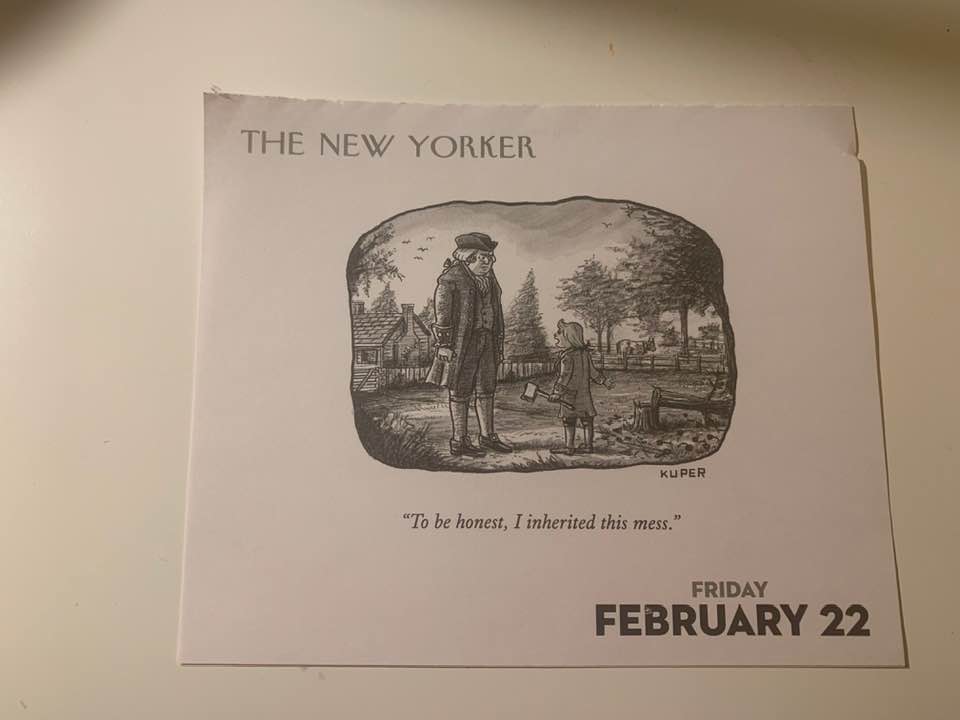
When it comes to cultural icons, the story of George Washington never telling a lie is a perfect example of how symbolic narratives can be used to shape the moral strivings of a nation such as ours.
 
As with all symbolic stories, this one is not meant to be taken literally, because, as we all know, everyone lies, at least some of the time. Rather than being about George himself, this symbolic story is about how we as a people value honesty, the way we recognize it as the glue that binds our culture, and thus our prosperity, together.
 
This principle of honesty is also implied in the motto, “In God We Trust.” You have probably heard that the subconscious mind sees and hears differently from the conscious mind. If we say, “I am not sick,” the sub hears only the words “I” and “sick.” It doesn’t compute the words “am not.” Likewise, in the phrase, “In God we trust,” the sub hears only “God” and “trust.” And just as it tends to equate the words “I” and “sick,” it will equate the words “God” and “trust,” which places trust at the very top of our conceptual hierarchy of values.
 
The story of eBay illustrates how important a concept this is. When eBay first started out, no one thought it would work. They thought that you would send me a bad check and I would send you junk. In fact, there was a slew of companies that acted on that skepticism and offered to guarantee our purchases for ten percent of the cost. But they all quickly went out of business. Why? Because…
 
NO ONE CHEATED.
 
The motto “In God We Trust” isn’t an attempt to Christianize or religify the government. No. It’s a rather secular understanding that in order for a society to thrive and prosper, business contracts have to mean something. They have to be enforceable. There has to be a court system that will back individuals when their contracts are broken.
 
This conceptual value was so ardently upheld in the early days of our country that a person’s word alone was enough to seal a deal. A man’s word was his bond, as the saying goes. And everyone took that very, very seriously.
 
Today, not so much. But the trust still lingers, as was demonstrated by eBay’s business model being wildly successful. People, by and large, will do what they agree to do, at least in matters of business, because trust is a value we can all agree on, even if we don’t always perfectly live up to it in practice.
 
How do we know this? Because when we don’t honor our agreements, we know that we’re violating a principle. It feels wrong. It’s when we see people cheating without compunction that we know that a society is sick. Just look at those countries where corruption has taken over. When trust is intact, economies flourish. But when trust is broken, corruption takes over, and everyone, except for a few at the top, sinks into desperate poverty.
 
So, it’s not as though George was a perfectly honest man, it’s that symbolically (being the “father” of our nation) he represents one of the CORE PRINCIPLES that has made our economy, and therefore our society, one of the most affluent in the history of the world. Where trust abounds, everyone does well. 


Posted in Lessons | Leave a comment