What Is Truth?

pilot and jesus

by Michael Maciel

If we blanketly assume that our favorite beliefs are true, then we’re no better than the average fundamentalist. And being convinced that we have the corner on the market in the reality department renders us completely incapable of thinking critically.

It’s tempting to slide into fundamentalism when we are confronted with injustice, which the world seems to offer up in a mandatory, all-you-can-eat buffet. When we see injustice, we just want it to stop. And we’re not too interested in figuring out WHY it’s happening. All we know is that something has gone terribly off the rails and that lots of innocent people are suffering because of it.

But, both Buddhism and Christianity have said that suffering is what we can expect. The fundamental truth of reality, Buddha asserts, is that all life is suffering, and Jesus voluntarily submitting to torture and death on the Cross reiterates that claim in excruciating detail. His voluntary submission to that ordeal was a dramatic restatement of the Buddhist ideal of the “joyful participation in the sorrows of the world.”

As an archetype, the Crucifixion represents the worst possible thing happening to the best possible person—a limit case, as it were. Jesus has done nothing wrong, and yet he suffers betrayal, condemnation, and a record-breaking, messy death. The message is clear: we will all suffer and die, regardless of what we do. The best option we have in the face of life’s brutality is to bear up under it nobly and with an unwavering commitment to the highest ideal we can conceive.

However, the immediacy of the problem of injustice warrants immediate action, or so it seems. But, the sheer amount of the world’s suffering elicits more of an emotional reaction than rational analysis. All we know is that something has to be done NOW—we can talk about it later. So, we fly into action before we really know what the problem is. We want to fix the effect without understanding its cause. Therefore, we are more likely to make the problem worse than make it better.

All too often, our vehement response to injustice and suffering is little more than an attempt to refute what Buddha and Jesus told us—a message simply too bleak to accept. But we, in our techno-pride, think that we can fix the evils of the world and bring about a Heaven on Earth—a utopian dream where everyone is equal and deserves to have as much prosperity as anyone else, where we should all contribute as much as we can and only take what we absolutely need. The drawback of this utopian vision is that not everyone will agree on it, nor will they ever. The only way utopia is possible, then, is to kill everyone who disagrees with its version of the Truth. If you are a dissenter, you die.

Acquiring real truth, therefore, depends on a diversity of opinions, a plurality of worldviews, and an open society in which they can contend with each other in the public forum, without the threat of retaliatory violence. The irony is that both sides believe they’re right, while at the same time, they share essentially the same values as their opponents. We all want a better world, one in which we suffer the least and achieve the most; we want to belong, but we also want to excel—to go where no one has gone before; we want to fit in, and yet we want to stand out.

The tension within this opposition will create an environment where both sides will be compelled to question their own assumptions about reality and begin to imagine alternatives, perhaps even the alternative presented by the other side.

Faith isn’t believing that something is true, it’s believing that there is such a thing as truth and that that truth will always be more than our mind can comprehend. Yes, you can believe in truth without knowing what it is. That’s faith. And, living in that space, anything is possible. We begin to see the world not as an assortment of things but as an infinite field of creative possibilities—eternal life.

It would be foolish to say that we make up the truth as we go along. If that were true, then hell would be just as accessible as heaven, depending on how much mind control we possess. But having mind control includes being free of rule-bound, fundamentalist thinking. If science has taught us anything, it’s that reality is in a constant state of flux, that matter is actually bounded energy in continuous motion, and that nothing is solid at all. If we are to meet reality on its terms, we’re going to have to be flexible in our expectations.

A large part of our experience of reality occurs in our connections with each other, also by the way we intuitively know that at some level we all share the same mind. We are social beings, meaning, in a sense, that together we comprise one organism and that our minds have evolved as individualized extensions of it. We know this because connection sustains us but isolation makes us crazy. To deny another’s viewpoint is to sever your connection with him. You don’t have to agree with what he believes but you DO have to respect it—respect it for its own sake—because eventually your turn will come, and you will want precedence to work in your favor.

The connection between us is analogous to the brain and its billions of neurons, all of which have a distinct existence but live together in vast networks. Some say that it’s our connections that facilitate consciousness by means of their networks—no network, no consciousness. But, this is not to say that consciousness is the product of neural networking in the brain—no one really knows that for sure. But whether those networks act as a generator of mind or an antenna to receive it, reality seems to show up in and through our internal and external network connections. And if it’s reality we’re talking about, those connections are everywhere.

If this is true, it puts to rest the idea of “your truth, my truth,” which is a popular notion these days. I’m proposing a different model: Truth emerges. It comes from what opens up when we talk with each other about our differences. The tension between our polar oppositions forces open the door of possibility, and new solutions present themselves, solutions that could not have come any other way. Therefore, we should never try to eliminate diversity of opinion, lest we close the doors of opportunity on everyone. Stifle one person and you stifle everyone, including yourself.

It does no good to talk about “oneness” without first acknowledging and honoring differences. Any attempt at oneness made without first respecting the other can only be a zero-sum game. Someone will have to die. That was the lesson we were supposed to learn at the end of the Second World War, the lessons of Nazi Germany and Communist Russia. Both were attempting to create a utopia—one based on racial superiority and the other on social equity. They were different in their approaches but identical in their methods—they killed everyone who dared to criticize the utopian party line. In a world that demands that everyone be the same, those who are different must be eliminated.

So, it’s important that we understand the nature of truth. It emerges, it unfolds, it is always expanding beyond our capacity to understand it. What is it expanding into? Itself. As the poet, T.S. Elliot said, “We shall not cease from exploration, and the end of all our exploring will be to arrive where we started and know the place for the first time.”


Posted in Christian Transformation, Lessons | 3 Comments

Gift of Light to the Planet Earth

As a gift to our planet, do the following visualization:

1. Close your eyes. Sit quietly in a chair with your hands in your lap. Take three
deep breaths through your nose and relax. Quiet your mind. Allow your thinking
to slow down; let your thoughts pass by. Raise your arms slightly and turn your
palms to face up. Place your attention on your palms. Your palms will begin to
tingle.

2. Now imagine each palm holding a ball of light. Be still, keeping your attention on
these two balls of light that you are holding. The light will feel like it’s growing,
getting brighter. Sit this way for a few moments.

3. Take three slow, deep breaths through your nose.

4. With your hands still facing upwards, imagine the planet earth is floating in front
of you between your hands. See the thin shell of the atmosphere, complete with
clouds and weather patterns. See the colors of the land and the sea.

5. Very slowly rotate your hands to face each other, with the planet earth still
floating between them. Now raise your hands just a few inches, with the earth
staying between them. See the balls of light that radiate from your palms begin to
merge into one light. You also see that the planet earth is now completely covered
with light.

6. Note that our ideas about space and size are very different than God’s. The
Creator is everywhere so for It the idea of size does not exist. So what you are
seeing is real. It IS the Earth.

7. Now as a gift to the planet earth and to all of the beings residing upon it, imagine
them receiving this light radiating from your palms into their hearts and the cells
of their bodies. See them relaxed and at peace. Poised and balanced. Sit for a few
minutes in silence imagining this.

8. Take three slow, deep breaths through your nose.

9. Surround yourself to a distance of 2 to 3 feet with the light that is radiating in
front of you so that you are now sitting in the center of a ball of light. Draw all of
the light and the Earth into your heart.

10. Take three slow, deep breaths through your nose. You are now poised and
balanced. Open your eyes.

“There is no great and no small to the Mind that maketh all.”

– Ralph Waldo Emerson

Posted in Christian Transformation, Lessons, Meditation, Prayer | Leave a comment

Karma

justice

by Michael Maciel

Our bodies are hundreds of millions of years old. We’re like walking repositories of the history of the evolution of life on this planet. Wouldn’t it make sense that many, if not all, of our deepest most ingrained beliefs are the products of that evolution?
Take the belief in karma, for example. What is it that makes us believe that if we do something wrong that we will have to pay for it at some point in the future? And I don’t mean believe it cognitively, but believe it in our bones, believe it precognitively as an existential fact. This goes beyond words and concepts.
The feeling comes from deep in our brain, from the part that predates our prefrontal cortex, back before we could even think. Or perhaps it stems from early tribal taboos, or maybe it’s part of the fabric of Being itself, woven into us when we were first created. Wherever it comes from, it seems to be an integral part of the way we relate to each other. Because if we see ourselves as products of our past deeds, we will certainly see others in the same way.
If we believe (and by “believe,” I mean hold as a precognitive presupposition) that the universe somehow judges us according to how well or how poorly we have lived our lives, we will surely think that of others. If we’re doing well, we will feel like we deserve it, but if we’re doing badly, we will see it as the universe’s way of punishing us for our sins. Then, when we see others who are suffering, we will believe that they deserve it, too.
But what happens when we don’t believe in karma? What happens when we believe that the universe is random and that whether we’re doing well or poorly, it’s only by chance? If we think like this, then we have no choice but to believe that no matter what we do, our actions will have no effect on how our lives turn out. We will have neither the incentive nor the desire to do good. And if, God forbid, we suffer a life-changing malady, how could we not fall into the deepest depression? How could we not believe that our disability was for nothing? And how could we not grow resentful, not only because of our condition but towards life itself?
But this kind of nihilistic attitude towards life is one that we have to talk ourselves into. We have to override the millions of years of genetic programming we carry with us in our body. We have to deliberately ignore our feelings and proceed with life as though they didn’t exist. And if they are, in fact, part of reality itself woven into us from the beginning, then denying them separates us from our very nature and from the world. By deadening one part of our being, we corrupt all of it, and those parts we still love, such as our intelligence, our intuition, and our ability to love, begin to fail, and life for us turns into a living hell.
It makes perfect sense that whatever connects us with the whole, whatever prompts us to cooperate with life, to further its evolutionary explorations, that this would constitute the Good, and that whatever separates us from ourselves also separates us from each other and from nature, taking us out of step with life, which is what causes us to suffer.
So don’t get suckered into believing that life is meaningless and that there are no universal truths. There is absolutely no evidence that that’s the case. In fact, everything that we have observed about life shows us that the universe is filled with intelligence and is motivated by love.
Posted in Lessons | Leave a comment

The Problem of Polarization

politicians and cowboys

by Michael Maciel

The problem of polarization is probably THE problem of our age, so it’s really important to understand the underlying causes of why we’re at each other’s throats. And in typical fashion, we all tend to exteriorize our problems, projecting out onto the world and each other the unresolved conflicts within us.
We all seem to have a pretty good idea of what’s wrong with other people and so little understanding of what’s wrong with ourselves. We prefer to think that we’re basically okay but that those we disagree with are fundamentally flawed. But when we’re honest, the reason people bother us so much is that they stir up our inner demons. And we don’t know what to do about those, so we project them onto others and then try to fix them out there.
We need to get past this idea of otherness and realize that we ARE that other person. They are the embodiment of the things within us that we haven’t figured out yet. And it’s not that those things are evil, necessarily, because we don’t know that. It’s far more likely that they are simply those things that are foreign to us—part of us but foreign—and that can be extremely upsetting.
We need to get to know these people, the ones that bother us profoundly. Because they’re our mirror. Maybe they have something to teach us. Maybe they’ve figured out how to deal with the things in us that we’re not conscious of yet. Maybe they’re farther along in the process of discovery than we are. Instead of a threat, they’re really our lifeline to wholeness, IF we allow them to be that.
The old aphorism is true: my enemy is my teacher. In order to fix the world, then, we have to become better students.
Posted in Christian Transformation, Forgivness, Lessons | 3 Comments

“I Am Not My Body” — What Does That Mean?

Killy2

by Michael Maciel

Two weeks ago, I had a tooth pulled. As the dentist attempted to extract it, the crown broke off. It took her an entire hour to dig out the root. All the while, I’m contemplating what it means to not be my body. At the same time, I’m telling her to inject me with more novocaine. I think she gave me about eight injections. She kept saying she was sorry and tried to comfort me as much as possible. I told her that there were only two words I wanted to hear her say: “It’s out!”

I have read about incidents where yogis and Buddhist monks have been able to undergo surgery without anesthetics. In one case, the person was also able to keep his blood away from the incision site. I have no reason to doubt these anecdotes, but I can’t say for certain that they actually happened. Personally, I have never witnessed that degree of control, either in myself or in others. 

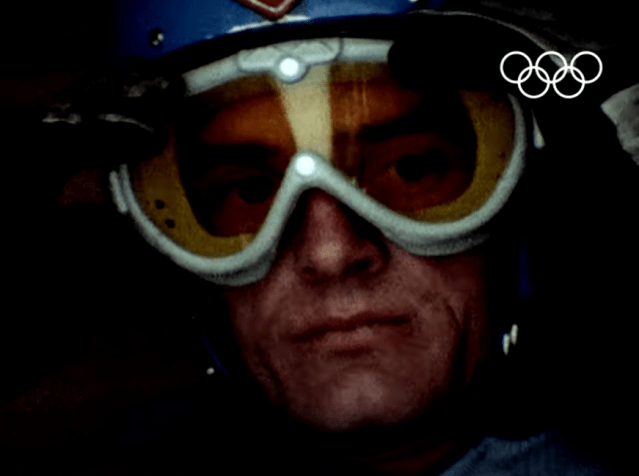
I have, however, witnessed many athletes significantly improve their performance through the use of visualizations, meditation, and even mind-altering drugs. In 1968, French ski racer, Jean Claude Killy, made history by winning all three alpine events at the Grenoble Olympics, and he did it by scant hundredths of a second. Such a sweep suggests that there was more than technical skill involved. It suggests that Killy’s mindset played an important part in his narrow victories. 

annuit coeptisAthletics are a good example of mind over body. They show that intention, thought patterns, and commitment can be the difference between 1st and 2nd place. Of course, it also takes a high degree of technical skill to place that high in any competition, but when two competitors are closely matched, mindset can be the deciding factor. The pyramid of achievement is topped by a vision of victory. 

Any endeavor, whether physical or spiritual, is made better by an assertive, positive mindset, especially when used in combination with a well-developed skillset. Take meditation, for example. It has both physical and mental aspects. If, along with lots of practice, you visualize an exalted level of consciousness with perfect stillness of body, you might achieve such a state more quickly. This mindset, which includes the perfect image, will enhance your chances for success, especially when your image is accompanied by feeling. The feeling of crossing the finish line first is just as powerful in terms of outcome as the visualization. The two must become one. 

But, it’s not enough to visualize and feel victory. You also have to take it on. The vision and feeling have to descend on you like a cloak, one that drapes across your shoulders like a mantle. And the energy of it must amalgamate itself with your whole body. You become the manifestation of your visualization. You are it and it is you. 

This can happen in a couple of ways. One is to accept it through grace — as a gift from God — and two, you can assume it. Either way, it has to feel real. And, it has to be real-istic. In other words, there has to be a reasonable match between mindset and skillset. Visualization is not a substitute for practice. And yet, it can greatly speed up the development process. The point is that you can only advance as far as you can see. Unless you can conceptualize victory, no amount of imagery will work, nor will desire alone get you there. 

The monk who was supposedly able to stop his blood from flowing into his abdominal cavity had to have practiced similar techniques for a long time before he was able to do that. He didn’t just show up for surgery thinking he would give it a try. That’s not how such things work. Neither will holding a thought for a particular outcome ensure that you will get it. One gets to the top of a difficult mountain by first climbing a lot of easier ones. Victory can only be reached from an already elevated platform. 

Perhaps competitive sports and achievement aren’t important to you. Maybe your life’s goals have more to do with cooperation, harmony, and equality. But if that’s the case, they are still goals. Reaching them is a kind of victory in itself, a victory over selfishness, discord, and privilege. As such, you’re going to have to employ these same strategies — mindset, skillset, visualization, practice, commitment, feeling, and assumption. In order for values to be meaningful, they must be embodied. They must be lived.


Posted in Christian Non-Duality, Lessons, Meditation | 4 Comments

A Politics Based on Love

family

by Michael Maciel

We have two models by which we can form our society, both of which are based on love — love as expressed within families and love as expressed between families. And since we’re talking about love, both of these models are understandably positive and life-affirming. 

So, at the outset, we can dispense with the negative models, which by definition are not loving. An example might be the authoritarian model for writing laws and the punitive model for enforcing them. Neither of these is based on love but on power and control. Since we are talking about forces that support and sustain societal health, we will focus on them and not their opposites.

The loving models — the means by which we can grow and develop our society in constructive and sustainable ways — are based on the Family model and the Friendship model. 

The Family model is based on the relationship between parents and child — provider, nurturer, dependent. It has three components — father, mother, and child. Let’s look at all three in terms of the love-bond — the primordial force that unites all families:

The primary quality of a loving father is encouragement. The primary quality of a loving mother is nurturance. And the primary quality of a loving child is devotion: 


  • To encourage (to instill courage) is to prepare a child for taking risks in the world. Obviously, this can only happen after a child has reached a certain age, spanning a seven-year range between seven and fourteen. Before then, children are simply too young to venture too far from home. But once they’re more or less independent, they must be taught what’s safe and what’s not and who’s friendly and who’s not. 


  • To nurture is to love and protect. Infants, toddlers, and children under seven need constant supervision. They need help in learning how to work their bodies and to navigate within a controlled environment. They need to trust their parents and to feel their love, both physically and emotionally. But, most of all, they need to know, in their flesh and bones, that they are part of their family, that they belong. 


  • From a physical standpoint, a child’s primary relationship with his or her parents is one of absolute dependency. But on the psychic or soul level, the relationship is one of devotion — a love of that which is greater than oneself. Devotion is the positive acceptance of the dispensation of a manifest ideal. It is aspirational. Parents are the sun, the moon, and the stars to their children, who orbit them with admiration and unquestioning loyalty. 


The Friendship model is based on shared affections, tolerance, and trust. Whereas the Family model gives society cohesion and stability, the Friendship model gives it the ability to adhere to like-minded others. It gives society the opportunity to grow. 

The Friendship model has three primary components:


  • Family bonds are universal, but they exist within the larger context of culture and geography, both of which add their unique flavor and ideals. So, families that share the same culture and locale will also share similar affections for them. Cultures consist of a shared history and a destiny to which all within the culture aspire. This creates lateral (rather than hierarchical) relationships based on deep similarities, thus producing friendships grounded in shared affections


  • However, no matter how similar they are, the perceptions and interpretations of a shared culture and locale will vary, sometimes substantially, because the roles individuals play in their culture vary. This leads to learning how to abstract from a variety of experiences the commonalities among them and to recognize that outer differences are tolerable as long as the foundational verities remain intact. Societies can tolerate differences in interpretation of its innate qualities by its members, as long as that which is being interpreted is the same for everyone, meaning that everyone must agree upon the historical narrative they share and look forward to the same destiny they envision. 


  • As long as these requirements are met, everyone will know what to expect of each other. There will be a certain level of conformity in all aspects of their relationships. In fact, expressions of that conformity will be taken as a declaration of each person’s loyalty to and respect for each other. And because of the cultivated tolerance that allows for reasonable differences in interpretation of shared goals and behaviors, the code of conformity will be wide enough to allow for experimentation and growth. When these parameters are well-established in a society’s collective consciousness, trust will abound and will thus establish a friendly environment for a viable commonwealth. Everyone will prosper. 


When a society possesses the proper amounts of cohesion (family bonds) and adhesion (shared values) to hold itself together over time, the need for authoritarian power diminishes accordingly. Cooperation, not coercion, governs its activities. Crime, too, is handled adequately, because what constitutes a crime stands out in bold relief against the backdrop of universally accepted norms. The letter of the law becomes more malleable because the spirit of the law is so clear. And because the relationships among the people are predicated on family and friendships, the penalties for crime will be tempered with compassion and thus be more just. 

In order for this ideal version of society and its governance to be practical, there must be a certain degree of autonomy at every jurisdictional level, both regional and national. Each city and state must be free to express its local culture and geographical uniqueness. Mandated, large-scale conformities at the national level must be flexible enough to accommodate the sovereignties of individual communities — and vice versa. 

But without a nationally shared grand narrative, this would be impossible. America’s shared grand narrative is “Liberty and Justice for All,” which is set within the context of “E Pluribus Unum” — out of many, one. The latter is the expectation that disparate peoples who have different ethnicities and religious loyalties can nonetheless peacefully coexist, as long as their national identity is the same. 

It’s a schema that places secular values front and center, while at the same time relies on ethnic and religious values to nurture and form the culture from within. It’s the “out of many” part of the equation that fosters diversity, not only of ethnicities and religions but innovation, too. And it’s the “one” part of the equation that makes it possible for everyone to live in peace and prosperity. 

Perhaps it’s the fact that the world is divided into continents separated by oceans that makes social boundaries and national sovereignty so important, because the differences between cultures (driven by religion, ethnicity, history, and geography) have made the gulf between some of the world’s cultures too wide, at least for now, to permit them to work closely together, at least at a cultural level. Trade is almost always feasible, but even it is not enough to bridge cultural differences when they are extreme. 

The countries that work together best are those that have interacted the most. And this has largely been the result of geography, not differences in intelligence or race. Cities with access to water navigation have advanced the fastest because long-distance travel was relatively easy, which made sharing goods and ideas easier, too. On the other hand, landlocked societies were slower to advance, both technologically and culturally — the more isolated, the less opportunity for economic growth and development. 

So, the ability of the nations of the world to peacefully work together depends on the cohesiveness that national sovereignty provides along with their attraction to the unique values of other nations, as long as those values aren’t too different from their own. Of course, the Family model has to be sufficiently established, lest one nation becomes too enamored of the other, getting lost in the glamor and forgetting its own values. Too much of a good thing is, well, not good.

Finally, it’s not enough to simply pray for world peace, unless prayer also includes action. It takes work to understand the “other,” but it also takes work to understand one’s own culture and its values. And that takes an appreciation for the labors of those who have gone before us — their accomplishments and the values that made those accomplishments possible. Unless a society honors its fathers and mothers, it will fail. And unless it continually strives to reinterpret and re-articulate those values — to resurrect them from the dead — its culture will solidify and precipitate out of the lifestream of the world. The sands of history will cover them and they will be remembered no more. But when a society calls its members friends rather than subjects — treating them as equals and not as children — that society will live for a thousand years.

Posted in Lessons | 2 Comments

Missing the Mark

archery

by Michael Maciel

If sin is “missing the mark,” then we have to ask, what are we aiming at?

You may have heard the adage, “I reached the top of the ladder of success only to discover that it was leaning against the wrong wall.” Also, “No one on their deathbed wishes they had spent more time at the office.” A sinful life doesn’t necessarily mean a life of debauchery. It could also mean being unfaithful to our heart’s desire, to our calling, or even ignoring the still, small voice within. How true are you to YOU?

If our sense of God is one of a strict and judgmental father, then repentance feels like avoiding punishment through shame and self-hatred, but if God is a loving, nurturing Mother (or Father) then repentance feels more like turning away from bad choices and rededicating ourselves to what the angel in the Book of Revelation calls “your first love.”

What worldly concerns have replaced our heart’s desire? Isn’t that the worst kind of betrayal? What has our soul come here to do, to learn, to contribute, or to share? What unique role are we here to play? What would the world be missing if we as unique individuals weren’t here? These are virtuous questions.

Perhaps the worst way to miss the mark is to not aim at anything at all, to just simply give up. That’s when we sink into despair. That’s when we say to ourselves, why even try? What’s the use? Or, I just want to die. What could be more sinful than that? 

Well, actually, a lot. Sometimes, our despair can turn into resentment. We can start to hate God for creating such a pointless and painful world. And if our hatred becomes strong enough, it can turn into a pathological desire for revenge. Like Cain, who killed his brother Abel because God favored him more than him, we begin to hate anyone who is more fortunate than we are. 

We might even internalize our hatred and start to hate everything good in ourselves. We become cynical. We start to regard our own feelings of kindness and compassion as evidence that we are weak and pathetic. We might even decide to turn that self-hatred out onto the world and find perverse comfort in harming others. Once we start down that path, hell starts to feel like home, and we can’t get there fast enough. And if we can take others with us, so much the better. 

The best thing about having good aim is that we will eventually hit our target. But life doesn’t end there. Each accomplishment opens new doors of opportunity. Having climbed the top of our hill, our horizons suddenly expand. We not only see farther, we also see where we have been. And that can inform our future choices. That’s how we grow. 

We might also, having gotten what we wanted, realize that it’s not all that we hoped it would be. A course-correction might be in order. But that’s good too, right? Isn’t that the way it usually happens? Our efforts make us stronger and more mature, so our goals in life naturally evolve as we evolve. What we thought was the top of the mountain now proves to be just one step towards a loftier peak. How exciting! What new adventures lie ahead? Having accomplished one goal, we can’t wait to try for another. Success breeds success. Life begets more life. The strong get stronger. Our cup runneth over. 

Missing the mark isn’t so bad, as long as we keep shooting. In fact, not missing the mark might just mean that our target is too close, too easy, and too tepid. And souls aren’t usually tepid. Our soul is that part of us that is always face-to-face with God, and God is a consuming fire. So when we are in touch with our soul, our hearts are inflamed. And like actual fire, our lives are in a constant state of change. Everything we touch is affected by the heat. People are either drawn to us or they run like hell. Few are lukewarm. 

So, it’s important that we kindle that fire. It’s important that we be true to our “first love,” our soul’s longing to blaze towards the heavens. It’s not what we want to do, it’s what we have to do. That’s what matters. And it’s the “have to” part that sometimes makes our lives uncomfortable. When it comes to soul work, there will always be pain. Fire burns. But it also forges. It purifies. It enlivens. It opens the way. If we resist it, we will always be running from it, but when we accept it into our hearts, it lights the way ahead. It’s better to run towards something good than to run away from something bad. But hey, most of us need a little of both, don’t we. That’s life. And given the inertia of this world, that’s a good thing. 


Posted in Lessons | 2 Comments

Naivete and Cynicism

2.-How-to-use-a-magnifying-glass-for-your-purpose

by Michael Maciel

I’m thinking that the opposite of being naive isn’t being smart, as though naivete is ignorance by definition, but rather, the opposite of being naive is to be cynical. However, both words have negative connotations, so we have to strip them of that before we can keep from using them inappropriately.

Naivete means the lack of experience, wisdom, or judgement — easy to see why it’s a negative. But what if the word isn’t as accurate as we suppose? Or, if it is accurate (many people do lack those things, after all), what if it’s sometimes used inappropriately? How would we know unless we think about it more carefully?

If we can look at cynicism for a moment (also regarded as a negative), which means an inclination to believe that people are motivated purely by self-interest, we can also ask ourselves if we sometimes use that word inappropriately, as well. Usually, when we call someone a cynic, we imply that they disagree with whatever it is they’re being cynical about. We tend to use it as a pejorative, especially when they are being cynical about something we believe. But in reality, they might just be applying critical thinking. 

These two concepts, cynicism and critical thinking, are easy to conflate, but they are entirely different. Critical thinking means the objective analysis and evaluation of an issue in order to form a judgment. It’s not prejudicial thinking but analytical thinking. It’s analyzing an issue in order to arrive at an informed opinion. 

In the same way, we use the word naive to imply that a person is not well-informed, when in fact they may be idealistic. But that word, too, has a negative connotation. It implies, whether correctly or not, that the person is somehow disconnected from reality and that they are not looking at the sense data. Perhaps a better word for this possible misinterpretation of the word naive would be “creative.” 

Creative thought — at its best — uses all of the available data as a springboard to launch into the realm of the possible. It’s climbing on top of what’s known and then looking out from there to see the unknown. But it’s a special kind of unknown: it’s not what we know that we don’t know, it’s what we don’t know that we don’t know. For instance, we know that we don’t know the secret of anti-gravity. We know that. But it’s what we don’t know that we don’t know that holds the secret. That’s why we haven’t figured it out yet. 

So just as the word cynicism can keep us from recognizing legitimate critical thinking, so can the word naive keep us from recognizing legitimate creative thought. 

We seem to be born with a proclivity to one or the other of these ways of looking at the world. We are either questioning what we see or we are busy imagining what would be ideal. And just as the human nervous system has two separate mechanisms to control our metabolism (one to speed it up and one to slow it down), so do our minds have mechanisms to do the same thing — to either construct increasingly optimal solutions to the problems of life or to fact-check those ideas so as to avoid unforeseen consequences should we act on them. 

One is an exploratory mindset, and the other is a protective mindset.  One ventures beyond the known to discover what’s new, and the other wants to conserve what has already been established. One says, “We can do this better,” and the other says, “If it ain’t broke, don’t fix it.” Obviously, either mindset without the other would quickly lead to disastrous outcomes. It would be like trying to drive a car with a gas pedal but no brakes, or vice versa. We would either crash or simply go nowhere. 

The world seems to be divided almost equally down the middle between those who think creatively and those who think critically. And isn’t it wonderful. The outer things that differentiate us, such as gender, socioeconomic status, general intelligence, and education, don’t have any bearing on which of these two mindsets we have. We seem to be born with them. This makes sense from an evolutionary standpoint, because we need both to survive and thrive. Nature has somehow ensured that both will be equally represented in the population across multiple dimensions. 

While we can strive to understand that frame of mind to which we are not native, we can never become it. It will always be extrinsic to our nature. This is a good thing, because it guarantees that we can remain objective. And objectivity is essential to critical thinking, and to some extent creative thinking, as well. (Objectivity and identity are another innate dichotomy but are a topic in their own right, perhaps better explored in a separate article.) For this reason, both modalities would do well to respect each other, because though they are complementary, they will always be at odds. 

Trying to blend the two would be counterproductive. In fact, emphasizing their differences — as long as it’s done within a framework of mutual respect — maximizes the advantages of both and safeguards against either inadvertently drifting away from reality. As Albert Einstein said, “Science without religion is lame; religion without science is blind” — just one example of this psychological polarity.  But interject too much of one into the other, and the strengths of both are diminished. A healthy antagonism is required, and both need to keep their watchful eye on the other and never let the gulf between them get too wide. 

Another example is whether the government should be entirely a secular affair, or should it allow itself to be informed by religious values? One could argue that the overzealous separation of the two has led to the exaggerated consumerism that is polluting our planet — also, the rise in teen suicides and inordinately high divorce rates. But again, these are topics for another time. It does seem, however, that this fundamental polarity is universal. 

Peacefully coexisting with those on the opposite side of this cognitive divide requires open dialogue within the context of mutual benefit. We have to assume that we both want the same thing — a better world to live in. And unless the other person has proven him or herself to be pathologically predisposed towards ruin and annihilation, we have to give them the benefit of the doubt in this regard. We must never accuse them of being evil simply because their views of a better world differ from ours. This is true diversity — viewpoint diversity.

No one knows the perfect condition in which everyone can thrive, but we do know that forcing everyone to be the same is not it. Many societies have tried this approach, and every one of them ended in a bloodbath, without exception. Those that have survived for any appreciable amount of time have allowed for open dialogue and compromise. This holds true for large groups as well as intimate relationships. When we recognize this fundamental difference between us, it opens the door to a world that is both stable and innovative. 


Posted in Lessons | 2 Comments

Meaning and Meaninglessness

'Christ of the Abyss' statue, Pennekamp State Park, Key Largo, Florida, USA.

by Michael Maciel

It seems to me that there are two things that drive meaning in our lives: love and purpose. In the presence of love, even loving one’s cat, pushes the need for meaning to the side, if only momentarily. And with enough purpose, meaning is…well, self-evident.

But when either of these fail us, meaninglessness can swoop in like a dive bomber and blow us to pieces. Which raises the question: What, in the lack of love and purpose, can make our lives meaningful? And why is meaningfulness important at all? Is there ever a point where life just is, and can that be enough? Not just enough, but arrestingly enough, mind-stoppingly enough, where the only danger becomes death by astonishment?

I wouldn’t want to give up meaning or the quest for it. It makes everything so…interesting. But without that place beyond meaning, without the bedrock of the sheer amazement that comes when we encounter being itself, what is there to sustain us when love and meaning fail?

Is this, then, the thing we should seek before all else, the thing that, once acquired, would bring us to the place where everything matters, where if one thing were plucked away, the whole universe would tremble?

Or is it that meaning itself is meaningless and that that’s okay? Perhaps it’s when the heart is empty that it is at its fullest; and the will, when stripped of its banner, becomes the deadliest force on the battlefield of life?

No one wants to be reduced to the mere instinct to survive, but perhaps it’s that instinct, the urge to move forward at any cost, that is the pulse of God, the pounding of which can grind everything—even meaning—to powder.

Is this the place, the center of gravity of our being, which is empty and yet holds the promise of everything, the thing without which the most meaningful life will one day be catastrophically undone?

In the face of that—the absolute impoverishment of spirit—what might be revealed? And would we be able to bear it, knowing that to enter into its field would be the utter subsumption of us?

Perhaps the rawness of life is nothing less than terrifying, and that that’s why we pursue meaning and endlessly strive to keep it alive. Maybe it’s our flight away from the terror that keeps the details of our lives in their swirl and locks us into the never-ending quest for anything that will distract us from the sheer magnitude of our awakening.

(Just a few thoughts in the early hours of a new decade.)

Posted in Lessons | 4 Comments

Notes on the Law of Mind

wright_brothers

by Michael Maciel


How much of our world is held together by our beliefs? I mean, held together in such a way that if our beliefs were disrupted, our whole world, including our sense of self, would fall apart.

Consciously, we might wish that we could escape the bounds of our limitations, but subconsciously, we might not want that at all. Who’s to say that our limitations aren’t there for our benefit? Perhaps our soul knows something we don’t. Perhaps our limitations are our gestation chamber, like an egg, that if removed would kill us, not just physically but spiritually, too.

For instance, how often have you wished you could win the lottery? But, did you know that lottery winners often wind up worse off than before? Why do we believe that having lots of money would cure all of our problems? It might appear that way to our conscious mind, but the subconscious knows better. (Remember, the subconscious is the mind of the soul.) It knows that the integrity of our social circles would be jeopardized should we suddenly come into a vast fortune. Would we be willing to undergo the shift in perception our friends and family have of us? Probably not. Even if you gave everyone a million dollars, it still wouldn’t be enough. They would still resent you or hound you endlessly for more.

Then there’s the problem of addiction. Most people’s addictions are kept relatively manageable by their lack of cash. But give them access to whatever they want, and it’s only a matter of time before they self-destruct. As Paul Simon said in one of his songs, “Thinking I had supernatural powers, I slammed into a brick wall.” Our soul knows this, because it’s been there before.

Using the Law works best when we stay close to the edges of our beliefs. We can push the envelope; we just can’t push it too far. We have to honor the forebears of our perceived reality. If we reject them outright, there will be a massive pushback from the subconscious mind. All hell will break loose.

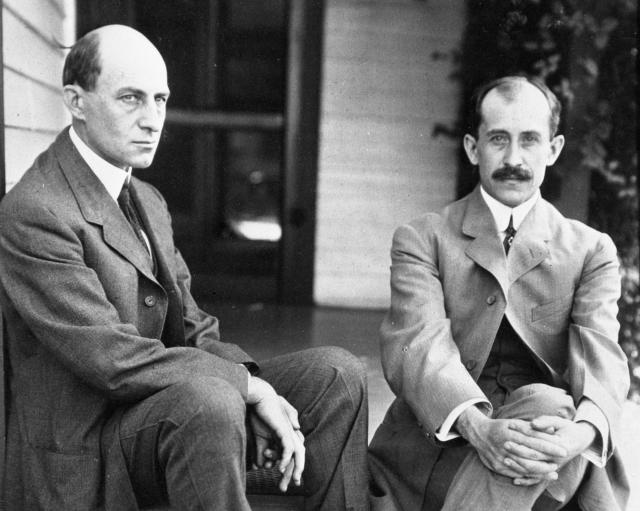
Take the example of flying. If we pray for the ability to fly, you know, like Superman, it’s not likely that that will happen. It’s just too far removed from our perceived reality. We don’t have wings, we are subject to gravity, and we all know that people can’t fly. Only birds can fly. But, people have wanted to fly for centuries, maybe thousands of years. They finally worked it out on December 17, 1903, near Kill Devil Hills, about four miles south of Kitty Hawk, North Carolina. Sixty-three years later, we flew to the moon.

As astronaut Jim Lovell said when someone said it was a miracle, “No, it wasn’t a miracle. We just decided to go.” The most powerful force we know of is the human mind. When we decide to do something—really decide—it gets done. The Law of Mind is the mechanism by which that happens. “Until one is committed, there is hesitancy, the chance to draw back, always ineffectiveness. Concerning all acts of initiative and creation, there is one elementary truth the ignorance of which kills countless ideas and splendid plans: that the moment one definitely commits oneself, then providence moves too.” – William Hutchison Murray

Using the Law of Mind is an integral part of spiritual practice. It’s not enough to accept whatever comes along as though it were the will of God. When conditions aren’t right, it’s up to us to fix them. If it’s raining, we go inside. If it’s hot in the city we go to the beach. If people are dying of cholera, we invent a sewage system. These are fixes. But what if we’re shooting for the moon? What if we want a new job or a better relationship or even a new car? What prevents us from having those things? Is it God? I don’t think so. The only thing God wants, as far as I can tell, is that we get our prayers answered. THAT is the will of God.

Our approach to life should not be passive. We were created in the image and likeness of God. And God, first and foremost, is a creator. If we want to be like God, if we want to “please” God, we need to create. There are two ways of looking at the world. One is to see it as an aggregate of things and stuff—inanimate and mindless. The other way is to see it as infinite potential, to see all things in terms of possibility. We either say, “What must I put up with today?” or, “How can I turn my circumstances into opportunities?” One is the path of needless suffering. The other is taking on the mind of Christ.

Posted in Lessons | Leave a comment