Faith vs. Certainty

by Michael Maciel

Faith is not necessarily the same as certainty. It is, rather, more like the expectation that there is more to reality than we can perceive and that that reality is somehow supportive of the one we can see, touch, and feel.

Certainty and expectation aren’t the same. 

I live in a house that’s surrounded on all sides by the huge ranch it sits on. At night, it’s easy to forget how isolated it is. The inside is comfortable, well-lighted, and has everything I need for daily life.

It’s easy, when I’m focused on my work, to forget about the wider world. When the blinds are closed, the interior space of the house becomes, in a sense, all there is. My mind ends at the walls that separate me from the wildly natural world that stretches out for miles a few feet from where I sit. 

In the daytime, it’s entirely different. The blinds are open, and the hills, pastures, and vineyards (I live in Northern California) are right there, reminding me that I’m in Earth and not the cave of my living and dining rooms. The landscape I see is real—it’s unmistakably real. I’m in here and it’s out there, but the walls are transparent to the world, so it’s impossible to forget where I am.

But just as the walls at night seem to be the borders of reality itself, isn’t the world that I can so plainly see during the day just another kind of wall, just another kind of border? What if there were a greater daylight, one brighter than the visible sun, that would cause me to open a different kind of blinds, ones that would reveal that which is normally hidden from normal eyes?

Would that not substantiate my faith in higher worlds? Would it not prove that every limit of my experience is just another border, just another wall with just another set of blinds?

I would be a liar if I said that I have not seen what’s on the other side. But I would also be a liar if I claimed to know what’s on the other side of the other side. Oh, I’ve glimpsed it, but that hardly qualifies as knowing. And who knows how far that goes? How many other sides are there?

So, without the luxury of certainty about such things, I still expect that they’re there. And I expect that they all somehow work together, but I’m not so certain that I will ever understand completely how they do. 

And here I sit, nested within multiple walls, multiple borders, with only a limited perspective of what’s really out there and whether it ever ends, something I doubt I can know. So it’s useless to speculate about it. But as long as it all works together, that’s fine by me. I’m okay with that, no matter how big or how far it goes. 

Is that too much to expect? I don’t think it is. 

Posted in Bible 3.0, Christian Transformation, Faith, Lessons | 3 Comments

Honor Thy Father and Mother(?)

by Michael Maciel

Honoring our parents means recognizing them as a factor to be understood, not a model we have to replicate.

In its simplest sense, the Fourth Commandment means taking care of your elderly parents. But in a deeper sense, it means recognizing that which deserves honor and overlooking (forgiving) the rest. You can’t honor what’s dishonorable.

Biologically, we inherit all the genes we have from our parents. But which ones get turned on is determined by how we react to our environment. That’s why it’s important to “honor” the better angels of our nature.

Mentally, we “honor our father and mother” when we recognize the existence of the preconceptions out of which our ideas are born. An amoeba moves by extending itself through a narrow bridge of its own cytoplasm. It can’t jump from one place to another. It has to maintain a connection with its former position before it can fully take on another. Or, as the saying goes, “If a frog had wings, it wouldn’t bump its ass a-hoppin’.”

In terms of prayer, or the use of the Law of Prayer, it means that we can only move as far as our legs can carry us one step to the next. We can’t, by taking thought, make one hair white or black, as Jesus said. When the Wright Brothers set their minds on flying, they didn’t magically sprout wings from their backs. They worked with what they had and built an airplane. That was the answer to their prayer.

At the soul level, which is our spiritual operating system, we honor our Creator, knowing that we are infinite in our potential but, at the same time, confined to our humanness. It’s as though we have been shot into this environment so that the infinite potential that we are will raise up or redeem the whole place. This is the Christian doctrine of “The Incarnation,” the atonement and redemption all rolled up in one. Enlightenment starts with a spark from above that lights a fire, which then burns towards heaven.

These three actions—incarnation, atonement, redemption—are distinct. The Incarnation is the descent into matter. The atonement is Christ submitting to the tomb, Jonah to the whale, Shadrak, Meshack, and Abednego voluntarily entering into the furnace—allowing ourselves to be consumed by the Earth Plane and becoming one with it. The Redemption is regeneration—the transformation of matter into the New Man, the New Jerusalem, the Return.

Posted in Bible 3.0, Lessons, Manifesting With God | 1 Comment

What Is Being Born?

by Michael Maciel

What’s being born in us at this Holy time of year isn’t like a parasite that destroys its host, like the creature in “Alien,” but like a baby that comes into our life and overturns it completely.

Make no mistake—it will change your life forever. But just like a baby, it needs you to be the adult, to help the newborn thing to safely integrate into the world. 

And the Christ Child NEEDS you to protect it—from Herod, your own stipulations as to who the Child will grow up to be. You might need to hide it from the profane, lest they murder the new version of you in its infancy. But the biggest threat could be you yourself—your fear of losing something, your doubts, and your opinions about who you are. 

There is a point where you will have your “coming out” in the temple, after which you will no longer be able to keep the New You hidden, nor will you be able to keep it from saying and doing the things it was born to say and do. 

But now is the time to stay indoors and ponder the true nature of who or what is being born. Protect it. Nurture it. Give it your full attention. 

“If you bring forth what is within you, what you bring forth will save you. If you do not bring forth what is within you, what you do not bring forth will destroy you.”

The Gospel of Thomas

Posted in Bible 3.0, Christian Transformation, Christmas, Lessons | 4 Comments

What Is Holiness and How Do We Get It?

by Michael Maciel

Much of what we call “holy” is based on a belief that the world is not. This is a great tragedy. It’s not that we should behave as though everything is good and therefore we should get as much of it as we possibly can—to seek only pleasure and avoid pain. That would be hedonism. Those who have tried that route usually find themselves miserable in the end. But those who hold themselves aloof from life, even as they are caught in its gears, also find themselves left with nothing more than a desperate hope that things will get better after they die.

Terrific.

Of all the theories I have heard of why we are here, the best one, in my estimation, is that we are here for one reason and one reason only: soul growth. Put another way, we are here to develop character. We are here to discover who we are, not what we’re not. If there is some other reason why we’re here, I simply cannot imagine what it would be, not in a way that doesn’t sound like an elaborate hoax or a cruel fiction. 

Look at it this way: Perfect parents would not only help their children grow up to be strong, capable adults, they would also help them discover their own innate qualities, the gifts they were born with, gifts that might even make them unlike their parents in significant ways. That would be remarkable parenting, would it not?—to help your children find their full self-expression even if who they really are runs counter to your standards and ideals. After all, in a perfect world, children aren’t clones—they eventually become people in their own right. They become evolution’s next step up the spiral of adaptation, not just physically but spiritually, too. And what they become will be larger and better adjusted than their forbearers.

But what about us, the children of God? If God is perfect, that doesn’t leave much room for exuberant self-discovery, does it. In fact, anything other than clone-ship would, by definition, be imperfect or, as religious folks like to put it, sinful. The very idea brings exuberance to a screeching halt. What’s there to look forward to in life if all you can ever be is “just like dear old dad”? And if you’re a woman—well, yours is an impossible task, isn’t it. Most girls don’t want to grow up to be “just like” their mothers, either. Like their brothers, they want to grow up to be themselves

Now, I know we live in extraordinarily narcissistic times, but this is not narcissism. Wanting to be your own person is your soul’s most ardent desire. And as such, what could be more holy? We’re not talking about an infatuation with oneself, but a love affair with spirit. The soul is looking for full-blown self-expression, not a pretty picture of itself. If the soul is a living thing, then growing into its potential is its primary objective, not to get hung up in its own image. It wants to celebrate LIFE, not bask in its own undeveloped state. Children don’t care about being children. They care about playing. They care about tearing across the yard as fast as they can, not to get to the other side of the yard, but simply because they can. Running is the point, not to reach a goal, unless, to our shame, we teach them to want that.

The belief that something is wrong with the world keeps us locked into false notions of holiness. It keeps us from surrendering to the opportunity that life is. Believing that the world is innately contrary to the will of God freezes us in a pathetic, undeveloped spiritual infantilism and unnecessarily drags out whatever difficult lessons we might need to learn. When it comes to suffering, I’m for the short kind. Why, in God’s name, drag it out? Just because there is some suffering doesn’t mean that it’s all suffering. If that were the case, then we would be forced to become narcissists, because such a dismal state could lead us nowhere but into a downward spiral of self-obsessed despair. 

We cannot become holy by holding the world at arm’s length. We get holy by engaging with life in whatever form it presents itself to us. Buddha called it the “joyful participation in the sorrows of the world,” which in mom-speak translates as “be grateful for what you’ve got, honey, and try to be nice.” And if that sounds trite, just think of what puffed-up ideas of holiness have done for people other than making them feel superior. If you’re too holy to be nice, then you’re too holy. 

Sometimes, being holy means getting up and going to work. It means showing up when other people are expecting you. It means being thrilled to come home at night, to be ecstatic in the company of friends, or to let somebody with only one item go ahead of you in the checkout line. Holiness finds its fullest expression in the simple things of life more easily than it does in lofty notions of the nature of reality. Chop wood, carry water. First the ecstasy, then the laundry. Suffer the little children to come unto me. Consider the lilies of the field. Smell the roses. And, most importantly, get off your high horse.

Being poor isn’t the way to go, either, but then neither is being wealthy. The soul wants only to be in the present moment. It hungers for the now. And it doesn’t much care about the contents of that moment, only that it be present to it when it happens.

Be present. Be awake. Be in your life and give thanks for it, even if it’s hard. It’s the fool who chases after material things and manufactured ideals. The wise seek out what’s right in front of them, and they don’t move on until they have squeezed the last bit of nutrition from it.

Posted in Lessons | 1 Comment

Prayer—How to Conquer the World

trio

by Michael Maciel

Alexander the Great once said that anyone who can concentrate on one thing for three minutes could conquer the world. He would know. Anyone who has ever attempted to see a vision to fruition knows that nothing saps effectiveness like inconsistent thinking. Those who know what they want tend to get it. Nothing metaphysical about that.

Imagine what would happen if you sat down once a day and held a single thought for three minutes straight—not a static thought, not the repetition of a statement, like an affirmation, but a living thought, one that you actively think about. For example, instead of repeating a phrase, such as “let there be world peace,” you actually entertain the concept of world peace. You think about what world peace would look like, what it would feel like, and what the overall effects of world peace would be.

worldSuch a visualization—or vision—would have a profound effect on your mood, would it not? And what is your mood but your vibration, your statement to the world? It would be like saying, “I SAY that there IS world peace.” You don’t say that there will be world peace, because the only feeling that produces is a feeling of hope, and hoping never changed anything. But when people turn themselves into broadcasting stations, pumping out the vision of world peace with all of its feeling and descriptions of what it would look like, then that has power. That has the ability to change the way people think and believe.

If you’re honest with yourself, you know that big changes happen in your life as a result of something that changes the way you see the world, right? People experience that all the time. Big changes don’t come because of new ideas, but because of new perspectives. They happen when people see the same old world through new eyes. And people who walk around with new eyes firmly in place have a tremendous effect on those around them. Their vision becomes contagious. And visions that become contagious have a name. They’re called MOVEMENTS.

Prayer is our statement to the world. It’s what we tell reality to be. The world, by its very nature, is plastic—it molds itself to our thoughts. If you doubt this, look at the world and ask yourself whose thoughts are you looking at? Whose worldview are you seeing? What beliefs have shaped the world you live in? When you go to work, who created the mindset of that environment? And what effect does that mindset have on the way you experience your job? We’re talking about real things here, not some quack ideas.

When we see prayer as our statement to the world, we begin to take it seriously. One meme currently circulating through the Internet is that prayer is not enough. Rightly so, especially if prayer is defined as petitioning a non-existent god, or simply expressing one’s hopes and wishes. Hopes and wishes never accomplish anything. But major changes in the world come about as a result of visions, visions that become contagious and then become a movement. And what is a movement if not a statement, a collective statement powered by consistent thought?

blossomBut, it all begins with you. Your first job is to hold the vision; your second job is to speak that vision into reality. You talk about it, and you broadcast it mentally out into the greater mind of your community. Like a cell phone, you connect with other people through the network—the higher network of MIND.

The more established a vision is in mind, the easier it is for people to talk about it openly, and the harder it is for opposing visions to appear credible, to be blindly accepted as the way things are. Your statement, your speaking your vision into the world, telling it what it’s going to be, changes the way things “are,” because mass-assumptions support prevailing conditions. Undermine a mass-assumption, and people begin to ask questions. If your vision is already in place, it will be the first thing they see when they start to imagine alternatives.

VictoryBe the alternative. Don’t just lament the problems of the world—actions without vision never succeed. Hold the vision, speak the vision, radiate the vision. Invest it with your feeling. And what is the most powerful feeling known to humanity? Victory. It’s the feeling of victory. It’s the feeling you have when justice prevails, when goodness prevails, when compassion and empathy prevails, along with the desire to heal the world and not just wait for it to end. The survival instinct is the most powerful instinct we have. As human beings—as spiritual beings—we have the ability to raise that instinct up, so that it’s not just an individual concern, but one that encompasses the entire planet and every living thing upon it.

Be a spiritual being.

guardian

Posted in Contemplative Prayer, Lessons, Prayer | 7 Comments

Science is inching towards a theory of universal consciousness:

by Michael Maciel

Scientists have come up with a new theory of consciousness, the CEMI field theory. (See the link below.) Publishing his theory in the journal Neuroscience of Consciousness, Professor Johnjoe McFadden posits that consciousness is in fact the brain’s energy field. This theory could pave the way toward the development of conscious AI, enabling robots to be aware and have the ability to think.

This theory is fascinating but at the same time feels desperate. Not that it isn’t true, just that it’s not true enough. It illustrates the long-standing battle between the bottom-up theorists and the top-down theorists—those who favor complexity arising out of the primordial and those who favor the primordial “reaching” for a pre-existing field of intelligence.

As I’m sure you’re aware, mystics have known about the magnetic field generated by the human body (and all life forms) forever. They just used different names for it. This new theory seems to fall short in that it doesn’t take into account (at least not in this article) the fact that electromagnetic fields are everywhere and at all scales. Knowing this, why would it be hard to conclude complex interactions between them? And not just interactions but induction—one field, more complex and more potentialized, affecting and even forming another?

We already know that the brain is mostly a reducing valve designed to make sense of an infinitely large dataset, meaning in this case the intricate matrix of electromagnetic information the universe is awash in. Most of what we call “us” is entirely and perhaps irretrievably below the threshold of our awareness, such as the autonomic functions of our bodies. Thank God for that! If I had to consciously control my metabolism or my calcium balance, I’d be dead in seconds. 

Mystics have always said that consciousness is universal and that the body is a result of it, not the other way around. This CEMI field theory seems like a preliminary step in that direction.

Researcher proposes new theory of consciousness

Posted in Christian Non-Duality, Lessons, Science and Religion | 1 Comment

Find Victory in Failure

UFC 207: Nunes v Rousey

by Michael Maciel

Most of us are trying to make something of our lives. We have values, and we want to realize those values in our living—to make them real, to manifest them in the world. Having values is the same as saying that your life is oriented towards the good—the ideal you envision for yourself, your family, and for the society you live in. It’s the same because it’s impossible to want anything unless you value it. “Where your treasure [value] is, there will your heart [desire] be also.” The heart wants what the mind deems worthy.

We define setbacks in our life as those instances where we fail to reach our goals. We miss an opportunity, we reach but fall short, or we fail to meet an expectation, either of others or our own. This is the source of our anxiety—the ever-present possibility of failure. This fear is simultaneously our nemesis and our strongest ally, because it keeps us alert, and it goads us to try our best in all of our endeavors. But when our anxiety supersedes our desire to succeed, we take fewer risks. We cease trying. We tend to hunker down in the safety of the known, the tried and true. Too much fear stops us moving forward altogether. And since life never stands still, it leaves us behind, until we are cut off from our own vitality and die. In the face of our greatest challenges, it is fear that we need to conquer—“We have nothing to fear but fear itself”—not some external foe, real or imagined.

No one is perfect. “All have fallen short of the glory of God.” This is the number-one reason why Jesus told us not to judge. “Thou hypocrite, first cast out the beam out of thine own eye; and then shalt thou see clearly to cast out the mote out of thy brother’s eye.” If you are a person of good will, you naturally want to do your best to expunge the world of evil. And evil is everywhere! But it’s not so easy to reconcile our own evil, the malevolence we carry around in our hearts, the desire to correct the extraordinary evil in others. We would do anything to eliminate the atrocities we see on an everyday basis. We might, if given the chance, murder those who commit them, because our zeal to do good can easily flip and become its own kind of atrocity.

Recognizing that we ourselves are capable of doing evil is in itself a horrendous failure. That’s why we don’t go there. We don’t sit with our evil propensities and acknowledge their existence, because to do so would show us that we aren’t good at all, at least not as good as we pretend to be. So we try to bury it, we keep it under lock and key, like Pandora’s Box hidden away in the cellar of our psyche. But what we conceal in darkness has its way of oozing through the cracks, and we find ourselves doing strange things that we cannot control, things that we believe only strangers are capable of committing. And when we do them, we become strangers to ourselves. And that, dear friend, is our downfall. It’s when we surprise ourselves with our capacity to do evil that our lives are upended, sometimes catastrophically.

So, imagine what power there might be in getting to know the contents of the darker corners of our hearts, to go into each contest, whether external or internal, knowing that the evils we hate have already taken up residence within us. In fact, they have been there so long that we can hardly regard them as other. On the one hand, knowing that we can just as easily be bad as good can make us more compassionate. We’re not as quick to condemn others because we’ve “been there.” But, on the other hand, since knowing this about ourselves is a failure in itself, we might want to simply give up, to write off the whole human endeavor, to see the world as hopelessly flawed and unworthy of our efforts to change it, since we ourselves are the problem we seek to solve.

This, however, is the greatest failure of all. It’s what keeps good people doing nothing, because there’s no better way to psyche out your opponent than to get inside his head and make him doubt himself. And those who are unabashedly evil-minded do not hesitate to do that every chance they get—to make you feel guilty, shameful, inept, and powerless.

True heroes, however, already know that about themselves and enter the battle anyway. In a way, they know they don’t have anything to lose and are therefore the most dangerous. They have no badges of honor to defend, no purity to preserve, no inviolable standards to uphold, because they know that they have themselves violated all these values. They themselves have been untrue. They themselves have done the evil they seek to overthrow. Honestly accepting this eliminates any pretense in the combat.

This is what makes the wounded warrior a formidable foe.

If you are serious about doing good in the world, understand one thing: there is no virtue in naïveté. None. It does not give you strength. It doesn’t make you pure. It doesn’t mean that you are better than the evildoers you hate. It only means that you are naive. And realize this, too: If you are hellbent for justice, you are potentially the most hateful, malicious, and genocidal person in town. History is full of such do-gooders. And millions have died as a result of their self-righteous schemes to set other people straight. Don’t be one of them. Not on any scale.

Let’s call it the vehemence of justice. Its tools are the flaming social-media posts, the student rallies at universities, the riots of tear gas, rocks, and broken glass, and, finally, the guillotine, the firing squad, the forced marches, and the death camps—all in the name of righting wrongs, of casting out the beams from the eyes of others, of ridding the world of evil. What we repress, we project. And God help those upon whom we project the things we are unwilling to look at within ourselves!

Justice—real justice—never froths at the mouth. Real justice knows how to restrain itself, to make the punishment fit the crime, not gouge out the eyes of those who only knocked out a few teeth. Real justice doesn’t force anyone to do anything but instead deals with the present moment without imposing a utopian vision that only has room for conformists.

“Judge not that ye be not judged” doesn’t mean to let everything slide. It means
stop condemning other people for displaying in broad daylight the things you are hiding in the dark. Stop that. Stop it now. If you see something you don’t like, something you wish other people would do differently, imagine yourself in their shoes. Chances are that if you do, they will fit your feet perfectly.

Posted in Bible 3.0, Christian Transformation, Lessons | 3 Comments

The Problem with Really Smart People

by Michael Maciel

I once knew a man, brilliant and highly educated, who was also a spiritual teacher, and a good one, but he tried to tell me that God created Adam out of the dust of the earth – literally. His reasoning was that “God can do anything.” He also believed that when Mary gave birth to Jesus, a white cloud surrounded her and poof – Jesus was born. No labor, no pain, no placenta, nothing. Just a ready-made baby magically in her arms, as though she had no vagina. And this man, so smart, so educated, so knowledgeable about so many things, taught his students (who were also well-educated) that this is how these things happened. And they believed him.

Here is something that I have noticed: the smarter a person is, whenever they embrace God, they throw rationality out of the window and cozy up to the most superstitious, childlike forms of religion they can find. As though faith and reason were antithetical to each other. In the face of the unexplainable, they opt for a laws of physics-defying miracle.

You have to admit that some of the smartest people in the world are atheists. At least eighty-five percent of the world’s scientists are. And they have good reason to be, given the stranglehold that the Church had on free thought only three hundred years ago. I would be a little over-reactive, too, wouldn’t you? But why is it that when those few, for whom the numinous overtakes in a moment of spiritual breakthrough, suddenly throw all of their hard-earned science out the window and adopt this golden book form of religion? Can they not at least try to integrate the two?

Neil deGrasse Tyson pits reason against revelation, as though the two were mutually exclusive, when in reality you cannot have one without the other. Reason alone leads to the belief that complexity arises from the simple; revelation proclaims that it comes from above, that complexity asserts itself on matter and forms it into aliveness. Revelation says that perfection precedes the rudimentary, that matter struggles to realize the multi-faceted range of its own unformed potential. Reason tries to explain away that potential by saying that the whole thing is just random, like a pinball trying to find the hole at the bottom. But, you cannot have a coherent theory of reality without first discovering how these two aspects of mind, reason and revelation, work together. Bad-mouthing one out of defense of the other is simply a bad marriage.

To the moon, Alice!

In all fairness, Tyson’s view of “revelation” IS superstition. But, that’s his problem. He points out that Islam lost its preeminence in science in the Twelfth Century when an imam declared that mathematics was the “work of the devil.” Up until that time, Baghdad was the scientific and cultural center of the world. But now, not so much. Tyson, along with much of the rest of the scientific community, mistakenly equates revelation with anti-intellectualism. Such a shame.

Revelation is, by definition, information from the universal mind. But if you stubbornly insist that consciousness is unique to the human brain and is the product thereof, you are…well, how shall I put it? Stupid. Why stupid? Because everywhere you look, either in the super-microcosmic world of quantum physics to the ultra-macrocosmic world of galactic super clusters, all you see is intelligence in action. And it’s all connected. If that’s not the very definition of universal mind, I don’t know what is. And yet scientists say that it all “just happens.”

Superstition knows no bounds. It’s not solely the affliction of fundamentalists. It occurs whenever and wherever we get too defensive of our own take on things. It’s rare to find a person who can integrate reason with revelation without making a complete fool of themselves. Of course, the remedy is simply admitting that we don’t know. But saying, “I don’t know” is vastly different from saying, “I CAN’T know.” Revelation makes knowing possible. Reason is the process of making sure we’re not just seeing what we want to see.

Posted in Christian Transformation, Lessons, Science and Religion | 1 Comment

Whose Truth Is True?

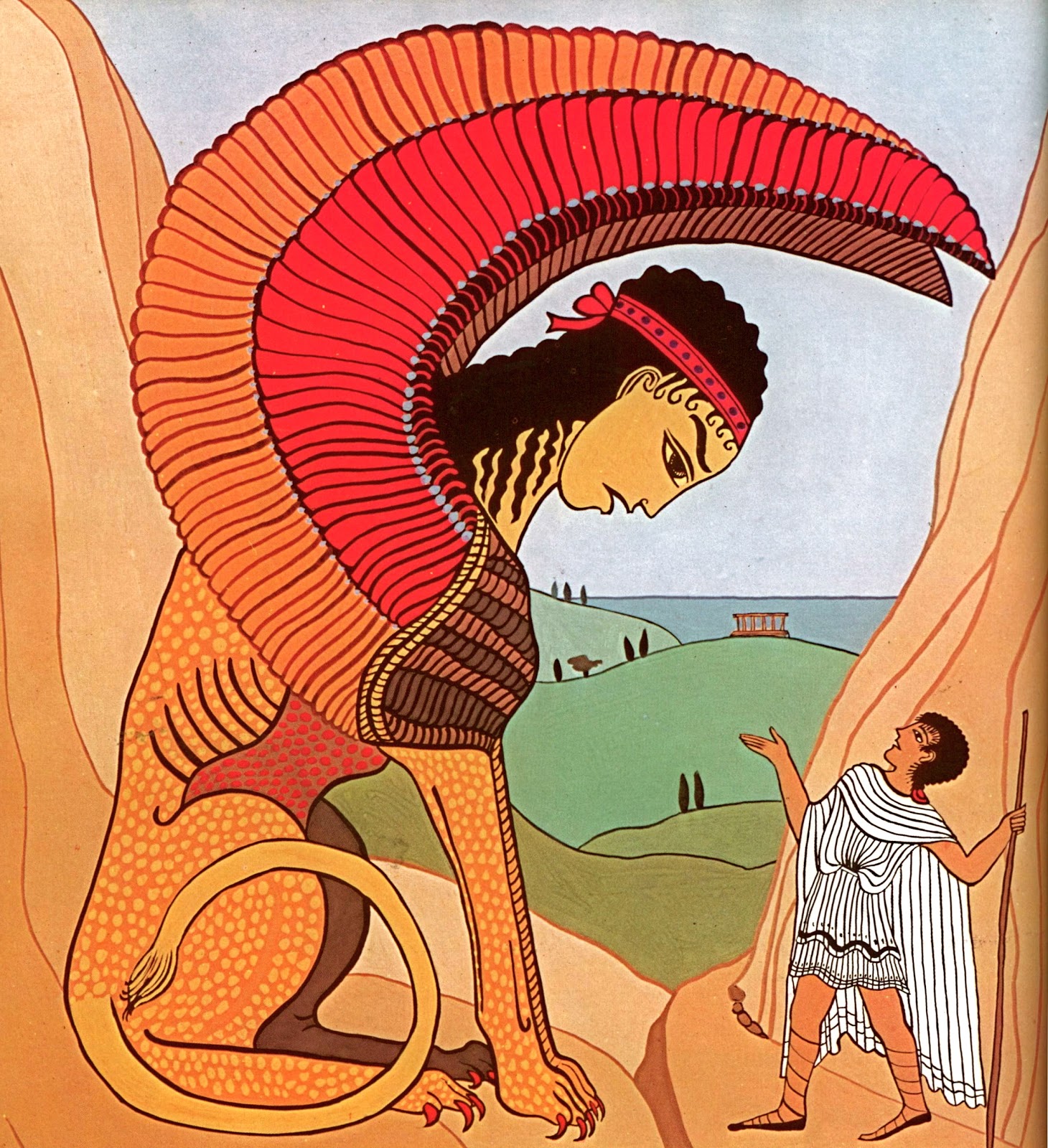
sphinx

by Michael Maciel

We live in an age of relativism. Once it was discovered that any experience can be interpreted in an infinite number of ways, all beliefs in “universal truths” were dismissed as irrelevant. Context became the sole determinator of meaning. What’s more, any attempt to assert a universal truth became merely a way to dominate others. Truth systems began to be seen as tools of the oppressor. Religion became the “opiate of the masses” designed to make them more controllable. The old value systems were thrown out and people were left to formulate their own values. Welcome to the 21st Century.

One of the most misinterpreted quotes in history is Nietzsche’s “God is dead.” This wasn’t a victory cry; it was a warning. He predicted almost fifty years in advance that relativistic thinking would dominate Western philosophy, and he was right. He also predicted that the result of such thinking would result in the deaths of hundreds of millions of people. In this, he was also right, because Marxist Ideology (and its offspring, Postmodernism) would decimate the world with two global wars, the Maoist Revolution, and Stalin’s genocidal purge of Soviet Russia. Millions of people—hundreds of millions—died!

Nietzsche’s prediction prompted the poet, Yeats, to proclaim:

Turning and turning in the widening gyre
The falcon cannot hear the falconer;
Things fall apart; the centre cannot hold;
Mere anarchy is loosed upon the world,
The blood-dimmed tide is loosed, and everywhere
The ceremony of innocence is drowned;
The best lack all conviction, while the worst
Are full of passionate intensity.

And to Yeats’ question, “And what rough beast, its hour come round at last, Slouches towards Bethlehem to be born?” the answer is clear: postmodern, relativistic, truth-less thinking.

The Postmodernist’s rationale seems to suggest that there are an infinite number of word combinations, therefore none of them can be privileged over any others. But not all combinations have meaning, and of those that do have meaning, not all of them are meaning-ful.

So, when I hear otherwise spiritually intelligent people try to equate various spiritual philosophies in the name of “fairness” or egalitarianism, I have to say something, because I know that they have come under the sway of relativistic, postmodern thinking. And what I have to say is this:

In the science of spiritual development, there are certain rules and methods that have been proven—over vast periods of time—to work. These rules and methods are used in every spiritual discipline, regardless of religion or locale:

Attention
Concentration
Meditation
Contemplation
Realization

These DO NOT vary and they are always taught in the order listed here. They are so fundamental that they can easily apply to almost any other discipline as well, such as archery or music.

During the process of learning these skills, certain experiences will inevitably occur. These, too, are universal and come in a definite order. They are referred to as “initiations.” But they’re not the type of initiations commonly used in fraternities or Masonic Lodges. They are not merely rites of passage.

The initiations I’m talking about are transition points from one evolutionary stage of consciousness to another.

They are as solid and predictable as the bodily changes we go through—losing our baby teeth, going through puberty, reaching the age of majority, becoming an adult, etc. Just as every human being goes through these stages of development, so does every person on the spiritual path go through a definite series of initiations, known to mystics as “The Way.”

These transition events can only occur when a person is ready, but the skills listed above hasten the process of development (along with learning to overcome challenges, studying sacred symbols and texts, and developing a sensitivity to the sacred and to the arts).

As an example of what these transitions look like, the first is when a person suddenly feels that the world he is accustomed to living in is somehow false, that there is something more to it, that what she perceives with her five senses is but the veneer of a deeper reality. This is the experience that sets people on the spiritual path.

If you have read my description of these things this far, you have almost certainly experienced this first initiation. However, it’s not too difficult to find people in your life who have not. Many people are strict scientific materialists and regard this kind of discussion as inherently meaningless.

Other transition events follow. The next is traditionally called “The First Threshold” where the seeker begins to venture into the world beyond the senses. This world “calls” to him. There, he or she will experience phenomena that will attest to the reality of this strange new world. In mystic circles, these phenomena are called the “illumination” and “Self-realization.” They are the direct encounter with the light of life and the underlying oneness of all Creation.

But before the aspirant crosses this threshold, there is a point of resistance—a dweller—which is the mundane part of his consciousness that tries to persuade him not to go any further. In mythology, this dweller is depicted in many forms, but always as a demon of some sort or a dragon, which must be overcome. It’s a universal archetype. In reality, the dweller is not a being but our own mind that resists losing itself to something greater than itself.

After this comes the Second Threshold. The aspirant has seen the true nature of her being but has not yet integrated it into her personality. Therefore, she feels like two people—a rather schizophrenic condition. There is “me” and then there is the “real me.” Since she still has the worldly patterns of thought within her, she will then enter into a period of purification, a trial by fire whereby the new consciousness will emerge out of the old (the Phoenix motif). But in the meantime, she will suffer greatly. Many who enter this stage will experience a terrible depression called the “dark night of the soul.” It is the great darkness before the dawn that always comes at this point in the process of spiritual awakening.

This process is as old as humanity itself. It has left its footprints in the symbolism and mythologies of the most ancient civilizations. From the Sarcophagus in the King’s Chamber of the Great Pyramid to the caves of the Greek Mystery Schools, the theme of death and rebirth repeats itself, echoing the Mystery of the Sun and its diurnal cycle of death and renewal and its rebirth out of the three days of darkness at the Winter Solstice. Everywhere the cycle is represented, from a seed dying so that new life can emerge from the chaos of the soil to the mysteries of gestation and birth. All point to the same archetypal experience, beginning with the call to venture into the unknown—enduring trials and the ultimate death of the old self—and culminating in the victory of resurrection into the light. It has always been and will always be the same path—the Path of Initiation, the Hero’s Journey, The Way.

Posted in Christian Transformation, Lessons | 2 Comments

Right Action in the Time of Coronavirus

edwin-hooper-Q8m8cLkryeo-unsplash

– by Michael Maciel

The problem with being a future-oriented society is that when the future disappears, everything falls apart. Our horizons have been too broad and too far-flung. It’s time to bring them closer to home. Because when we use the future (which is always fictitious) to anchor our reality, we lose direction—it is suddenly obliterated, not just by changing into something different but by being replaced altogether by uncertainty.  And that can be unsettling if not downright disturbing.

Now is the time to practice mindfulness, but in a way that’s a little different from the way we might practice it in meditation. By bringing our horizons closer in, so that our future is no more than a day or two out, we can focus on what needs to be done right now.

We all have a certain amount of chaos in our lives, but we manage to put off organizing it by constantly focusing on the future. We have goals, and they are usually long-term. Now those goals have…disappeared. And we don’t know how to live without them. 

Ever notice how young parents can be too distracted to be in the present moment with their kids? It’s because they have goals. Big goals. Important goals. And the overzealous pursuit of those goals can rob them of the most precious years of their life.

Now we’re in a time where there are no goals. Goals have been preempted by a huge cloud of uncertainty. For many of us, the farthest out we can see is fourteen days, the recommended period of quarantine. After that, who knows? Maybe another fourteen? 

Being overly future-oriented has its dubious payoffs. It allows us to falsely prioritize. Instead of tending to the things right under our nose, we put them off, because there are much more important things to attend to. Even if we’re not actually doing anything concrete to realize our goals, we justify putting off the small stuff by believing that if we don’t stay focused on the future, it will drift away, as though thinking about it holds it in place. Thoughts without action is a form of magical thinking.

Having goals isn’t the problem. Having goals that are beyond our immediate horizon is. We need to bring our horizons in. Way in. What am I going to do today? What has to be done by tomorrow? That’s it. That’s as far as our concerns should extend right now. Why? Because no one knows what lies beyond that. But we do know what needs attention right now.

Our lives are a continual balancing act between the known and the unknown. We plan ahead as a way of projecting certainty into our world, so that we can feel confident that our actions will produce predictable results.

Our actions, then, become our prayers. We tailor them to produce the world we want to live in.

There is a Zen saying: “The way you do anything is the way you do everything.” Just as having a well-defined long-term goal can positively affect the way we take care of the little things, so can the way we take care of the little things positively affect how our future will turn out. There are two reasons for this. One is practical and understandable. The other is profoundly esoteric. Let’s take the first one:

As we attend to problems as they arise, we prevent them from accumulating beyond our ability to control. If we fail to attend to them now, they will overwhelm us in the future. Procrastination sets in. We worry—a lot. We get depressed, and our ability to respond to the exigencies of our life deteriorates. If we ignore our problems long enough, they will sink us, sometimes catastrophically. 

We face problems everyday. There are enough of them, big and small, to completely occupy our attention. Unless, of course, we’re too busy thinking about the problems that might occur in the future. Those problems are fictitious. They haven’t happened yet. They might not ever happen. But we spend more time worrying about those than we do about the real ones lying at our feet. 

When Jesus told his followers not to worry about tomorrow, he wasn’t telling them how to be hippies. He wasn’t telling them not to plan for the future. He said, “Sufficient unto the day are the evils thereof.” He was telling them that if they attended to everyday problems as they arose, the future would be a far better place to live in when it arrived. But if they did not attend to the everyday problems as they arose, the future would likely be a living hell. 

Now for the esoteric part of this: We are not born a blank slate, but…we live into one. There is no fate. The future is not written in stone or, as Lawrence of Arabia said, “Nothing is written.” We write our futures as we live. Our actions are our prayers. If we organize our lives now, the order we create will extend into the future and the future will take care of itself.

How do we implement this? Since most of us are in isolation now, due to the public health crisis, we have the time and the stage upon which to conduct our experiment. Our home is like a miniature solar system. It is in constant flux, and as conditions change, so do its needs. All we have to do is ask ourselves, “What needs to be done today?”

Our home will tell us, if we listen. Maybe the refrigerator needs to be emptied and cleaned. Maybe we need to order food from Amazon. Maybe we need to call a family member or friend. Whatever it is, it is a bit of chaos that needs to be put in order. Chaotic conditions—unattended problems—make us vulnerable.

Sufficient unto the day are the problems thereof. Don’t allow yourself to get obsessed with speculations about the future as a way to avoid what needs to be done now.

By bringing our horizons in and living consciously in the present moment, we live in a state of continual preparedness. When conditions change suddenly and unpredictably, we will be as ready as we can be, which is better than feeling crushed by regrets.

And, most importantly, when we order our present, we simultaneously order our future. The developer of the Alexander Method, F. Matthias Alexander, said, “People do not decide their futures; they decide their habits, and their habits decide their futures.” Get in the habit of attending to real needs as they present themselves. Bring your horizons in. Way in.


Posted in Bible 3.0, Christian Transformation, Lessons | 8 Comments