Something Wonderful

There are many kinds of goals. The obvious ones are easy: to lose weight, to find a partner, to get rich. These you might call instinctual goals, because they all have to do with survival. Then there are goals that reach beyond the instinct to survive to the desire to thrive. These might include learning a foreign language, seeing the Eiffel Tower, or standing at the tip of the Cape of Good Hope. But while these are invigorating, they are very much a part of this world, this body, and they are (dare I say it) narrowly human. And while it’s relatively easy to connect with our instincts and our desires, as mystics we have to ask, “What does my spirit want?”

Our instinctual nature is like a train. We are all passengers on it. We share the same drives to survive. When we have been on the train long enough, it starts to get boring, and we start to look for something more. This often takes the form of travel, as in seeing the Eiffel Tower. In the analogy of the train, we start to explore the different cars, talk with the other passengers, enquire as to how the train works. No one asks, “Where are you headed?” because we are all headed for the same place. People locked into instinctual consciousness all know where it ends, and they either ignore that fact, or they do everything they can to get all they can while they can – this is the boring part. Those who want more out of the ride do everything they can to make it interesting. But they too know that it will all eventually end, which leads them to make up all kinds of stories about the nature of life’s origins and destinations. At some point, this also becomes boring.

Our spirit, on the other hand, never actually got on the train. From its perspective, the track goes in a circle, like the model train in your grandfather’s garage. The circuit never changes, neither does the scenery. The train just keeps going around in circles (Hindus call this the Wheel of Karma). But the spirit within us has a wider view of the Cosmos. And, it has its own goals. To understand those goals, and to get in touch with the spiritual part of our being, we have to see what it sees. We have to get off the train.

There is a larger circuit that we all travel. But, unlike the meaningless path of the train, this circuit is a pathway through the stars. It is a journey not driven by necessity, but by ecstasy. The more one tunes into it, the less boring and more fascinating it becomes – in fact, thrilling. The more of it you get, the more you want, and the more you want, the more you get – an upward spiral of brightness and aliveness.

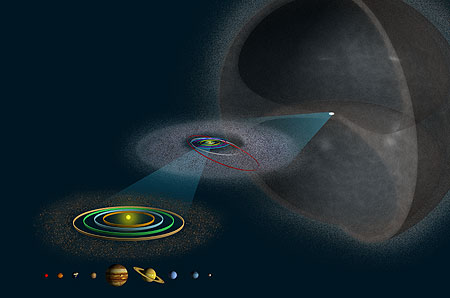
The Greek word planetos means wanderer. They called the planets wanderers because they seemed to wander through the fixed stars of the constellations. We are all planets. The planets, it could be said, are part of the Sun, comprising one system, one organism, one central campfire around which they all dance. Just as our physical body is the vehicle of Spirit, the physical body of the Sun is the visible manifestation of a larger Spirit too great to comprehend, a Spirit not driven by necessity but by ecstasy, the ecstasy of Life and its perpetuation, its evolution, and ultimately its transcendence. For that is the key element of Life – its ability to transcend itself.
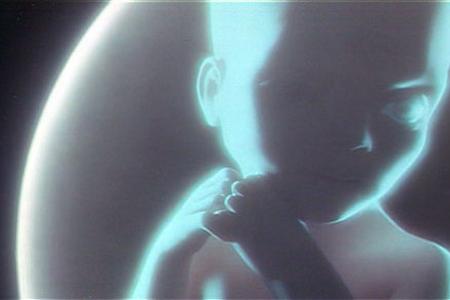
The lower nature of life – instinct – is all about perpetuation; it is the engine of survival. The mental part of life is about possibility, variation, and exploration. The spiritual part of life is about transcendence. Transcendence is about rising to a higher level of consciousness, a higher level of being. It is, in Christian Mystical terms, rebirth. In prayer, in meditation, in spiritual ecstasy, we rise up into higher states of being, higher levels of recognition of the unity of all – the Body of Christ, the Mind of God. We shed the skin of earthly consciousness and take on Cosmic Consciousness and thus join the heavenly host in their songs of praise and exaltation. What is “praise and exaltation”? It’s when our spiritual eyes are opened to the splendor and magnificence of it all, and we say with our spirit, “Wow, this is really great!”

The cosmo-conception of spirituality, recognizing the Sun and planets as the “body of God,” is a recognition in the most rational sense of what is actually going on in our experience of life. The vast distances between our Solar System and its nearest neighbors underscore its organic individuality, its unique identity as a cell in a larger organism. It is literally an island, an oasis in a sea of light. It pulsates with its own rhythms, its own organelles. And for those who have eyes to see, it teems with spiritual life, the forms and manifestations of which are too numerous to count. Consciousness is its life-blood; organic life is its expression. Air, Earth, Fire, and Water are the modes of that Consciousness, its Four Directions, its Cross, its Cube of Space. Mathematics is its language, music its expression of that language, geometry its physiology, light its mind. Everything we are, it is, and everything it is, we are.

Read more about the Son/Sun of God.
Posted in Lessons | 3 Comments

Service – The Art of Doing Nothing

The hardest thing to do is nothing. You cannot truly be of service to another person until you master the art of doing nothing. It’s easy to jump in and “provide” what you think is needed, but the world groans under the weight of good intentions – people and institutions doing what’s “best” for the poor unfortunates around them. More often than not, our good deeds miss the mark, and we wind up doing more harm than good. Our blunderings make us spiritually deaf and blind. Our failed attempts to “fix” the world make us cynical. We become jaded and, eventually, hateful.

Too often, we think we perceive a vacuum in other people, and we rush to fill it with what we think they need. This is the very opposite of nurturing. The need is there, but if we assume we know what it is, we only set the stage for disaster. One need only look at the many examples of missionary zeal throughout history to see the wreckage left in the wake of those who sought to save others. The problem lies not in the other person but in ourselves. The vacuum is in us. Saint Francis said, “O Divine Master, grant that I may not so much seek…to be understood, as to understand.” Nothing needs to be added, only revealed. The best service we can offer in a storm is a safe harbor.

The truest thing that can be said about human nature is that no one receives anything unless they ask for it. Why? Because unless they ask, they are not ready to accept. Unless there’s a vacuum, nothing substantial can move to fill it. Surely, there are laws of physics at play here, but this is more easily felt than understood. The key lies in knowing that everyone already knows what they need; the answers they seek are already there inside of them. What they need is our permission to let them out. By this, I mean that instead of trying to give them something, the best thing we can do is to back off – give them room to express the hidden thing. Depressurize them, so that what is scratching at the inside of the egg can break free. But backing off does not mean leaving – you have to be there. Be there and yet do nothing. This is why doing nothing is an art.

This is where the vow of service most closely mirrors the vow of humility. Again, all of the vows seem to be subsets of the one vow. The quality of humility is preeminent in all of the world’s enduring faiths. Muslim, for instance, means “one who submits.” Mindfulness means to “just be with what is present.” Namaste means “I salute the God within you.” They all point to allowing people to be what they are. Once the energy starts moving in that direction, from the center of their being outward, all of the imbalances can begin to heal. This happens from the inside out. Nothing we can add will be of any help.

All of this can sound suspiciously like being a doormat. Being a doormat never did anyone any good. No one wants to be an enabler. But, this is where clarity comes in – the vow of purity. We will look at that next.


Related article: The Vow of Service—Deliberate Love

__________________________________________________

Note to subscribers to The Mystical Christ:

New articles automatically show up in your inbox in a ready-to-read format, but going to the website is a much richer reading experience. Just click on the underlined text, and you will be switched over to the site itself.

If you are on Facebook, please “share” The Mystical Christ so that your friends will have the opportunity to check it out. If you like it, odds are they will too.

Thank you for being a subscriber!

Posted in Lessons | 2 Comments

Getting Guidance

Asking for guidance is kinda like asking for a job. If you were to go to the owner of a company and ask for a position, his or her first question would be, “What can you do?” God asks the same thing when we ask to serve. Divine guidance will always come in accordance with what we are ready for, never more. This has a built-in opportunity – great endeavors require great preparation. The more we prepare, the better guidance we will get.

SueDoodles.WordPress.com

found at SueDoodles.WordPress.com

Too often, we ask God, “What should I do?” God’s reply to this kind of question is, “What do you want to do?” Even if we ask the question in regards to a specific situation, God’s response is the same, “What do you want?” While it’s true that we shouldn’t be attached to the outcome, we at least need to know what outcome we are looking for. However, we have to know what we want without reaching for it. We have to have a clear idea of it without trying to make it happen. When we know what we want, the guidance on how to get it will be there. But if we don’t know what we want, no guidance will be forthcoming. How could it?

You have to realize that you are lacking a thing before you can want it. The very word “want” means that you are without. If you think that you know the answer to a question, or if you are attached to a particular answer, you are already in possession of the answer you want, even though it is probably wrong. Admitting that you don’t know the answer (and being willing to accept one whether or not it agrees with you) requires humility.

Sometimes, we only think we know what we want, but later on we realize that we were headed in the wrong direction. But if you are stuck, if you are confused and don’t know what you want, wanting anything will at least get you moving. Once in motion, course corrections are relatively easy. Have you ever tried to steer a car while it was standing still? Turning the steering wheel has absolutely no effect on the direction the car is headed. But once it starts moving, then you can control where it goes. The same principle applies in your life and what you want out of it. If you don’t know what you want, choose something/anything. As you start to move toward that goal, its actual value will become apparent and you will be able to tell whether it is right for you.

Receiving divine guidance requires the willingness to step out in a direction that you choose. We can’t ask God to choose for us; the universe simply does not work that way. Choosing is the only thing we are absolutely required to do. But, unless we are humble enough to risk making a mistake, unless we are willing to look foolish both to ourselves and to others while we stumble towards our goal, no amount of prayer for guidance will work. We must be daring enough to try. And when Spirit gives us a nudge, we have to be willing to go with it.

Posted in Lessons | 1 Comment

The Vow of Service – Deliberate Love

You may be noticing a pattern by now. Much of what we have said about the vow of poverty sounds a lot like the vow of humility. Letting go and letting God, the willingness to be led, recognizing that you don’t own anything anyway – these are all aspects of humility. It’s almost as though the five vows form a pyramid with humility as the capstone. In sacred symbology, five is the number of man and is represented by the five-pointed star. Humility is at the top, at the Crown Chakra, because to be humble is to be receptive. The left hand is the hand of receiving, and the right hand is the hand of giving. Hence we have, “Let not the right hand know what the left hand is doing.” Don’t give with an eye for what you might receive in return. Give without thought of repayment. This also relates to the vow of purity, but we will get to that later. For now, let’s look at the right hand, the hand of giving. Service.

The heart is the hardest working organ in the body, but ironically it is also the least developed, at least in terms of consciousness. The split between heart and brain is well-known. And while we have the capacity to love, few of us can direct it. We can direct our attention, if we have developed concentration, but we have a hard time summoning love when it is not already there. In other words, we find it difficult to love deliberately. This is at the heart of Jesus’ words, “If you love those who love you, what reward will you get? Are not even the tax collectors doing that? 47 And if you greet only your own people, what are you doing more than others? Do not even pagans do that? 48 Be perfect, therefore, as your heavenly Father is perfect.”

How many people in the world suffer from the condition known as “failure to thrive”? In a hospital study a few years back, it was discovered that touch – warm, affectionate human contact – was essential to premature babies in order for them to thrive. (See how long it takes for the mind to catch up to the heart?) Those who received it did well; those who didn’t usually did not survive. Much of the trouble in the world can be directly traced to the lack of deliberate love. It is the one thing we all need – if not actual touch, then “warm, affectionate regard.” After all, we touch each other all the time – with our mind. The moral conscience evolves from acting morally to thinking morally to being moral. At its core (cour) service is about deliberate love.

It is easy to hate your enemy, but it serves no one, not even you. In fact, hating your enemy is the fastest way to lose to him. Michael Corleone in The Godfather said, “Never hate your enemies – it affects your judgement.” And if you think that’s cynical, consider the story of the Samurai warrior sent by his lord to assassinate a rival warlord: the offending warlord was caught off guard late at night in his quarters. His back was against the wall as the killer made ready to lop off his head. In desperation, he spat in his attacker’s face. The assassin jerked back, looked intensely at his intended victim, and then in a disciplined, military style sheathed his sword and walked away. Why? Because it is against the Samurai code of honor to kill in anger.

In prison, the worst offense you can commit against a fellow inmate is to diss him. Disrespect can get you killed. You can punch someone in the face, and that’s okay. You will get punched back, and hard, but you won’t get killed for it. Why is it that some people can walk down the street through the most dangerous situations and not get accosted? It is because they do not judge those they see there. Judgement is the highest form of disservice there is, because it is an attempt to trap the other person in his error. Judgement says, “You are evil,” when that person’s soul knows that it is not. Jesus said not to fear those who can kill your body, but be damned scared of those who can kill your soul. Fear is the precursor to anger, and anger is the precursor to violence. Again, no one is served.

To serve is to exercise the heart. It is to love deliberately and then act accordingly. Deliberate love lacks sentimentality; it loves whether it feels like it or not. It is love powered by will. Nothing cleans the pipes of the heart like deliberate love. Originally, the heart was the positive pole of the spiritual body, but it has been corrupted by selfishness and vanity. This is why there is such a lack of moral courage in the world. Loving deliberately strengthens the heart and develops moral courage. It is the Right Hand of God.
Posted in Lessons | 6 Comments

Poverty and the Ties that Bind

We now know that vows are more than a ritual, more than a promise or declaration of intention; we know that they are pre-existing states of consciousness that we enter into. But if we say that poverty is an aspect of God’s consciousness, we make God something external and different from ourselves; if we say that we are God, then the states of consciousness begin to feel like personal constructs – merely ideas having nothing to do with power, force, and energy. No cause, no effect – just bubbles in the mind.

But having lived with vows, we know that they are real, that they have real effects in our lives, that life would be different without them. This is why we study them, to try to understand what it is that we are experiencing. What is it about taking vows that puts our life on a different trajectory than if we had not taken them?

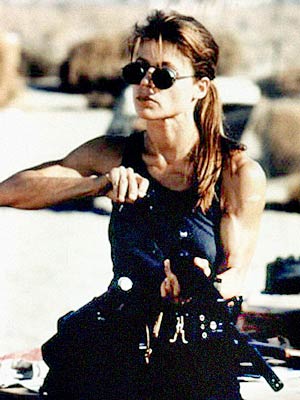
Poverty is the one vow we all wish we had never taken. Ironically, it is the one vow that we have all lived up to. At least, that’s how it feels. Mark Twain said, “Money isn’t everything, as long as you have enough of it.” No one is more obsessed with money than a person who has too little. These days, 99% of us fall into that category. But, as with all the vows, the vow of poverty is about something deeper, something universal. As we saw with Sarah Connor, it is a state of mind, a level of training, an unwillingness to let any thing get in the way of our connection to God. Let’s look at one more aspect of this before moving on to the next vow.

Crucifixion of St. Peter

Non-attachment is a tricky concept. Wrongly understood, it can lead a spiritual seeker to drift untethered across the vast open spaces of the mind. The subtle distinction is this: because it is human nature to prefer to set our own course, we have a reluctance to be led. We might say that we want to surrender to God’s will, but when it comes to actually doing it, well, that’s another story. We always want to have the last word, to engineer our own destiny. This is why we are so obsessed with money, because money “is” power, and power is the Great Enabler.

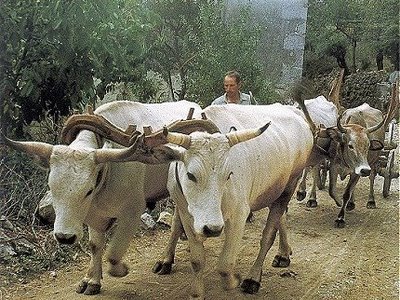
The idea of being led is carefully woven into the words we use for spirituality. The word “yoga” comes from the Sanskrit word yug, meaning “yoke.” The image is of two oxen yoked together, suggesting the union of opposites, but this is a misreading of the idea. The ox is a symbol of power, divine power, stemming from the Age of Taurus when this symbol was first used. The idea is to tether yourself to the oxen, to the divine power, and let it pull you along. Metaphorically speaking, most of us get through life by pushing our carts from behind, trying to do it all ourselves, as though personal effort were the highest virtue. But on the spiritual path, the only effort required is the willingness to let go and let God.

Another word we use to describe spirituality is the word “religion.” Like “yoga,” it also refers to tethering. The Latin root of this word is ligare, which is the same root for the word “ligament.” Ligaments connect bones to muscles, another form of motive power.

Tethering is different (at least in its connotation) from “binding.” Binding feels like bondage, whereas tethering empowers. We tether a computer to a cell phone in order to go online without an ethernet connection. We tether a dingy to a boat, or a horse to the back of a truck. The purpose is to accomplish something, not to restrict – to perform an action, not to prevent an action. Too often, vows are seen as restrictions and not as agents of empowerment, which is what they are. Jesus said, “Very truly I tell you, when you were younger you dressed yourself and went where you wanted; but when you are old you will stretch out your hands, and someone else will dress you and lead you where you do not want to go.” Symbolically, the “young” person is he or she new to the path; the “old” person is one who is spiritually advanced and is able, even over the objections of his or her preferences, to be led by the Spirit. We follow our inner guidance, even when we don’t feel like it. We say to God, “Take these hands and use them.” This is the mark of spiritual maturity.

The best investments we can make are investments in ourselves. Rather than a boat in the driveway, we learn to play a musical instrument. Rather than more stuff, we hone our talents or develop new ones. This is true wealth, the kind we can take with us. Compassion, generosity, an affinity with God – these are “possessions” of the soul. No one can take these from you. But, the more encumbered we are by the things of this world, including ideas and opinions, sentiments and desires, the less able we are to be led by the Spirit. This is true impoverishment and the source of sorrow. Why be tethered to the past? The past can only drag you down. Cut that rope, the ties that bind, and tether yourself to God. God will pull you up.

Posted in Lessons | 3 Comments

Interesting Times

"May you live in interesting times." That was a Chinese
curse, wasn't it? Well, at least we know now who to blame it
on. All the economic stuff is interesting enough, but the
real show is happening right in my own atmosphere. Just
watching what kind of vibration I allow myself to have,
whether I succumb to fear or get mad as hell (I have GOT to
stop listening to NPR!) or whether I'm just gonna breathe.
It's up to me. 

You know, we've all been through this before. Many of us
were probably alive during the Great Depression, died there,
and then came back for these interesting times. We were
probably around for the fall of Rome. During our time on
earth, we've had to have seen many of the great
civilizations come and go. Not that any of it was fun, but
it sure was interesting! Now, we might live to see the
collapse of the entire ecosystem. That would make the fallen
civilization thing look not so bad by comparison. But much
worse than any of these things would be to lose ourselves in
fear and anger. That would be tragic. To keep things in
perspective, I tell myself that none of this is new. I've
been here before and this is pretty much the same. 

Now more than ever I feel it's important to watch what I
think. I can almost see my thoughts gather around me like a
mist; sometimes the mist glows and sometimes it doesn't. I
like it better when it glows. But best of all is when there
is no mist, when there aren't any thoughts, just that
wide-awake, silent awareness - watching, waiting, letting
go, lifting up, receiving - in other words, consciousness. I
can either be scared and angry, or I can be conscious. I can
either control my thoughts, or I can let them blow in the
wind. Negative thoughts can either stick to me, or I can
peel them off and expel them from my mindspace. This I can
do. Or not. It's up to me.

Today, I choose to be conscious.
Posted in Lessons | 3 Comments

Ruthless Poverty – the Essentials of Life

Kali

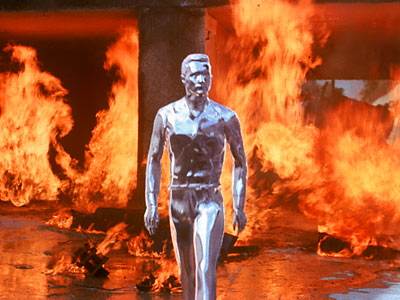
Many motion pictures use myths as the basis of their story line, and Terminator 2 is a good example. And since poverty is a spiritual principle, it’s an easy bet that it will show up, as it does in this movie.

Since Sarah is The Mother, she represents the Divine Feminine – conserving, protecting, ruthless. Her level of horror at the impending nuclear holocaust personifies raw survival instinct that will stop at nothing to preserve life. No thing gets in her way.

The Divine Feminine is the sharp end of the stick in the preservation of life department. She is “red in tooth and claw” – she will not hesitate to cull the herd if it means preserving the species.

Quicksilver -bloodless

The intellect of man is just the opposite: his rapacious need for more and more stuff willingly risks the entire ecosystem, destroying whole species nearly on a daily basis. The mind of man ignores the heart of nature and is willing to die so that he might achieve the last thrust of his gluttony. With man, it’s all external – and temporary. But nature takes a longer view.

Nature is less attached to form than she is to systems. Life is always changing its forms – always evolving – shedding its “skins” in order to adapt. Nature is relentless in her attachment to life, but she is the epitome of non-attachment when it comes to form.

Mother and Son

Poverty is stripped down – it is the consciousness of the essential. Poverty says, “Take everything you need, but no more.” Her abundance is geared not only to the what but also to the when. A thing taken at the wrong time is taken not out of need but out of fear. And fear kills life – it shuts it down. Fear of lack stops the flow. One who has adapted to the consciousness of the essential never lacks for anything. Poverty leads to abundance. It is the seed bed of generosity.

The vow of poverty leads one into the consciousness of the essential. A clear signal is a strong signal. Simplicity, clarity, focus – these are the footprints of poverty. When you find them, watch out! Because you’re on the trail of a very powerful animal.

Tiger, tiger burning bright

Posted in Lessons | 2 Comments

The Five Vows – Poverty

Sarah Connor - Terminator 2

When thinking of the vow of poverty, an image leaps to mind, and it is an image that you will find highly improbable if not downright ridiculous. The image is from a scene in Terminator 2, Judgement Day. (See, I told you!) Here’s the story: Sarah Connor is on a mission to assassinate the scientist who will eventually create the artificial intelligence that in the future will seek to eradicate humanity. She knows this, because others have travelled back in time to tell her how it will all play out. They come to her because she is the mother of John Connor, the future leader of the resistance against the machines. So, in her role as the mother of the messiah, she spends the years leading up to Armageddon in combat training. I’m telling you all of this just in case you are one of the very few who are unfamiliar with the story.

Focus

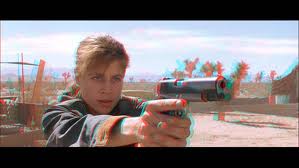
So, the scene is this: it is nighttime, Sarah Connor is in camouflage and armed with an assault rifle with a night-vision, laser-guided scope and a sidearm. Her target is seated at his computer unwittingly engineering the destruction of the human race. She is positioning the little red dot on the back of his head from her vantage point outside, and just as she is about to pull the trigger and save the world, the scientist bends down to reach for something. Her sniper round clinks through the window glass and shatters his computer monitor. He is immediately alerted to the imminent danger and heads for shelter away from windows and into the interior of the house.

Sarah, as I’m sure you would, realizes that her assault rifle will be cumbersome in close-quarters. So, without hesitation she throws it down on the ground and unholsters her automatic. She is intensely focused and disciplined in the pursuit of her target. Now this is the part that speaks volumes to me about the vow of poverty, specifically the part where she throws her rifle down on the ground. When I saw her do that, my first thought was, “O my god, that’s got to be at least $3000 worth of equipment she just threw away!” I mean, couldn’t she have carefully set it down, on the grass maybe? No. She discards it as if it were the one thing keeping her from her goal, a thing vile, to be despised, so worthless as to be hateful. She shed that gun as though it were a tee shirt stained with cranberry juice.

And there’s this other thing, and I promise to get right back to Sarah, because I know you’re dying to know what happens next, but this is also germane to the point I’m trying to make. It was in Traffic School (yes, I went to Traffic School). The instructor said that one of the main causes of traffic accidents is eating while driving, that when faced with the decision of either hanging onto your Big Mac or grabbing your steering wheel, you will hang onto your Big Mac. I thought that was absurd, but it turns out to be true. It’s kinda like the monkey that won’t let go of the morsel inside the coconut shell, and because his hand will fit through the hole but his clenched fist won’t, he’s trapped and gets hauled off to the research lab.

Back to Sarah. When she realizes she’s going to have to chase this guy through hallways and bedrooms, she flings her $3000 rifle/night-vision, laser guided scope to the ground like it was n o t h i n g and leaves it forever. This was attributable, no doubt, to her rigorous combat training, which says that while your rifle is your best friend, it can quickly become your worst enemy if trying to keep from getting a scratch on it causes you to hesitate at a critical moment.

Life is full of such choices. But the combat training we are interested in is the inner kind. What are we hanging onto that is getting in the way of the spiritual goals we have set for ourselves? Is it a house, a job, the opinions of others?

Monastic Life

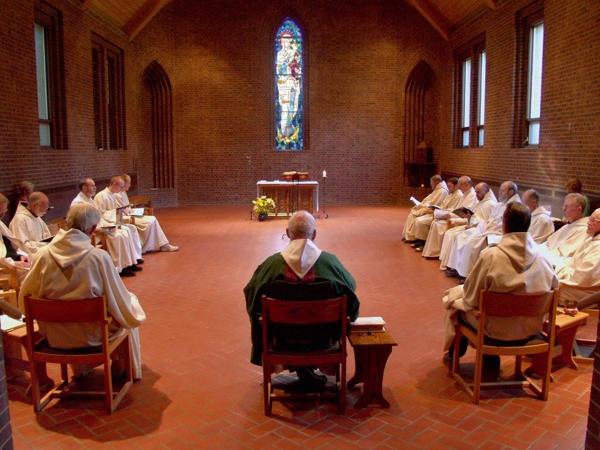
Some say that the vow of poverty is a way to facilitate communal living, as in a monastery. No one owns anything; all goods are shared amongst the community as a way to foster harmony and cooperation. Others say that it is the Western equivalent of the Eastern principle of non-attachment, and while that is true, as an explanation it fails to provide us with a purpose. Why is non-attachment a good thing?

This is where Sarah has a lot to teach us. Her training has enabled her to be intensely focused, but is focus in and of itself the goal? Is non-attachment in and of itself spiritually viable? Non-attachment and the vow of poverty are tools, not goals. Once they achieve their purpose, they can be discarded, just as the ferry boat of Mahayana Buddhism can be left behind once it reaches the far side of the river (enlightenment). Although, in reality, as long as we are in a physical body, it is a safe bet that keeping these tools close at hand and in good working order would be a good idea. Attachment is what the physical body is good at, and for its purposes that works well. But, the spiritual path demands a certain mastery over the body, and non-attachment works well for that.

Jesus being stripped of his garments

Too often the spiritual path gets turned into The Destination, a kind of religion in itself. This is a mistake. We need to keep two steps ahead of our religion at all times. As Jesus said, “The sabbath was made for man, not man for the sabbath.” If you are stuck in the mindset that the spiritual path, however that might look for you, is where you have to be, then when moments of liberation lift you above the earth, you will feel like you are doing something wrong, that you are being “unfaithful.” Don’t spoil the moment. Let tools be tools, and when they are no longer needed, cast them aside. This is the heart of the vow of poverty.


Posted in Lessons | 5 Comments

183 Words

Theologians love to complicate things. Take the concepts “omniscience” and “omnipresence.” Omniscience is the idea that God knows everything; omnipresence means that God is everywhere. As a child, these ideas mystified me. In a way, it just made God seem more distant, more remote. But if you consider that you are omnipresent and omniscient in your body, it’s suddenly not so hard to understand what these two terms actually mean. For instance, my foot is distant from my brain, but if it hurts or gets cold, it occupies my entire awareness. Or, if your partner is upset with you, it doesn’t matter where on the globe they might be – they might as well be in the same room with you, the feeling is the same. So these two five-dollar words, omniscience and omnipresence, are really just saying that we live in a great being. We are, in fact, part of that great being. The more we identify with It and not our separate self, the more we know and feel what It knows and feels. This is the mystery that these two theological words conceal.

Posted in Lessons | 3 Comments

God’s Humility

Into the Un-Known

Not-knowing is our most powerful position, because it opens the door to possibility. Why would it be any different for God?

The statement “God knows everything” is meaningless, or at the very least has been grossly misinterpreted. The rules for creativity are the same for God as they are for us – you have to know nothing before you can know anything – “And darkness was upon the face of the deep.”

Not-knowing creates a space within which all things are possible. Not-knowing breaks down the barriers that keep us imprisoned in the known. The known is a parched desert – nothing grows there. Once a thing is known, it ceases to live. Not-knowing is the key to life. You can’t exist in a state of not-knowing and believe that God knows everything. If God knew everything, everything would cease to be. It is God’s not-knowing that keeps the universe growing and evolving. It is the very thing that generates life.

Reflexion

Consider that our greatest awakening occurs in the space created by not-knowing. Why would it be different for God? We are the microcosm of the macrocosm. What is true for us is true for it. If we believe in statements like “Man, know thyself” and “We are created in God’s image and likeness,” then we have to afford God that which provides the opening within us, namely, not knowing.

Only in a society caught in the glamour of the intellect, a society that values knowledge and information above all else, can you find a concept of God that knows everything. When knowing everything is the highest concept of good, then naturally the god of that society must epitomize that concept. But the mystic knows better. The mystic knows that in order for God to be the creator of all life that there must be that within God which creates the emptiness within which life can occur. Unless the universe holds that space within itself, the whole thing would grind to a halt.

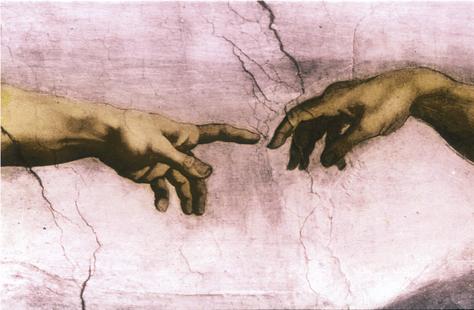
The one thing that is guaranteed to produce movement (life) is a vacuum. When we stand in the place of not-knowing, we effectively create a vacuum in the universal mind, the mind of God. God then rushes in to fill the vacuum that we are.
Surrounded in Royal Purple

In order to understand this concept, we have to think in terms of power, force, and energy. God is not an external entity – God is the living, sentient being in Whom we live. The only thing that keeps us from the experience of God is the belief that we exist as a separate self. This is the lie perpetrated by our own senses. When we turn away from the senses and go into the silence within us, we begin to experience God as a presence. And by that I mean a living power that knows and experiences you to the degree that you know and experience it. God’s love is a two-way street – love begets love, although, “we love because He first loved us.”

Taking the phrase “first loved us” out of the context of space and time, which is what we have to do if we want to know God, “first loved us” means that we exist in a field of love, a conscious energy that is always present and always here. “first loved us” means that we did not create it – it was already here when we arrived. But when we get quiet within ourselves and open up to it, we allow it to occur in the world. This is our place in the scheme of things. As Eric Butterworth put it, “We are an inlet and an outlet of God.”

It is imperative that we stop thinking of God as something external. God is that which keeps the Cosmos in motion, from the very smallest to the infinitely big. It is all one thing. Emerson said, “There is no great and no small to the mind that maketh all.” Size and distance are creations of the mind. They do not exist in Gods reality. If we want to know God, we have to be like God and think the way God thinks. This is not as difficult as it might sound, because again God knows nothing about difficulty, either large or small. We need only ask for help and help is given.

Afterword:

When a spiritual teacher pushes the idea that God knows everything, what he’s really saying is, “I know more than you do.” The assumption is that the teacher is closer to God and therefor naturally knows more of what God knows. This is a well-known tactic to gain power over one’s students. The true teacher, on the other hand, seeks to draw students into the state of not-knowing, so that together the entire community can become one with God in that state. The Buddha of Compassion, Avalokitesvara, vowed not to enter into enlightenment until all sentient beings were saved. And in Hebrews 8 we read, “And they shall not teach, each one his neighbor and each one his brother, saying,’Know the Lord,’ for they shall all know me, from the least of them to the greatest.” Not-knowing is the Causeless Cause of the act of creation. It is the organizing principle of all that is. “Of myself, I do nothing.” This is humility.

Avalokitesvara, the Buddha of Compassion

Posted in Lessons | 3 Comments