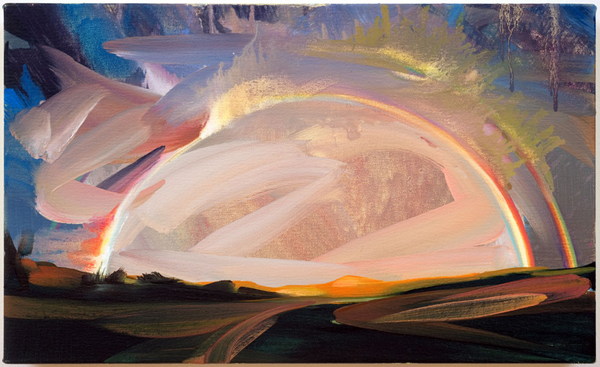
What Does It Mean To “Affirm”?

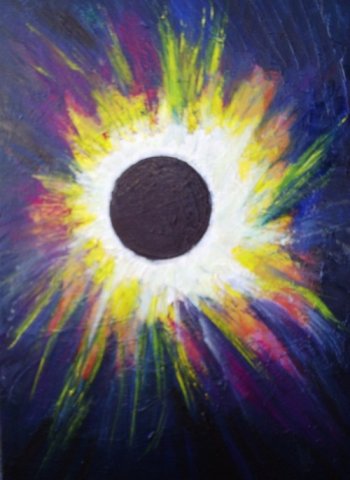
Art by Rebecca Campbell

Affirming in the face of contradictory evidence can have the appearance of forcing the issue – an act of will, not of faith. For example, saying “I am well” when you are obviously sick is trying to overcome the illness with a thought, as though the thought had a power of its own, which it does not. In order for a thought to have power, it has to have life moving through it, like an electric circuit has to have a current moving through it before it can produce an effect. Thoughts are circuits, and electric circuits are “thoughts.” In fact, an electric circuit is so exactly a thought that the word hardly needs quotation marks around it.

Saying “I am well” when you are not must be accompanied by a perfect thought before it can restore health. That’s the first requirement. You have to know what being healthy feels like, looks like, and sounds like, even when you feel like hell. You have to be able to visualize it and feel it with all of your senses while those same senses are inundated with the opposite. Easier said than done.

The second requirement is that you have to take your attention off of being sick and put all of it on your concept/experience of being well. This is kind of like “being part of the solution and not the problem.” As long as you are giving life to the problem with your attention, you are feeding it. Again, easier said than done.

Thirdly, you have to create it, and this has three parts. Briefly, you have to want to be well, which means you have to want it more than any benefit you might get from being sick, such as being right or getting sympathy or time off from work. The second part is that you have to have sufficient willpower to override the inertia of the already established thought, which by now does have a life of its own – the one you have given it by your words, your actions, and your thoughts. And the third part is that you have to command all this to take place. It’s not enough to just have the thought; you have to say it. Saying it breathes life into it. And you have to say it as though there is no other option. The universe is continually asking us what we want, and any hesitancy on our part is a deal-breaker. We have to want it past wanting. We have to expect it the way we expect our paycheck. This is our contract with God (in the old language it was called covenant). This is what the centurion meant when he said, “Only speak the word, for I too am a man under authority. I say, ‘Do this,’ and it is done.'” Symbolically, the centurion is the executive mind; the Christ is the God Being in Its life aspect. Both are elements of us – the thought and the life within it, activated by the Word.

There is a way to get a leg up on this: be proactive. It’s easier to change outer conditions before they get started than after they have hit high gear. Usually we wait until a negative condition is going a hundred miles an hour before we start making affirmations. It is far easier to affirm the good than to negate the bad, which is the way affirmations are normally attempted. Here’s how to make it work for you: the next time you’re feeling great, I mean really great, say to yourself and the whole universe, “YES! This is good!” And it doesn’t have to be a good feeling; it can be a knowing, a sense that what just happened was perfect. Call it that. Let God know that it fits – the same feeling when you fit the last piece of a jigsaw puzzle or when you find something that was lost. This goes beyond gratitude, which is also good; this is putting your whole being into it. Seize the moment. Carve it into stone. Touch the earth. Stand in it. If someone were to ask you in that moment, “Who are you?” you would say, “This is what I am.”

What we affirm is what we are. What we create comes back and re-creates us.

Posted in Lessons | 3 Comments

Solving the Mystery of God – being a spiritual detective

Path Through the Woods by Judith Yarrow at judithyarrow.com

Everyone has had a spiritual experience. Maybe it was having a prayer answered. Maybe it was a profound sense of Presence. Maybe it was a dream that felt like a visitation from a higher being, an angel, or a spiritual teacher from the other side. Perhaps it was an intuition into the consciousness of nature, or the sense that you have lived other lives. It could even be something as indefinable as the conviction that God is real and not just an idea taught in seminaries. It could be any of these or something else entirely. But whatever you experienced, you know the feeling of it – you know its vibratory signature.

There is a Sanskrit word, marga. It means the path or way made by an animal, a sign of passage. That is what we are looking for. This is what makes a mystery different from a belief. A mystery is based on a piece of evidence, a thread that when followed leads to more evidence, more clues. And these clues are actual, spiritually tangible experiences, not merely ideas or insights. They are feelings, but not emotions. In fact, they might have no emotional content at all but only a sense of something greater or larger than yourself, the way your body can tell when it walks past an open doorway in the dark. There is an opening, and you can feel it.

It is possible to follow Jesus Christ and not be a Christian. Being a “Christian” can mean a lot of different things, few of which have anything to do with God or Christ. Too much religious knowledge can actually get in the way of having a real spiritual experience, because the mind is ruthlessly biased toward the conclusions it has already made. Not a good formula for success. “A bird in the hand is worth two in the bush,” as the saying goes. The sense of a thing trumps the idea of it every time. And this is what a “mystery” is – a sense.

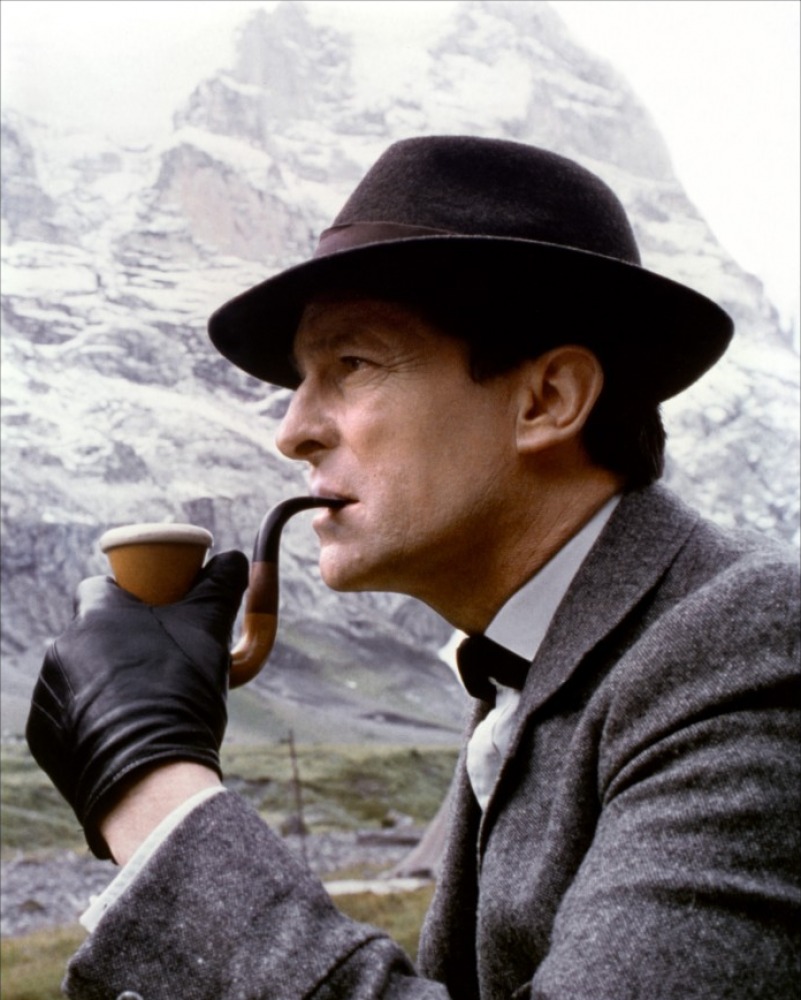
In detective work, physical evidence is the cold hard cash of a case. Hunches are fine, but unless there’s some form of proof, no matter how slight or thin, you don’t really have anything to go on. You have to take the one thing you have and build on it, regardless of where it leads. As Sherlock Holmes says, “When you eliminate everything but the impossible, that is where you look!” For a spiritual detective, this means taking the sense that you have and sitting with it. You block everything else out and isolate the feeling, not the emotion, but the feeling. You let it work on you until it gets real familiar, and then you watch for it in your everyday life, like a scout watches for signs of passage.

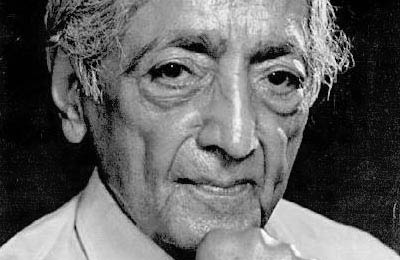
J. Krishnamurti

Vibrations are real things. Inner experiences have their distinct vibratory pattern. The challenge is to connect the instances of that one vibration as they occur in your life, to connect them in a meaningful way. Why did you feel it that day on the street corner the same way you felt it in church as a child? The two settings have nothing in common, but the feeling was the same. Was the source of the vibration coming from outside, or was it coming from within? And if so, what opening is being provided?

Sometimes, our helpers from above leave a track for us to follow, a scent, a feeling. Christian Mystics know this as the Way. Far from being a set of rules or a prescription for living, the Way is an energy, a spirit, that has its own distinct vibratory signature. We might not see what or who is making the track, but we can feel it. We learn to savor that feeling and to remember it (not that we could ever forget). Whenever that feeling comes up, we recognize it. We know that it will ultimately take us home. So we focus on it; we hold it close. We place it on our inner altar as though it were our direct link to God. If we feel lost or confused, we call on it to return us to our center, our true north. It does not matter if what we are experiencing is the “highest” spiritual experience we could ever have, because if we are true to it, it will lead us to ever higher states of realization. The path, as Sinclair Lewis puts it, “leads deeper in and higher up.” As long as we trust God, we cannot be deceived. God protects God’s own.

The Way cannot be found in books or in speeches. It is as real as a radio signal or a beam of light. We feel our way along it, like walking a path in a forest at night. Each step you take either confirms that you are headed in the right direction or warns you that you have strayed. And each step is all you have. But the path is sure; it has been travelled by many who have gone before you. And it is an easy path; nothing about it is meant to trick or mislead you. As long as you stay true to the high, exalted sense you have been given, you cannot go wrong. You will find home.

Posted in Lessons | 2 Comments

Oneness Exercise

"Handprint" from Shambala Times

Spiritual goals should only be as difficult as they need to be and no more. The most freeing realization we can have is that perfection is unattainable. Raising the bar incrementally is always a good thing, but raising it so high that you can never reach it is not only counterproductive, it is defeating. So what if you can only reach so high. The important thing is that you’re making progress, no matter how small.

Oneness is one of those experiences that has been turned into an impossible feat. Only saints and gurus, evidently, are capable of achieving it. But this is a story perpetrated by those who have not experienced it and want to make sure that you don’t either. If you love life and you love your life in this world and you want to live your life fully, the experience of oneness is easily and immediately available. You might not leave your body and sail off into the cosmos or have supernovae go off in your head, but you will feel one with life. And that’s what counts.

Kabbalistic Wisdom

The exercise is simple. It takes a little imagination, but imagination is our most powerful intuition, and it opens doors. It goes like this: become aware of the people around you, the ones next to you, the ones next door, the ones driving down the street. Picture them in their homes on your block, or downtown in their office buildings. What are they doing? What are they thinking and feeling? Picture their hearts beating in their chests, the blood flowing through their arteries and veins. Think about how they’re breathing. Is it fast, or is it slow? Imagine that you can see their nervous systems, all lit up like a Christmas tree, and that you can feel what they are feeling. And ask yourself what all those nervous systems are keyed into, what stimulus affects them simultaneously, both subtle and dramatic. You have to know that what is affecting you is affecting them, whether you are conscious of it or not. Entrainment doesn’t only happen during big events like 911. It’s always happening. Where is it happening right now?

The dream of individuality keeps us from admitting that we’re really not that different from each other. This is where judgement comes in – if I can make you wrong, then I have just reinforced the dream. The reality is that we all react to things pretty much the same as everyone else. We may show it more or less, but it’s the same reaction. Viewed from a great height (metaphorically speaking) we are hard to differentiate.

This might not be the kind of oneness you were looking for. But it’s a good place to start. No place is more solid than the bottom. Be real, be human. Find what’s the same. Recognize that what seems different is only a matter of perspective, a different angle. The human body is so packed full of nature that “out there” pales in comparison. And every body you see is the same. It is your body, only seen from a different “angle.”

Posted in Lessons | 1 Comment

The Vow of Obedience vs. Following the Rules

I live in California, possibly one of the most litigious states in the country. There is an inordinate fixation on rules out here, especially in the area of regulatory law, so much so that when it comes to environmental legislation, for instance, the rest of the states know that “as California goes, so goes the nation.” Whatever is mandated here will be mandated in Peoria ten years from now. This has its upside in that one of the first things Californians notice when they travel to other states is the smell of automobile exhaust. The air quality restrictions here are so fierce that smog is almost non-existent, even on a hot summer day.

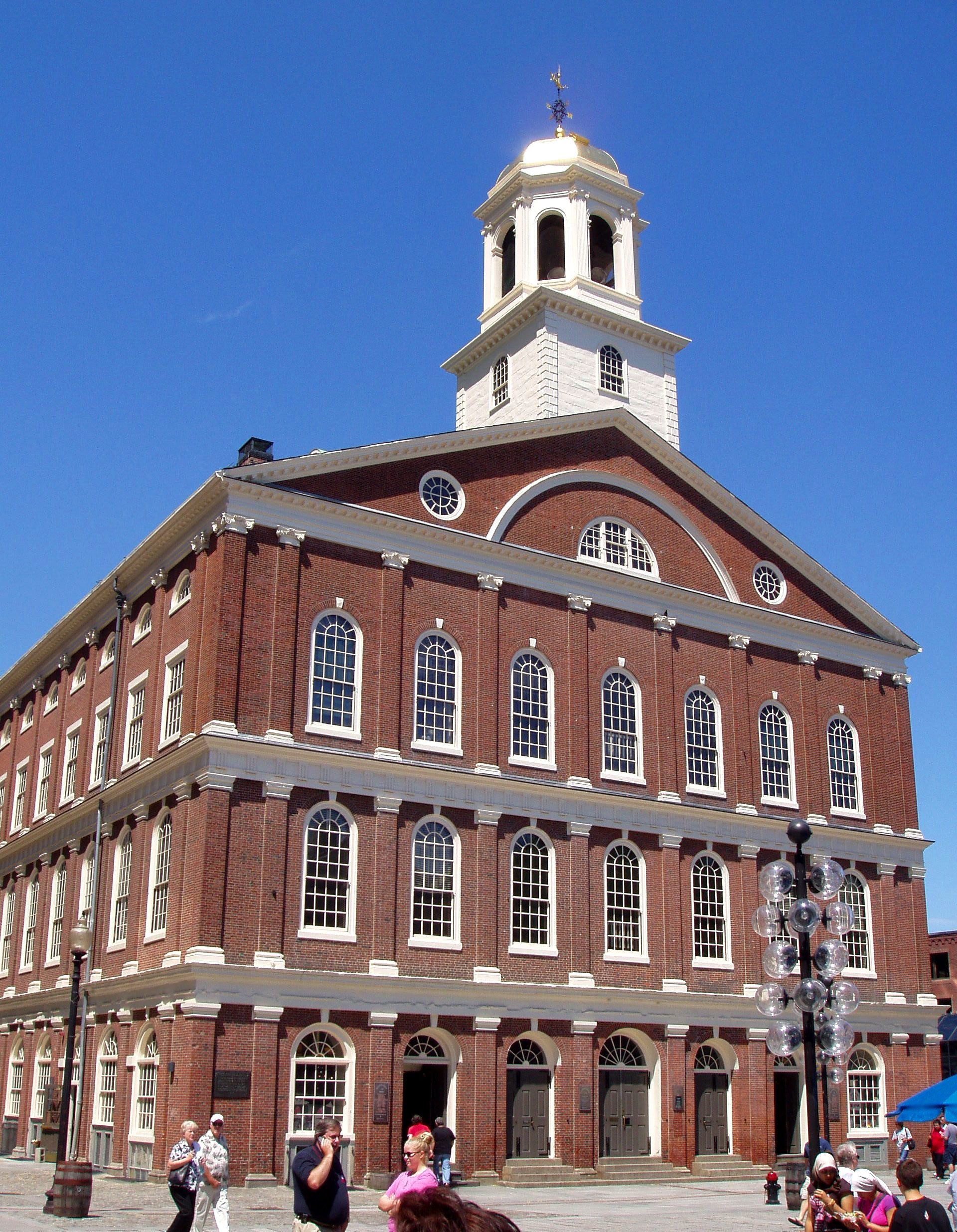
Faneuil Hall, Boston

There are stark differences between the East Coast and California in the way people follow rules. Blue blood vs. Hollywood. Pin-stripes suits and wingtips vs. bluejeans and Nike running shoes.  If ever there was a case where spiritual polarity mirrors geographical polarity, this is it. The East Coast has deep undercurrents of tradition, whereas in California innovation seems to spring up straight out of the ground. This may have something to do with the East Coast’s colonial beginnings, the “New” England, and California’s golden aura as the Land of Opportunity, the New Frontier. Both reflect our own inner polarities, our Saturn and Jupiter, our desire to be safe and our need to explore.

So it is in our understanding of the vow of obedience. There are rules we must follow, and there are rules we must break. There is a natural rhythm that rules provide, a safety zone wherein we can know ourselves. But there is the unknown part that beckons when we are ready – a call. And it is to that call that we owe a higher allegiance. This makes us traitors to the world – despised, rejected, forsaken – but to the call we must be obedient, even if it means we will be alone.

k.d. lang

Even through the darkest phase
Be it thick or thin
Always someone marches brave
Here beneath my skin

And constant craving
Has always been

Maybe a great magnet pulls
All souls towards truth
Or maybe it is life itself
Feeds wisdom
To its youth

Constant Craving” is a song written by k.d. lang and Ben Mink, and performed by k.d. lang on her album, Ingénue.

Posted in Lessons | 1 Comment

Spiritual Sight – seeing life

No one can deny that light is essential to seeing. That much is apparent. What’s not so obvious is that light is light – not spiritual vs. physical – just light. One light. Plants know this. They look forward to the sun rising the way most of us look forward to our paycheck. And in their heliotropic way, they follow the sun across the sky with unambiguous adoration. They don’t hate the cold; they don’t hate clouds; they just miss the sun, when it’s not there. Hatred and resentment are not in them. The absence of light isn’t evil, it’s just the absence of light.

In considering light, we could talk about spectrums, wavelengths, refraction and reflection, and wouldn’t that be boring. What we need to ask instead is what gets us the way the sun gets the plants? Where is our heliotropism? What turns our head in the course of our day? And I don’t mean instinctually – that’s too easy. Ask anyone what they really want and they immediately shift into low gear, as though that’s the only thing going on. But what if you had all that? What if you had so much of that that you were bored with it? What would you seek then? What sun would you look for? To develop our spiritual sight, we have to go there. Leave bodily concerns to the body. The body knows how to take care of itself. But the Spirit – the Spirit in us has been under a cloud for far too long. And it’s dying to get out.

Spiritual sight is seeing the Spirit in other people. But in order to see it, you have to look through it’s eyes, so to speak. You have to want to see it. The Spirit in you seeks the Spirit in them. All the rest, the physical stuff, the personality stuff, the stuff stuff, that’s all clouds. Those things are the cares of the world. Not much information in that. Not much life – only grasping, lunging, fleeing, and flirting. Those impulses are not what created the world, though many would like to think so. If we focus on those energies, if we try to “see” what’s going on there, then all we see is emotion. If we get good at that, we can read people from an emotional standpoint pretty well. But, we are not seeing Spirit. We are seeing emotion and its currents. This is called psychic sight, and it’s what people who are truly streetwise have in abundance. This is not, or should not be, our goal when we seek to acquire spiritual sight.

There is really only one thing going on in this solar system, and for lack of a better word, let’s call it heliotropism, the irresistible urge to orbit the sun. We all do it. We are all planets, strictly speaking. And in that wonderful way that the very large clones itself in the very small, orbiting is everywhere. Babies and toddlers orbit their mothers, adolescents orbit each other, young adults orbit their mentors, older adults orbit their careers and their families, and old people orbit that for which they have no name. We all seek the Spirit, and anything that provides a link to it holds our attention at the deepest levels of our psyche. We will give anything for it, go anywhere to find it, and listen to anyone who has something meaningful to say about it. It’s what we do.

The sun is in everything, in-forms everything, sustains everything. And the amazing thing about consciousness is that it is like the sun. It shines in all that lives, even those things that live really, really slowly, like rocks. Life is there too. Spiritual sight is seeing life, how it moves, where it moves, and what it’s trying to achieve. Spiritual sight is seeing what’s real, not what’s merely apparent. And all it takes to develop that is to start looking for it. Seek and ye shall find. Knock, and the door will open. But you have to know it’s there. Otherwise, all you see is the stuff of the world, not the life. Life sees life; the flesh sees nothing.

Posted in Lessons | Leave a comment

Spiritual Sight

Kabbalistic Wisdom

Knowing something is there is half the battle. Einstein might have been wrong about the speed of light, but we have devastating proof of the energy hidden in matter. All we have to do is look in that direction to see what we are not seeing. The incandescent substratum of our heart, or the heart of another, has been there from the beginning, but we ascribe little importance to it or chalk it up to imagination. But we know it’s there. And knowing unlocks the door. Knowing lets us see behind the veil.

It doesn’t take a lot of faith to know that matter is mostly empty space, that molecules and atoms have mass but no substance. What we call the things we see, the solids in our life, are more similar to a hologram than they are to a brick wall. Held in suspension by a Thought, pulsing with power at a rate that only makes them seem opaque. One wonders if it is simply a question of timing that holds the universe in place, not gravity at all. Periodicity. Scintillating matrix. Om. The Word.

The miracle is that Light responds to thought. Light – life made visible. Moving, flowing, shining – animating the world. IT knows exactly what to do and how to do it. There is no end to It’s Imagination. It looks to us for new ideas, new forms, combinations and counterpoints, dynamisms with which to create brighter worlds. We are the spinning top set to spin forever, a Projection offsprung, infused with hope, filled with potential, ravenous for experience. Human spirit = Holy Spirit, but can we see it?

Imperfection is Perfection half-hidden. It takes courage to see it, a luminous heart. We say that we “believe” in life, but why is it always something separate? Why do things have to be powered from without? Does food sustain us? Is light external to our senses? Do we need some thing to live? Faith is the substance of things hoped for, the evidence of things not seen. The heart knows what the eyes cannot see. It’s when we think we know what’s there that we see nothing at all. As though we have to tell the world what it is. Or ourselves.

It takes light to see. That which is true about light is true in the spiritual as well as in the physical. As above, so below. No metaphors here. If something is spiritually correct, it must be scientifically correct. If something is scientifically correct, it must be spiritually correct. God is real. We cannot separate God from matter. The Word was made flesh, and we can’t change that. The energy within a system is the real part. All else is appearance, subject to change.

Posted in Lessons | 3 Comments

At Your Service

It is naive to think that service means doing whatever you think needs to be done. This has caused most of the suffering in the world throughout history. No one knows with certainty what needs doing. Fortunately, we have the Spirit to direct us in that – the best visions are inspired visions. And what is right action in this moment may be disastrous in the next. Timing is everything. So, the intellect is out of its depth when it comes to decision-making. The best the mind can do is guess. Nor is the heart, strictly speaking, capable of executing right action, because withholding is not in its nature. Only the Spirit knows true balance, and only the Spirit knows when and how much to give.

Like electricity, Spirit (the Power of God) flows in the direction of need. But also like electricity, there has to be a difference in potential before a current will flow. The living symbol of this is the act of kneeling in prayer. We assume a position of helplessness and surrender, symbolizing our inner state of submission to God’s will; symbolic action is powerful when performed consciously and with understanding. But often in our desire to serve others, we “push the river” and attempt to impose our will where no request has been made. Wise as we are in our dispassionate objectivity, we assume to know more about the Power of God than God does. Our action has the effect of running an extension cord out of one wall socket into another (don’t try this. I did, and it didn’t turn out well. I was four). It’s far better to feel the energy and let it show you where it wants to move.

The best teachers teach by raising a question in their students’ minds. Unless and until there is a question, nothing is going to get in anyway. Similarly, unless people ask for your help, don’t try to serve them. They will only get annoyed. The highest form of service you can offer is to get in touch with the God of you (which is also the God of them) and present yourself as the conduit of grace. And if the person requests it, and if you are so inclined, you can lay your hands on them and give them a healing, thus giving the world of Spirit and the world of Matter a way to more immediately connect.

They also serve who only stand and wait


Note to subscribers to The Mystical Christ:

New articles automatically show up in your inbox in a ready-to-read format, but going to the website is a much richer reading experience. Just click on the underlined text, and you will be switched over to the site itself.

If you are on Facebook, please “share” The Mystical Christ so that your friends will have the opportunity to check it out. If you like it, odds are they will too.

Thank you for being a subscriber!

Posted in Lessons | 3 Comments

Re-envisioning the Vows

See more great photo art at http://www.colinthomas.com

The last thing most people want to do is to “vow” themselves to something – an organization, a religion, a spiritual teacher. Rightfully so. There are too many examples of the abuse of power perpetrated in the name of spirituality. Even when vows are administered with the understanding that they are taken to God and not an organization or a person, they usually wind up becoming just that – a means to govern and control the spiritual lives of others. I believe that the entire concept of vows needs to be re-envisioned in a way that serves people, not corral them into a prescribed way of life or ideology.

The vows are not about what we have to do. Nor are they about what we have to not do. We can’t do anything anyway, not of ourselves. So why make them a “have-to”? The vows are states of consciousness. Taking them opens the door to the experience of those states. Thinking that you will have to change yourself if you take vows is like thinking that you will have to change your personality if you move to a different city. You will take on a different character with time, that’s for sure, but that isn’t something you can make happen. No one changes by force of will, either yours or someone else’s. God does the changing. All you have to do is show up.

The nine Lesser Mysteries were designed to teach people basic moral principles, so that they could begin to bring the animal part of their nature up to a certain level of refinement and development. We’ve all been through these initiations. But the tendency is to think that we have to continually revisit them, because the slightest act of selfishness, pride, avarice, anger, or lust makes us edgy. We start to doubt ourselves, and we begin to feel unworthy of the Higher Mysteries of Illumination, Self-realization, and the Priesthood. If we try to perfect that which has already been sufficiently established, we are only wasting valuable time. It is egotistical to strive for perfection, because perfection serves no purpose in this world, except to prove yourself better than others. Good is good enough.

The Lesser Mysteries raised our consciousness to the level where we could recognize the existence of higher worlds. Physical survival is no longer that important, spiritually speaking. Maslow’s Hierarchy of Needs, as Joseph Campbell points out, carries no weight in the lives of artists and mystics. The Vision is the important thing, even more important than life itself. “He who loses his life will find it.” We all have a vision; it is what carries us forward in our spiritual strivings. If we are not obedient to the energies that arise out of that vision, our life becomes a living hell.

The vows are not meant to be enforcement mechanisms. Maybe they were at one time, but not now. The laws of God have been written in our hearts, and no one needs to tell us right from wrong. Now, disobeying our conscience requires a concerted effort of will on our part, whereas then we had no choice but to simply obey our instincts. Conscience had not yet come into existence.

The vows are openings into higher states of consciousness. They are meant for us to use as tools to help us achieve our higher calling into God-consciousness. They are made for us; we are not made for them. If we know that we are on the spiritual path, no one has to coax us. No one has to convince us that we should seek reality. We already know that that’s what we want, and we look for anything and everything that will help us get there. If we can see the vows as aids along the Way, they start to look attractive. We take them willingly. We understand that they strengthen our relationship with God, not weaken it. We don’t need layers of intermediaries between us and the Self. Rather than tell us what we have to do, the vows show us the reality they represent.

Posted in Lessons | 2 Comments

The Vow of Obedience

It is no surprise that the vow of obedience is perhaps the most controversial of the five vows. After all, no one likes to be told what to do. There is however a deeper, more real aspect of this vow that is rarely talked about, because for the most part it is unknown.

Jean Erdman, dancer and wife of Joseph Campbell

The typical understanding of the vow of obedience is within the context of religious orders. These are hierarchical systems – everyone from novitiate to the head of the order is expected to obey the directives given to them by their superiors. The more enlightened understanding is that one vows obedience to the God Self within. This version presupposes that contact has been made, that one has actually experienced the Self and is able to hear what it has to say. But people rankle at the thought of simply following orders, even (and perhaps especially) from God.

If you believe that God loves you completely and unconditionally, taking orders might not be that big a deal. In fact, being led in the paths of righteousness and green pastures actually sounds pretty good. One could do a lot worse. But the word obedience comes with baggage, in that it implies “power over.” And no one likes to have power lorded over them. What most of us seek is empowerment – the power to live our lives more fully and authentically, knowing that such a life also empowers others. Those who have this kind of devotion to Life Itself see life as a dance, not a march. Their relationship with God is a holy marriage filled with mutual love and devotion, not master and slave – not even King and subject. We know that this arrangement doesn’t work in a physical marriage; why should it work in our relationship to God? If something is true anywhere, it is true everywhere.

Following the Spirit is a positive affair, because the Spirit is positive. It is always initiating action. But in order for the Spirit to move, there has to be a vacuum – a need. We create that need through the action of prayer. Far from begging, real prayer is setting a pattern, a living pattern, that the Spirit can fill. Action begets action. If we want a job, we knock on doors – we ask. If we want to be an author, we write. If we want to be loved, we find it in ourselves to be lovable. No intelligent person expects to move forward in life by sitting around doing nothing.

Once our living prayer has been made, it is up to us to respond to the Spirit as it starts to move in and through the pattern we have set. Once we put our “cause” into motion, we then become the “effect” of our own cause. The movement of Spirit sweeps through us like a mighty wind, guiding our next move, inspiring our every thought, speaking the words we need to say in a kind of divine possession of the tongue. The Spirit ignites us with its white-hot flame, and the world responds by surrendering to us everything we need. And we discover very quickly that once our life starts to heat up, resistance on our part, especially the resistance of doing nothing, can be hell. Once you grab hold of the tiger’s tail, you don’t want to let go!

“If you bring forth what is within you, what you bring forth will save you. If you do not bring forth what is within you, what you do not bring forth will destroy you.”  – The Gospel of Thomas

Obedience to the God Self within requires a stepping out on our part. We must first be in motion before we can receive guidance. And when guidance comes, it will be creative, full of surprises, and it will sometimes demand of us the seemingly impossible. But no one is asked to exceed their capacity, so our “yes” leads us in a journey of Self-discovery. Obedience to God, obedience to Self, inviting and then allowing God to express through us – this is the essence of the vow of obedience. Anything else is power over.


Posted in Lessons | 1 Comment

The Vow of Purity

The troposphere is that part of the earth’s atmosphere that lies closest to the surface of the planet. It is usually about eleven miles thick, a little more at the equator and substantially less at the poles. From space, it looks like a gray haze, especially when seen from the side, due to turbulence caused by the friction between it and the ground. Air mixed with dirt, air mixed with water, air mixed with pollution – the troposphere forms a heavy blanket over everything. It is where we live.

Alchemically, air symbolizes mind, and it is remarkable how similar our minds are to the stratas of air that form the earth’s atmosphere. If we could see ourselves the way we see the earth from space, we would see the same kind of gray haze, the same zone of turbulence, the same mixtures of different elements. Water for emotion, earth for materiality, fire for impulsiveness – all these forming our own personal atmosphere pressing down upon our awareness and creating the lens through which we perceive and interpret our world.

As with all of the five vows, the vow of purity is a tool that helps clarify our consciousness. It helps us move past the entropy of self-absorption and toward a clear vision of God. As a blessing, administered by one who has himself or herself attained the reality of clear sight, the vow of purity is a taste, a scent of the possibility of something greater than oneself, a wider and deeper reality of life that lies just beyond the boundary of self-involvement that surrounds us like a layer of fog. Once introduced to that reality, we then have something to shoot for, a ray of hope, the certain knowledge that the sun is indeed shining, in fact always shining just above the clouds.

It is tempting at this point to regard all that is of the earth as impure. This is a big mistake. It’s not that the earth is impure, it is simply the earth. It is what it is, neither pure nor impure, good nor bad. To shun it or, worse yet, despise it is as misguided as despising one’s own body. Nothing but suffering can come of that. But to regard the earth as the entirety of one’s being is equally misguided and can cause tremendous suffering to the soul. The vow of purity is a way to see past the veil of materiality. It enables us to see the brilliant luminosity of the greater sphere of being that we also inhabit, just as surely as we do the dusty, turbulent environment of life on this planet.

Earth clings to itself. It has a kind of static electric charge, spiritually speaking, that makes everything earthy (including earthy thoughts) cohere into a mass of…well, dirt. Inherent within that clump, however, is the possibility of all life and self-expression. But without a connection to the clear, expansive, amniotic field of light within which it exists, the earth is entirely inert. No possibility for anything. In order to realize the full spectrum of life, that connection has to be made. That greater reality is the source of all power; no animation could exist without it. Far from obliterating all things familiar, however, this pure energy brings life to what would otherwise be dead. The vow of purity is a way to harmonize one’s thinking and way of being with that greater reality and thus bring about a fuller, more conscious spiritual life.

Posted in Lessons | 1 Comment