Lose Your Head

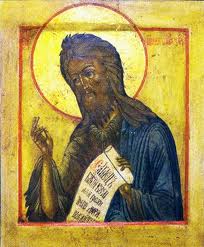
John the BaptistThe figure of John the Baptist symbolizes the fully developed intellect, the rational mind. And that mind, as John said, must decrease in order for the intelligence of the Most High, which surpasses our highest conception of mind, to find its place in us. John fulfilled all righteousness, which is to say that he followed the letter of the law, and for that he lost his head. This means that there comes a point in the evolution of our spiritual consciousness where the laws of God are internalized, written in our hearts. Knowledge takes a back seat to wisdom, and we begin to realize that laws are tools and not taskmasters. Compassion then becomes the highest law, and all other laws become its servants. As Jesus said, “I will have mercy and not sacrifice.”

Posted in Lessons | 1 Comment

Know Yourself


It’s important that we see ourselves the way others see us – not with the eyes, but with an inner sense.

What do I mean by that?

What we see with our eyes is limited. Even facial expressions and actions of the body are easily misinterpreted. What looks like a frown directed at us could simply be an absent-minded stare; disrespectful body language might be the reflection of someone’s inner attitude toward himself, not you at all. We simply cannot trust our eyes.

“Half of what you see, none of what you hear.”

The energy we carry with us, the feeling others get when we enter the room, our presence – this is what the inner senses pick up. It is our transmission, our broadcast, our “vibe.” And it tells everything about us. It is what children pick up on, what animals detect instantly, and what everyone knows, if only subconsciously.

The weather lags the seasons – the coldest months occur after the longest nights; the hottest days come as much as two months after Summer Solstice. Similarly, our energy signature lags our current disposition – we cannot change by merely putting on a happy face. It takes time, perhaps lifetimes, for Power to come.


Bad news? Not really. You are what you are. You can be comfortable with that – more secure, less doubtful. Accept what is, and with the self-confidence that comes with that, you can take command of your vessel and steer it toward the light.

This takes great humility.

http://www.flickr.com/photos/mariaismawi/

photo by M3R

Posted in Lessons | 7 Comments

Be Yourself?

Instead of striving to live an “authentic” life, try getting in touch with that which is bigger than you are and let it live through you. Being authentic, or being yourself, can sometimes be an excuse to let it all hang out and is often the expression of something smaller, not bigger. Whenever we try to express our individuality, we usually wind up looking like everyone else. But when we get in touch with something that is bigger than we are and let It use us as its vehicle of expression, we really begin to live. Because, after all, that which is bigger than we are is really that part of us that we are awakening to, not something outside of us. So, by letting it express itself, we are actually living more authentically than if we were to try to stand out from the crowd. “He who would find his life must lose it.”

Posted in Lessons | 6 Comments

The Birth of the Sun

Ann Torrence Photography

Three million miles is a lot. That’s how much closer we are to the sun at this otherwise “darkest” time of the year. Is it any wonder that our inner lights are amped up, shining brighter than in any other season?

We are used to making energy do what we want it to do. Etch a silicon wafer with an electronic circuit, string high-tension wires across the landscape, wrap copper around an iron core and spin it inside a magnetic field – mastering energy has changed the way we live. But have we learned to let energy master us?

Right now, our inner circuits are humming. Our powers of intuition and empathy are at their peak. The intelligence inherent in sunlight is in-forming the way we conduct our spiritual business – what we give and what we receive. This wave of altruism is landing on the roof of our skull and whooshing down the chimney of our spinal cord, bearing the gifts of the Spirit and lighting our inner world. What we do with our increased capacity will determine much of how our spiritual journey will unfold in the coming year.

The more we become aware of the Christ force within ourselves, the more we see it in others. More than religion, nationality, or ideology, this is what connects us. The light in you is the same as the light in me. And in this oneness lies the opportunity to give and receive love.

Posted in Lessons | 4 Comments

The Virgin Birth

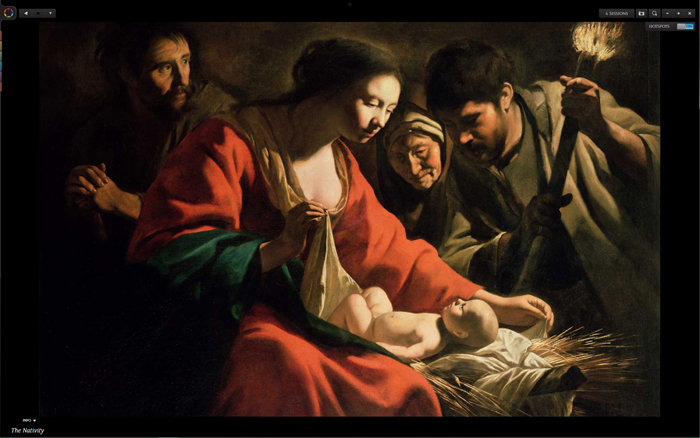
Birth of Jesus

"The virgin will be with child and will give birth to a son, and they will call him Immanuel"–which means, "God with us."

Rather than make Jesus look good and the rest of us bad, the Virgin Birth points up our inherent divinity—all of us, not just Jesus. We can no longer say that we are only human and use that as an excuse to ignore the higher part of our nature. By insisting that the Virgin Birth is strictly an external event, we hold the experience at arm’s length, and thereby avoid having to surrender to the Indwelling Spirit’s urge to open our eyes to the world of God.

Mary’s acquiescence to Gabriel’s proclamation is our own willingness to receive the Word—not the written word of the Bible (or any other sacred text) but the divine impulse, that which fuels our spiritual/physical evolution—”the force that through the green fuse drives the flower…” of Dylan Thomas. If we look at it in this way, the Virgin Birth story tells us emphatically that the Life Force is anything but blind, that life is imbued with intelligence and motivated by love.

Whether parthenogenesis (asexual reproduction) is possible in humans is a scientific question, even if we approach it spiritually. We can ask if one can cause pregnancy by speaking the Word, or if a female initiate of high degree, as Mary is reported to have been, can self-induce pregnancy. The theological assertion that God Himself through miraculous means fathered Jesus implies that the natural world is different and separate from the Causal Plane, which is scientifically implausible.

Philosophically, we could say that the story of Jesus’ birth reinforces the idea that our physical bodies are vehicles for our soul, that our origin is divine, and that who we are is not a mere product of biochemistry. But all of these notions are themselves meaningless, unless we can actually have the experience that they point to. They are all interpretations of an event that must take place in us, if we are to know God. Our physical body is the “world” into which the savior is born; the Cave of the Nativity is the center of our being.

Posted in Lessons | 3 Comments

Virgin

Mary surrendered to God. All she wanted to do was to live long enough to see the Messiah. Material possessions meant nothing to her, because all of her desire was focused on seeing God. She was the empty chalice into which the Blood of Christ would be poured. Who is she? She is us, both men and women, in our desire nature. When we empty ourselves of materiality and focus our heart and mind on the coming of the Light, Christ will be born in us.

It’s hard not to want things. There are lots of nice things to want. And there’s nothing wrong with wanting nice things, as long as you don’t let them come between you and God. There has to be a place within you, a sanctuary, where the things of the world do not go. This is what it means to be virginal – untouched.

You have to have that place where you leave your shoes at the door, your worldly desires, a place where only God exists. Mary symbolizes that place within us. Why? Because the energy that permeates and sustains that inner sanctuary is her energy. It is her energy, because she devoted her life to allowing the energy of her own inner sanctuary to radiate outward into everything she did. She became that energy, and that energy became her.

Because Mary was able to do this in her own life, it is now possible for everyone. This is a distinct aspect, the feminine aspect. And you don’t have to be a woman to experience it.

Virginity is of the mind. You are a virgin every time you leave the world and enter into your inner sanctuary. You are the Temple Virgin, just like Mary was and her mother before her. God comes first—in all things. This is what it means to be a virgin.


Posted in Lessons | 5 Comments

Electricity and Political Conflict

Actor Kevin Spacey in The Usual Suspects

Killing one’s own family members is abhorrent. We are hardwired not to do that. In the movie The Usual Suspects, rival gang members capture the family of their underworld opponent, threatening to kill his wife and children before his eyes if he does not capitulate to their demands. In one of the most horrific scenes in cinematic history, he draws his own gun and shoots his family one by one to the astonishment of his would be extortioners. Without feeling, and without hesitation, he then shoots all but one of the captors, allowing the survivor to run back to his bosses to report the monstrous will of the man they tried to defeat. His deed is so horrendous that it shocks even those who commit murder routinely. From then on, he is the one they fear, for they have witnessed an evil beyond comprehension.

Before every social upheaval, there is a concerted effort to dehumanize the other. This simple psychological technique is the fuel of war. Give the opponent a name: hippie, thug, 1%, 99%, elitist, socialist. The list changes almost daily as the fear-mongering linguists struggle to keep up. The more names we have for the enemy, the more distant he becomes, the less human, and the easier it becomes to kill him. Any attempt to understand him is a sign of weakness, even capitulation, and those who seek to understand are given their own label: traitor.

Linguistically separating one group from another is literally the same as creating an electrical potential between two charged bodies. Scuffling your feet across a carpet in the dry indoor climate of winter will cause enough of a static buildup to produce a visible arc between the tip of your finger and a metal doorknob. Petting your cat creates the same dangerous potential between your hand and the tip of her nose. But if you were to connect a wire to the doorknob and hold it in your hand, or if you hold one of your cat’s paws, making skin-to-skin contact with her bare pad, the static charge will dissipate and balance itself as fast as you can generate it.

So it is in today’s political environment. As a Christian Mystic, your duty is to create and continually re-create a linguistic bridge between the so-called enemies of freedom and your own sensibilities. The words you use to describe the “other” will either isolate or integrate, humanize or dehumanize. You will either promote conscious behavior, or you will actively contribute to its destruction. Calling the police “thugs” will only convince them that you are the enemy. Hating the 1% will only drive them farther into their ivory towers. And the more you hate, the more you say, “Thou fool,” the less Christlike you become.

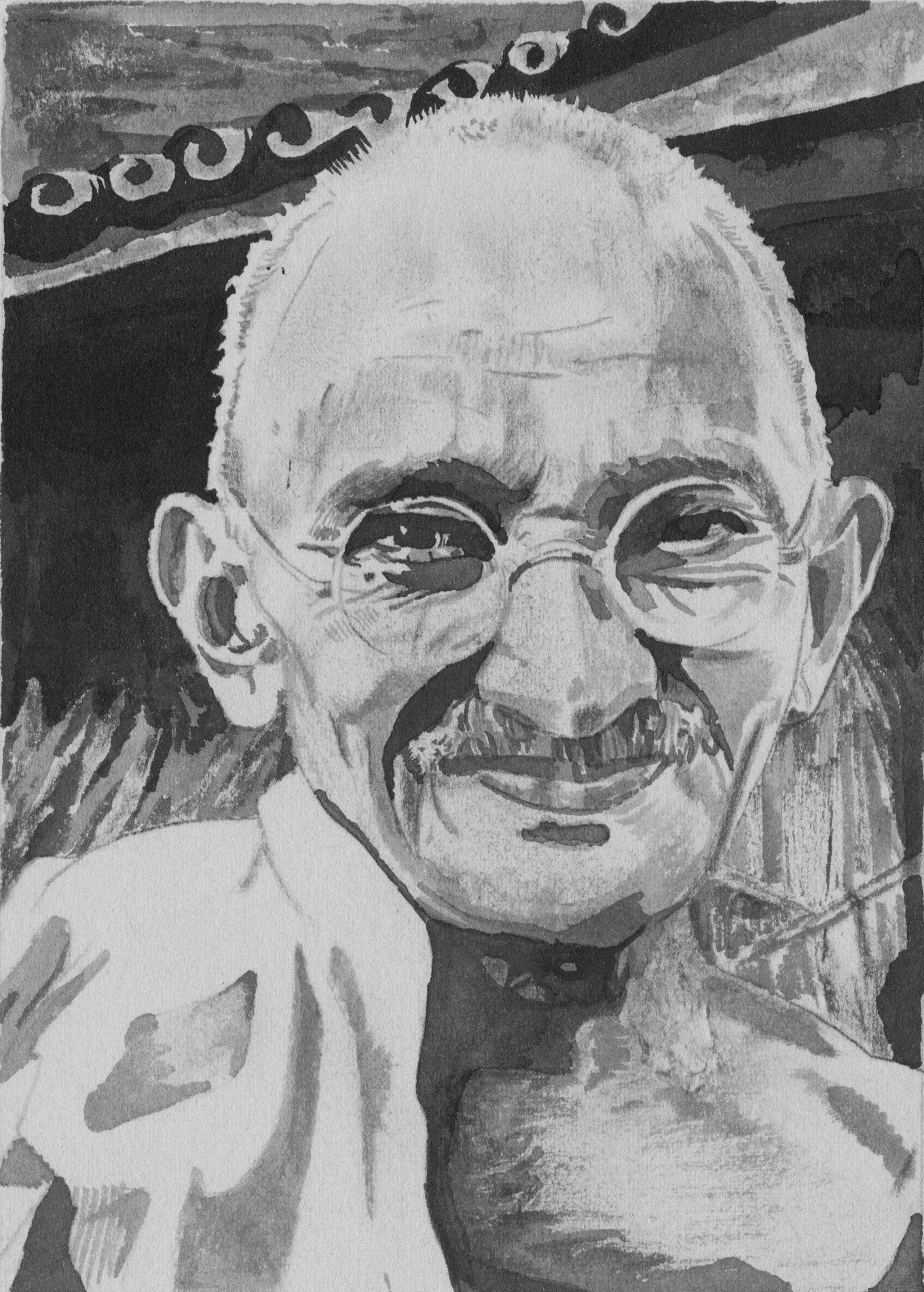
The battle lines are being drawn. The point of contact, the new front, is where we need to be. Not as combatants, but as points of conscious awareness – we need to provide bridges in mind that will allow the energy to spend itself in conscious recognition of the humanness of the other. This is how it worked in India in the 1940s and in the American South in the 1960s. One side saw the humanity in the other, and righteousness prevailed.

Be smart, be mystically smart. The more conscious you are, the more powerful you are. What you say matters. What you think matters more. What you are matters most. Be the solution.

Posted in Lessons | 1 Comment

Jesus as Guru

The idea of an indwelling God was a radical departure for the Middle Eastern religious mindset, but it was old hat in India. God, for the Hindus, was not a king in a kingdom, not a punishing and rewarding ruler, but the flame of the human heart, manifesting Itself as divine awareness, continually moving in and out of earthly life in a never-ending spiral of spiritual evolution. Spirit functioned in a cosmos ruled by impersonal law. God did not punish – one merely reaped the fruits of one’s own actions. Man was not innately sinful, but simply prone to error. It was ignorance, not inherent guilt, that kept us from seeing God. After all, error can be corrected, but guilt must be paid for with blood.

But whereas the Hindu Brahmins excluded the majority of the population from the mystery teachings by the caste system, and the early Jews with their exclusivity as the Chosen People of God, Jesus, and later Paul, would throw the doors wide open to the world, bringing the possibility of spiritual freedom to everyone. It was a populist movement of high spiritual origin, and its true meanings were left in plain view by the early Christians in their writings, so that those who came after could benefit from the movement’s momentum.

Who knows why the Third and Fourth Century Christian religion decided to disown the legacy of its forbears, and divorce itself from the Perennial Philosophy. It could have simply been to distinguish itself as something new, even though nothing that Jesus said was original; much of what he said can be found almost verbatim in the Vedas. Without this understanding, the Old and New Testaments read like half a text, a story with many of its chapters missing, a puzzle that has fomented nothing but debate and speculation for centuries, because the keys to its mysteries have been left out.

The Nature of Gurus and Their Students
Let us now overlay the traditions and methods of the East onto the mystical teachings of the West and see if there is something it can offer us in the way of understanding the teachings of Jesus Christ.

In the East, gurus are known as the Sons of God, and though they are not worshipped, they are given the utmost respect and reverence. Since there is no central authority in Hinduism, each guru holds the same position of spiritual power as popes do in the Roman Catholic Church, but his or her authority only applies to students, not to the spiritual community at large. Gurus can ordain priests who carry out the daily functions of worship and administration, just as priests do in the West. There are monks and nuns as well.

In order for men and women to become the students of a guru, they must prove that they have the right motive. They must have reached the point in their development where they no longer seek personal glory or power over others, but rather have a deep desire to be of service – to further the advancement of spiritual awareness in the world.

In the Western tradition, this is known as being called to the ministry. The guru himself, or herself, is one so called. Rather than use their abilities to permanently escape the sorrows of this world, they have chosen of their own free will to remain amongst humanity and to help it rise above its current condition. They take vows of service and are ordained into spiritual leadership. In order for their ordination to be valid, it must come through a recognized lineage, an unbroken succession of former gurus. Or, if it comes through direct revelation, it must be proved and accepted by his or her peers.

Once the student has proved the purity of his motive, he must take a vow of total obedience. If the guru is properly ordained, this is understood as total obedience to God, or one’s own divine Self, which the office of “guru” symbolizes. Because he or she holds this office by divine right, the words of the guru are considered to be absolute truth and are worthy of absolute obedience. In real life, the guru’s infallibility is only as good as his contact with the divine Self within, though often the sheer power of the student’s faith helps the guru to maintain that contact.

The best gurus are totally dedicated to the advancement of their students, even to the extent that the students eventually surpass them. It is because of this dedication that gurus are so demanding.

Not only must students have the right motive and be willing to submit to the guru in total obedience, they must also be willing to give up all worldly possessions and emotional attachments. These are no halfway measures. It is no wonder, as some have pointed out, that disciples tend to be either young or old – seldom do you find a person in the full career of midlife chucking it all to find God. The call seems to be best heard by those who are either filled with idealism or freed by wisdom.

Another prerequisite for students is the ability to stand up under peer pressure and criticism. They cannot be weak-willed or easily swayed by the opinions of others. The guru’s training methods are designed to move students out of everyday ego-consciousness, so that they can identify with the God-Self within. This is not an endeavor for the fainthearted! The ego does not give up easily. At the most critical point in the student’s training, there is great temptation to capitulate to the ego’s demands.

The temptations the student encounters will usually fall into three categories: lust, fear, and intellectual pride. Lust can manifest as the desire to fulfill any of the bodily appetites, such as comfort, food, and sex. Fear can be for one’s physical safety or the loss of continuity in one’s personal identity – the loss of a familiar sense of self. Intellectual pride manifests as a strong sense of right and wrong based solely on one’s opinions. Out of this comes the desire to control the lives of others, to be their “savior” and lawgiver. This is perhaps the most powerful temptation of all for a person who has attained some degree of understanding and moral strength. After all, who could be better for the job? “C’est moi!” 

Entering the School – the Guru Screens His Prospective Students
Spiritually training a group of students requires a considerable investment of the guru’s time and energy, since the entire process can take decades. It is no wonder that the selection process is so arduous. It is better to shake out the unqualified right at the beginning than to find out too late that the candidate is unqualified. It would be harmful to push a person beyond his or her limits, burdening them with an overwhelming sense of failure for the rest of their life. This would neither be loving to the student nor conducive to the long-range goals of the guru. Every effort is made to give the unqualified student multiple opportunities at the outset to bow out gracefully, allowing the more qualified students to advance rapidly in their training.

Entering a school for religious training is serious business, and both the students and the Guru know it. The student will try to impress the Guru with his sincerity, and the Guru will test the student’s resolve. One might say that the first lesson the student receives is the difference between these two virtues. It is not enough to merely be sincere – one must also be qualified.The guru needs to find out as soon as possible if the student has reached the point in his or her life where they are ready to set foot on the spiritual path. To do this, a series of hurdles is erected at the door of the school. While this obstacle course may, in real life, take days, weeks, or months for the student to run, Jesus summarizes them quickly in the Sermon on the Mount.

We gain an insight into the personality of Jesus by the way he couches his phrases. Whether his obliqueness is out of respect for the intelligence of his audience, or whether he just wants to see if they can pick up on the subtlety of his words, is hard to say. In an age when people could live or die by a single word, perhaps this was the normal protocol. In our day and in our culture, we play fast and loose with our words. So, as we go through the Beatitudes, I will take the “velvet gloves” off of Jesus’ “iron fists”, rephrasing his sagacity with the directness of a drill sergeant.

Blessed Are They?
First, let me address the one phrase that comes at the very beginning, the one we tend to skip over, the words “blessed are they.” What does this mean? We say these words as if we know. They have such a hallowed tone to them. They evoke pictures of saints and nuns with their hands clasped marching up to the altar, surrounded by light and the sound of singing angels. In a circular kind of way, these words have defined themselves by the way they have been intoned from the pulpit for hundreds of years. “Blessed are they” confers instant sanctity and piety on whoever says it, especially a preacher. But, while it has become a verbal icon, it has lost its meaning.

This is where an understanding of the relationship between an Eastern Guru and his disciples can help us. A blessing is a real thing. It is a movement of power from one person to another. If the person giving the blessing is a clear channel to God, then the blessing is effectively from God. If the person giving the blessing has “fallen from grace,” but is authorized to give it by virtue of his or her office, then the form or ritual of the blessing can itself act as the channel, depending in either case on the degree of receptivity of the person receiving the blessing.

Blessings are usually, but not always, conferred by some form of laying on of hands. In the normal course of events, a priest or Guru will place his hands on the student’s head and speak, either verbally or mentally, the words of the blessing, giving pattern to the spiritual energy as it enters the student’s body. Blessings can be of different kinds, as in the blessing of ordination as compared with the blessing of a meal, but always the energy is the same – the energy of the Holy Spirit.

Sometimes, the Guru will slap the disciple on the back. This is an important blessing. Those who have received it say that this was their “ordination” into mastery, the point at which the guru creates another guru. It usually causes an intense light in the head and spine, a feeling of lightness in the body, and the ability to see beyond the range of normal vision. In all cases, this kind of blessing carries with it the formality of lineage, that unbroken line of succession between Guru and disciple spanning thousands of years.

By the time a person, male or female, advances to the stage of guru, they have built up an energetic pattern around them composed of the way they have administered blessings throughout their life. It exists as a net, a matrix of force that hangs about the head and shoulders of the Guru. It is imbued with the personality of his teacher, as well as all of the teachers before him, and it is also imbued with his own personality. This is called the guru’s mantle. Though it can be seen as I have described, it is also omnipresent, existing like radio waves in all places at once. It can act as a proxy for the Guru, enabling him to be continuously available to his students, no matter where they are or what time they need him. When the guru takes on a student, he forms a connection between that student and his mantle. This gives the guru a continuous channel through which he can communicate with the student on the spiritual level. This is the ultimate privilege that a guru can bestow on a student. It is the equivalent of giving birth. It is at this point that the guru becomes the student’s “father” and “mother”.

Jesus as Guru
This is the blessing that Jesus holds out to his prospective students as he prepares them for discipleship. By saying “blessed are they”, he is actually saying, “I will bless you if…”, which is to say, “I will extend my mantle to you, and you will be my student, if you do the following…” This is what the students listening to his Sermon need to hear. They need to know what the requirements are in order to fulfill them, and Jesus is spelling them out so that there can be no mistake. This is a rite of passage, where the student leaves the “world” and enters the monastery. He or she is leaving the matrix (mother or alma mater) of family and society and is becoming a child of God – God as manifested by and through the guru. The guru becomes the student’s savior, his direct channel to the Divine.

Posted in Lessons | 1 Comment

American Exceptionalism

It’s easy to believe that you are the city on a hill, even as the relentless forces of global politics are building up mountains all around you. Jesus said that the high would be made low and the low high, and even though that principle has been at work in the world throughout history, the ever-increasing speed of life in our global community makes it seem that much more prophetic. The question now for Christian Mystics, especially those in the US, is how to rise above the problems of the multitude and not simply mirror them in our personal spiritual life.

America was once the leader in fairness in the market place. We believed that anyone could be successful if they worked hard enough and offered a good product. Craftsmanship was valued for its own sake, and innovation and inventiveness were the driving ideals. Now, profitability is all that matters. But, as the saying goes, not everything that counts can be counted. The same applies in our personal lives: have we become too busy to keep God first?

What made America great was its belief in the individual, that people’s lives were not limited by the class they were born into. But whereas oppression can strengthen the social bonds among equals, individualism tends to shred them. Breaking out of the feudal past has led to unprecedented opportunities, and many have prospered, but unless everyone benefits, all will suffer. An economy has to be as concerned with the health of the society it lives in as much as it is with the lifestyle of those at the top.

Behind closed doors......

Calling ourselves spiritual does not make us so. Huston Smith said it best: “It’s not the altered states but the altered traits that are important.” What good does it do to have all these amazing experiences if our character remains the same? The push toward having actual spiritual experiences was a welcome relief from the moralistic dogmas of the past, but we must not neglect being moral. We cannot allow our sense of spiritual exceptionalism make us believe that we are too good to be good. And while sexual mores are important, they are essentially private, whereas honesty in business and compassion in the courts of law affect everyone – profoundly and immediately. What you do behind closed doors is your business, as long as it doesn’t entail screwing the public at large.

The more spiritual we get, the more we realize that we are no better than anyone else. Everyone matters. As soon as you believe that the world would be better off if this or that group would simply disappear, you’ve lost it. America was great because of the principles it was founded upon. Those principles are spiritual. To be “chosen” means that you have been given something to live up to, not a license to do whatever you want.

Posted in Lessons | 3 Comments

Letting Go

When the Self shines outward, as a result of our seeking God, it activates all the dross in us, the stuff we need to let go of. As it comes up, it can be tempting to say, “That’s me…those are my sins.” But letting go of these things is what we have to do. How? By not identifying with them. Just recognize that what you are seeing/feeling is stuff that is on its way out. If you identify with it, that’s the same as “hanging onto it.” Just let it go. It’s not you. You’ll be surprised how good you will feel!

The mind doesn’t have hands with which to hang onto anything; the mind’s “hands” are it’s propensity to identify itself with what it perceives. All kinds of strange cause and effect conclusions can arise from this. The more you identify with an event/activity/idea/feeling, the more it becomes part of what you are “speaking” into the Creative Intelligence we call the Mind of God. The less you identify with it, its power to recur in your experience is diminished.

Studies have shown that detailed analyses of where the chains of events began, the one’s that seem to have you by the throat, are not effective in helping you let go; in fact, they tend to reinforce the belief that they are you, which is exactly what you don’t want! So, take away their sticky-power. When they parade themselves in your awareness, just say, “Hmm…that’s interesting. Glad to see that that’s moving out,” and let it go. The worst thing you can do is feel shame about it, which can only happen if you identify with it. That can only lead to you suppressing it, which is the same thing as hanging onto it.

Let it go!

Posted in Lessons | 3 Comments