Christ In You

The life of God is our life. It is also the life of every other living thing. It is through the life that we are able to connect. This is what makes us One.

Thoughts are not life – they are the shepherds of energy. Where thoughts go, life follows. Good thoughts make us more alive.

When we are in our thoughts, life feels external. We sense that life is aware, but its awareness is “out there,” looking back at us, as from a mirror.

Our thoughts are the mirror, our awareness is the life.

Posted in Lessons | Leave a comment

Desire

.

Wanting is life’s affinity with itself.

We are free to direct our thoughts wherever we choose. Each time we choose the same object, our thoughts wear the groove a little deeper. Through the groove pours our desire. Therefore, we should choose our thoughts carefully.

We need to stop placing value on everything we see.

~~~~~0~~~~~

.

.

.

Posted in Lessons | 2 Comments

Mammon

.

“Where your treasure is, there will your heart be also” – what we value, we want. Therefore, we should pay close attention to what we value.

In sales, they say you must first get their attention. Then tell them what to think: benefits, benefits, benefits. Next comes the decision to act – to buy.

Unless we know how to concentrate, how to direct our own thoughts – our attention – we become the commodity.

~~~~~0~~~~~

.

.

.

Posted in Lessons | 1 Comment

Is Jesus God?

.

God is the fire of life, our thoughts the form. When we think of the fire, our thoughts become alive. Fire begets fire, until at last, all is fire, and all is alive.

The burning bush on Mt. Sinai was on fire, but the fire did not consume it. The bush was fully fire and fully itself, just as Jesus is said to be fully God and fully human.

One gives life, and one gives form. This is the “mystery.” When we surrender ourselves to God, God uses us “as us.” We don’t disappear, we become more alive.

~~~~~0~~~~~


.++

.

.

Posted in Lessons | 2 Comments

Sun of God

The sun at the center of our solar system is the source of all life on Earth. Its light has within itself not only the force that drives life but the intelligence that informs it.

When Jesus asked his disciples, “Whom do they say that I, the Son/Sun of Man, am?”, we could take it something like the following: “The life (and the intelligence that informs it) within you and me – is it the product of our physical chemistry, or is it a manifestation of the universal life of God?”

Are we, as living sentient beings, separate entities? Or, at the core of our being, are we one with the Whole? This is a basic spiritual question.

Posted in Lessons | Leave a comment

Snow White 2 – the Male in Chains

> This is Part 2 of Snow White and the Huntsman—a mystical review

Let’s look at the symbolism of the male characters in Snow White and the Huntsman.

Snow White’s father, King Magnus, symbolizes the fully developed rational mind tempered by love (his wife, Queen Eleanor) and invigorated by the goodness and purity of life, Snow White. His heart and vitality, however, are still separate from him. So, even though he is master of his kingdom (the physical world) he is spiritually undeveloped, which is to say that he has yet to integrate these aspects of himself into his personality. This is why he becomes easy prey to Ravenna, who symbolizes vanity and the fear of death, because he has lost his connection to his heart and is thus prone to self-deception.

Cousin William

King Magnus also shows us what happens when our rational mind first encounters its dark side – the shadow army lurking just outside the borders of the kingdom. He only appears to conquer the threat, which is the way we feel when, by suppressing our dark thoughts and desires, they seem to go away. But Ravenna beguiles him with her physical beauty, and his loneliness and feelings of powerlessness in the face of an impermanent world makes lust seem like the only “reasonable” alternative to true love. And we all know what happens next – the unnamed, dark adversaries within manifest themselves in our outer circumstances, and a real army rides through our gates and destroys our world.

In the language of myth and symbol, male figures represent the conscious mind, while female figures represent the subconscious mind. Older characters, like King Magnus and Queen Eleanor, represent these aspects of ourselves that are well-established in our personality. Younger characters, like Snow White and her cousin William, represent the undeveloped spiritual side of us – the next generation. They are the part that has yet to fully emerge and that must go through tests and trials before it can become fully conscious and integrated. In Christian mythology, the baby Jesus has to be hidden and protected from the ruthless skepticism of the full-blown rationality and powerlust of King Herod. This shows how the tender blossomings of spiritual awareness are vulnerable to our sense-based logic and our tenacious ego that will not cede its control over our life energies.

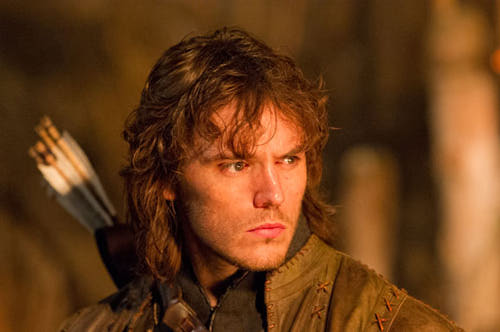
Ravenna’s brother, Finn

Remember that the hypothesis here is that all the characters in this story are aspects of one person – us. The male characters represent different stages of development and different aspects of our conscious mind. The female characters represent the same things about our subconscious mind. The “good” characters are those aspects that are life-affirming; the “bad” characters are our own self-destructive tendencies personified as forces of evil. Ravenna is our heart gone insane because it cannot rely on the rational mind to protect it from the world. Finn, her brother, fails to deliver immortality in the form of Snow White’s heart, showing that the conscious mind, when enslaved by vanity and the fear of mortality, cannot provide a link to eternal life. Cousin William also fails to protect Snow White when she is abducted in the beginning of the story, but whereas Finn is the corrupted mind, William is simply undeveloped, which Snow White points out when she says, “We were children.”

King Magnus’ brother (and father to William), Duke Hammond, is the protective aspect of mind in its fully developed state. But though he is able to hold things together under the oppressive rule of Queen Ravenna, that’s all he can do. It takes William, who is willing to risk everything in order to save Snow White, to justify all that protecting. William is the younger character and therefore the spiritual aspect of mind finding its place in the world. William is more spiritually developed than his father, because his heart is more fully integrated in the form of courage.

Ravenna’s brother, Finn, personifies what happens to the male aspect when it is totally disconnected from life. Both he and his sister have blonde hair in contrast to Snow White’s “raven black” hair. Black hair symbolizes vitality. The absence or opposite of it, in this case, symbolizes the semblance of life, which is how we appear when we are driven by self-preservation. We lose our life (vitality) when we are obsessed with keeping it. As Finn illustrates, the mind, when obsessed in this way, becomes outwardly obsequious to power, but cruel in the extreme when in service to vanity, which is the love aspect turned inward on itself.

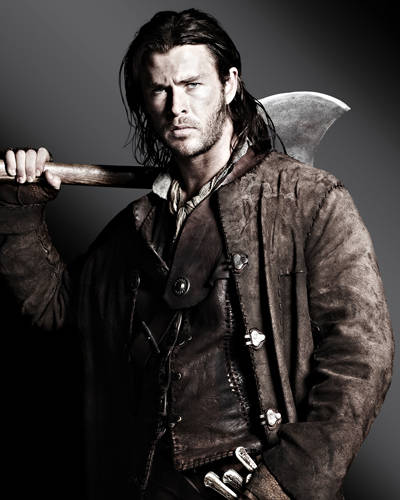
At last we come to the Huntsman. He is the will, the protector and provider of our heart aspect when allied with it, but unruly and self-destructive when disconnected from his feelings. All of the characters in this story illustrate what happens when our sensitive and innocent inner nature collides with the harsh, seemingly cruel realities of physical existence in the world. Life, which knows nothing of death, reacts when it sees it. It caused Siddhartha to abandon the world to search for enlightenment. But the Huntsman takes out his disillusionment on himself. Drunk, brawling, wallowing in the mud of negativity, his life is without direction until Ravenna orders him to find Snow White.

We can say here that there is only one will – the will of God. It is the voltage that potentializes every living thing – “the force that through the green fuse drives the flower.” Once he realizes that Snow White is life itself, nothing can stop him from returning her to her rightful place in the kingdom. When she is lost in the depths of the Dark Forest (the unconscious) it is he who leads her out into self-awareness. When she succumbs to the wiles of her false self (Ravenna), it is the will that jumpstarts her heart with a kiss. When we are overcome by the rigors of spiritual awakening, it is our will power that saves us. When nothing feels right and all of our rationale fails to justify the trials and tribulations inherent to the spiritual path, it is our sheer determination that sees us through. We do it because we said we would do it. We certainly don’t do it because it feels good, because it doesn’t. And we certainly don’t do it because it makes sense in the world. When the chips are down, we keep going because we gave our word.

When our will is wedded in service to our heart, that high spiritual aspect of courage blooms forth in our soul. It is the sacred marriage where our feminine is balanced with our masculine. And oh, the beauty! Or as the Huntsman tells Snow White, when he first sees her dressed in armor and ready to conquer the false queen, “You look fetching in mail (male).”


For Part 1 of this article, see Snow White and the Huntsman—a mystical review.

Posted in Lessons | Leave a comment

Authority and the Square

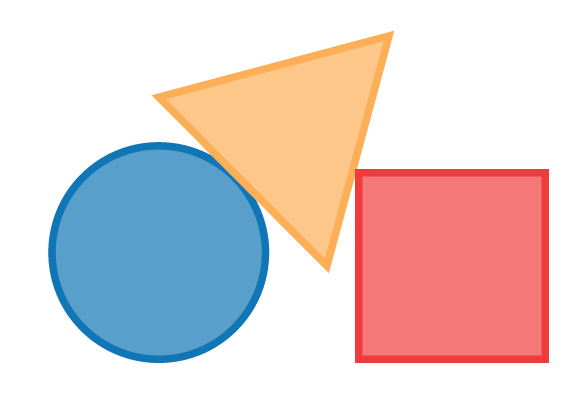
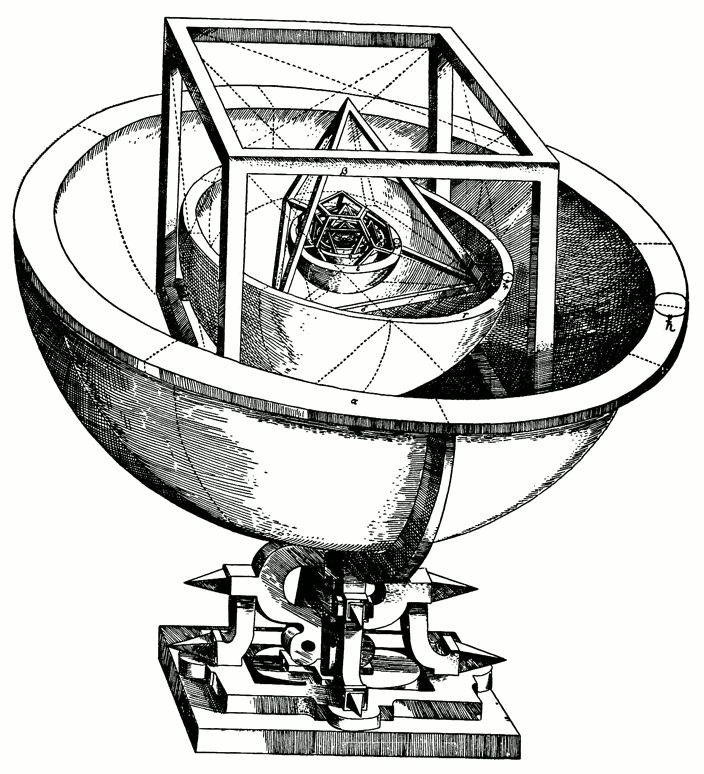
Now we come to the square, the third of the three basic symbols of creation. As with the circle and the triangle, it’s best to get a feeling, in an energetic sense, of what the square symbolizes. And like the other two symbols, the diagram of the square itself has both literal and abstract meanings. It is as though symbols of this nature occupy the space between the physical and spiritual worlds, the interface between mind and matter. The popular definition of the word “metaphysics” is “beyond the physical.” Well, this study is beyond metaphysics. We are looking at where the abstract and the concrete intermesh.

Just a word about “abstract.” Some people, in the interest of practicality, tend to avoid anything they regard as abstract. This is the most impractical thing one can do. Let’s define “abstract” as a principle that applies to a number of seemingly different things in a way that let’s us see an otherwise hidden relationship among them. The square is an abstract idea, and it shows up everywhere in our lives. And specifically, as the title of this article promises, in the issue of authority.
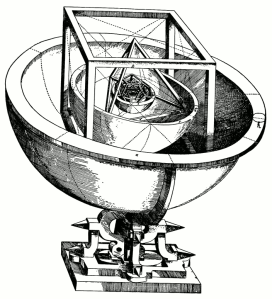
First the square. Remember when we were talking about the feeling we get when we stand in a circle? You can feel the energy move. It moves up, it moves down, it moves right, it moves left. The keyword is that it moves. Well, the square is that same energy when it lands. Whereas the energy of a circle is transformative, the energy of the square is stabilizing and consolidating. The circle acts like a conduit, allowing energy to move from one state to another; the square is a fixed system. The energy still moves, but is conservative, in that everything it does is for the purpose of conserving its present configuration.

In politics, for example, conservatives seek to preserve time-honored traditions, where liberals (or progressives) look for innovation and reform. (This is a very broad assessment not intended to spark debate.) Obviously, you can’t have a viable system without both of these elements existing in dynamic balance with each other.
Another example is the human nervous system with its sympathetic and parasympathetic networks. One speeds up metabolism, and the other slows it down. Too much of either will kill us, but a dynamic balance between the two allows us to adapt to changing conditions. And adaptation is the hallmark of viability.

So, the circle and the square act in polar opposition in the act of creation, not in conflict but in balance – a dynamic balance. When we omit one or favor one over the other, we get out of balance. If all we want in our spiritual life is to experience the flow of God’s energy through us, that energy will eventually make it impossible to live in the world. On the other hand, if all we want is a belief structure with rules to follow, then the Spirit will wane, and we will become crystallized, not only spiritually but physically as well. The correct way to live is a middle path between these two, a path that meanders from side to side in a never-ending process of self-correction. In this way, we can evolve and at the same time consolidate the gains we make. It’s a perfect system.

Because we live in the physical world, anything that is “established” tends to take on an air of authority. Why? Because it exists. It has authority by virtue of the fact that it is here. This has obvious problems, as a hypothesis, but if we define it this way, at least for the moment, it will help us get a feel for what authority is all about. Once we have a feeling for it, then we can refine our definitions in a way that empowers us to function with it.

Have you ever tried to calculate the area of a circle? Very difficult (for non-math types). But almost anyone can calculate the area of a square or rectangle. The square lends itself to measurement in a way that no other shape can. It is natural, then, that we use the square as the basis for our most fundamental activities in life, most notably in the way we build houses and in the way we formulate laws.

Architecturally, square structures are efficient to build and are very stable. They allow for an orderly arrangement of furniture and storage. Domes are even more stable, but they are hard to build, and it is difficult to manage their interior space. Rooms in a dome house are usually pie sections, which are uncomfortable and inefficient. Without interior walls, domes can be inspirational and uplifting, because of the energies inherent in the circle, but the energies are fluid, not fixed, so the space is more conducive to music or legislative halls where the activity is always in flux.
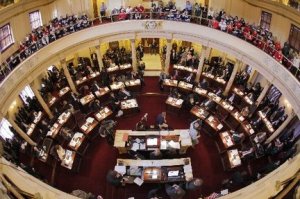
Laws, on there other hand, are based on opposition – the squaring of accounts, the settling of disputes between opposing interests, the separation of various activities into their appropriate arenas. Laws allow for the dynamic coexistence of divergent groups; they allow for difference. Difference, as an abstract concept, is defined here as “diversity.” And diversity, as we know in biology, is essential to maintaining a healthy ecosystem. This is true for a societal ecosystem as well.

Authority, then, is any established structure, either physical or ideological, that has within itself a definite set of rules that are consistent with itself and that allow for the movement of energy in a way that is self-sustaining. In a house, the roof is supported by the walls, doors and windows allow access to the interior, and everything is proportional to its occupants — consistent, coherent, functional. In a body of laws, such as a constitution, the rules are “set in stone.” They provide a structure that allows for the ideological equivalent of a house.

The problem lies here: though each structure is consistent with itself, it may not be consistent with other structures. A house might be beautiful in an artist’s rendition but look ridiculous if it’s built in the wrong neighborhood. Laws designed for a free-market society won’t work in socialistic society. Rules on a racetrack are different from ordinary traffic laws. If we try to apply the rules governing one structure to another, we will create problems. A good example of this is the way the rules of capitalism are destroying the environment. It’s not that the rules of capitalism are bad, they are simply being applied in the wrong domain.

Authority in the physical world consists of established patterns made viable by the energy working through them. Each established pattern has internal authority over itself. When in other people’s homes, you are expected to abide by their rules. If you don’t like their rules, you leave. Whenever you have a set of rules that is more abstract, meaning that they allow for a greater level of diversity and yet apply to everyone equally, then you have a government—the Law of the Land. And, if you add yet another level of abstraction, e.g., an international body of laws, there is allowance for an even greater level of diversity (or should be) and many houses are brought under one roof. In order for this to work, however, there has to be yet another level of abstraction, one that recognizes certain inalienable rights that apply to human beings generally.

This, therefore, is the current challenge facing humanity — finding that which is common to us all and then instituting those principles into a code everyone can live by, at least when they are interacting with the global community. Who or what do we acknowledge as the highest authority? Who has written the Laws? What is the house we are actually living in, and how can we conduct ourselves so that we don’t get kicked out?

There is much to consider as we study the symbology of the Square. Next, we will go further into the principle of consolidation, and we will examine the cube and all the abilities it gives us to chart our way in the world.

Posted in Lessons | Leave a comment

Snow White and the Huntsman – a mystical review

Unfortunately, myth has come to mean something that it doesn’t. Usually, when we say that something is a myth, we mean that it is untrue. But a myth is actually a story whose characters are the inner aspects of one person – ourselves – and the plot describes how we transform from a state of sleep and unconscious suffering into a fuller realization of who we really are. Snow White and the Huntsman is this kind of mythic tale.

You already know the story, so I don’t think a spoiler alert is necessary, so I would like to give you some overlays, things to watch for as the story unfolds. And I really do hope you see it. It is a beautiful movie!

The first key to understanding this myth is knowing that Snow White and Queen Ravenna are two aspects of one person – you. As we come into this life, fresh from the Other Side, the outer garment of our soul has been cleansed of past errors. We are born riding on a wave of innocence and grace. Once again we are in a cycle of infancy, a fresh start, but the deeper, more universal hurdles on the path to personhood are there to meet us, and we must face them.

> for a follow-up on this conversation, see Snow White 2, The Male In Chains

The evil queen, Ravenna, is terrified of death and obsessed with immortality. Aren’t we all. Our spiritual growth is held in check by our fear of dying. Until we conquer that fear, we cannot progress on the spiritual path. Ravenna is the personification of that fear. She keeps us imprisoned in her castle, a fortress against the natural cycle of birth, death, and rebirth. The fear of death sucks the life out every living thing around us, as we insist on seeing ourselves as forever young in the golden mirror of our vanity.

The path of initiation always comes with trials. We must face our fears and conquer them – see them for what they really are. Death is perhaps the greatest fear. In ancient Egypt, the initiate was placed in a tomb for three days, believing he was going to die. At the end of three days, he was “resurrected” into a new life. He was no longer afraid of dying, or maybe he was just glad to get out of that damn box! Either way, it was a ritual of rebirth. In the Buddhist tradition, there is a similar ritual called “the Graveyard Vision,” where a lone monk has to spend the night in a graveyard where he grapples with and finally overcomes his fear of dying. His teacher probably enhanced the experience with a bit of spooky astral projection just to override any false bravado in the monk. Teachers can be sneaky that way. Today, initiates sometimes spend three days in seclusion before going through a ritual of initiation, symbolically reenacting entombment in the King’s Chamber of the Great Pyramid.

There are other elements to Snow White and the Huntsman. The poison apple is the fruit of the knowledge of good and evil, the dual vision of reality that plunges us deep into the sleep of materiality. Its illusion is that of love withheld, as in an early scene where Snow White’s cousin pretends to offer her an apple but then snatches it away as she reaches for it. This symbolizes the seeming cruelty of life, the way death snatches away those we love, just as it did Snow White’s mother, leaving her vulnerable and alone, without an external role model and a father figure disempowered by grief and despair.

The Seven Dwarves are the seven virtues yet in their undeveloped state, kept small by our preoccupation with the sensory world. When one dwarf dies to save Snow White’s life, this is symbolic of sacrificial love, that love of which there is no greater. It is in this scene that the Huntsman first realizes that he is in love with Snow White. The stunted, unrealized integration of anima and animus is replaced by the full-blown fulfillment of soul-integration. The Huntsman’s own integration with his feeling nature has been cut short by the death of his wife, symbolizing our profound disenchantment with the transience of physical life, where our response is to shut down, just as he did, turning our love into anger and self-destructive behavior. This all takes place within one person – us – regardless of whether an external romance is found. Such is the quality of myth.
The troll under the bridge is our anger. This test is won by love when we are able to embrace the hurt part of ourselves with kindness and compassion. But first we must demonstrate that we do not fear it, as when Snow White commands the troll to stop, before it can obliterate her inner masculine. The troll is the masculine aspect after it has been consumed by anger, made into a monster that prevents travelers from passing over the bridge from the swamps of the dark forest of ignorance to the world of light and self-awareness.

After Snow White’s integration with her own inner masculine (symbolized by the Huntsman’s kiss) and her resurrection, she must do battle with the dark queen of her own fears. When we come into awareness of our spiritual nature, we still have to undo the mess created by years of false thinking. Initiations are beginnings – it is we who have to do the work of completing the transformation. Nothing is simply given – power must be seized. Snow White rallies all of her inner powers, symbolized by her knights, and rides out to do battle with the false queen, to slay her own illusions and reclaim the crown of enlightened, integrated personhood.

There are other metaphysical images in the movie, as when Ravenna climbs up out of a pit of black ooze, which symbolizes the dark, unseen forces of nature that bind the physical world together. These are the same entropic forces that pull the upward arc of physical life back into its source, the way the shooting water of a fountain loses momentum and falls back into its pool. It is this force that Ravenna seeks to escape by bathing in the milk of life, which she steals from “her people,” the various parts of our soul that long for full development but are starved of life-giving energies by pride and egotism.

Another metaphysical symbol in Snow White and the Huntsman is the heart, perhaps the central theme of the story. The heart, with its three aspects – courage, love, and life. Snow White demonstrates her courage when she escapes from the castle, her love when she subdues the troll, and her life when she refuses death under the domination of the false queen. Is it any wonder that the heart is at the center of all mystical traditions? It is passion, not lust – love, not fear – and knowledge, not ignorance that brings us into wholeness. It is the beauty of a fully integrated soul that defines Snow White, not the superficial glamor of vanity and worldly power. The battle is an inner one, the task herculean. But the reward is true happiness, the aliveness of the present moment, and the fulfillment of our soul’s purpose.

> for a follow-up on this conversation, see Snow White 2, The Male In Chains

Posted in Lessons | 2 Comments

Ritual and the Triangle

Ritual is pattern, and the triangle describes how patterns are made. There is only one drawing board—the Mind of God. Our minds are little roped-off partitions of it. And just as a piece of a hologram contains the complete pattern of the whole, so do our minds contain the entire structure of the Mind of God.

One of the biggest conundrums to ever come down the pike is this question: if a priest, by virtue of the knowledge he or she has of Divine Law, can cause the power of God to manifest according to the pattern set by a ritual, then is the priest more powerful than God? This question could only have been dreamt up by an egotist who had absolutely no understanding of either God or the Priesthood. Asking this question is the same as wondering whether cooking food with fire is an act of magic.

Science is science. It wasn’t until the early 1800’s that we knew of the existence of electromagnetism. When someone saw that a compass needle would deflect from magnetic north if it was brought close to a live electrical wire, two natural forces that had previously been thought to be unrelated were suddenly and irrevocably joined – two sides of the same coin – and the world changed forever. Modern technology became possible at that moment. And though it was a heady time for the scientific community, they knew that they hadn’t invented electromagnetism but had merely discovered it. It had been there all along.

There are two reasons I bring this up. One is to illustrate the power of understanding how nature works, the laws by which it operates and the impersonal nature of those laws—God sends the rain to fall on the just and the unjust alike. And two, to use this as a segue to the problem we have today, namely the belief that electromagnetism is the only useable kind of energy that we have to work with. (I know there is nuclear energy also, but so far all we use it for is warfare and the generation of electricity.) But there is another kind of energy—the energy of mind. And I don’t mean the power of persuasion; we’re not talking about communication between one person and the mob. We are talking about communicating with……..

And here’s the problem – if I say “the Mind of God” or I say  “the mind of nature,” neither would be entirely correct, because they are commonly regarded as separate things. If I say “the Mind of God,” then we’re back to a power struggle, as though we were trying to usurp God’s power. If I say “the mind of nature,” then we’re talking about spells and incantations—magick. Only a deeply split personality could come up with a scenario like that—God against man, man against God. The only thing that kind of thinking has produced is a corrupt Priesthood making their living by taking protection money from superstitious believers. No, because in the final analysis there is only science. If there is a cause, there will be an effect. And what the priesthood has known for millennia is that mind is cause.

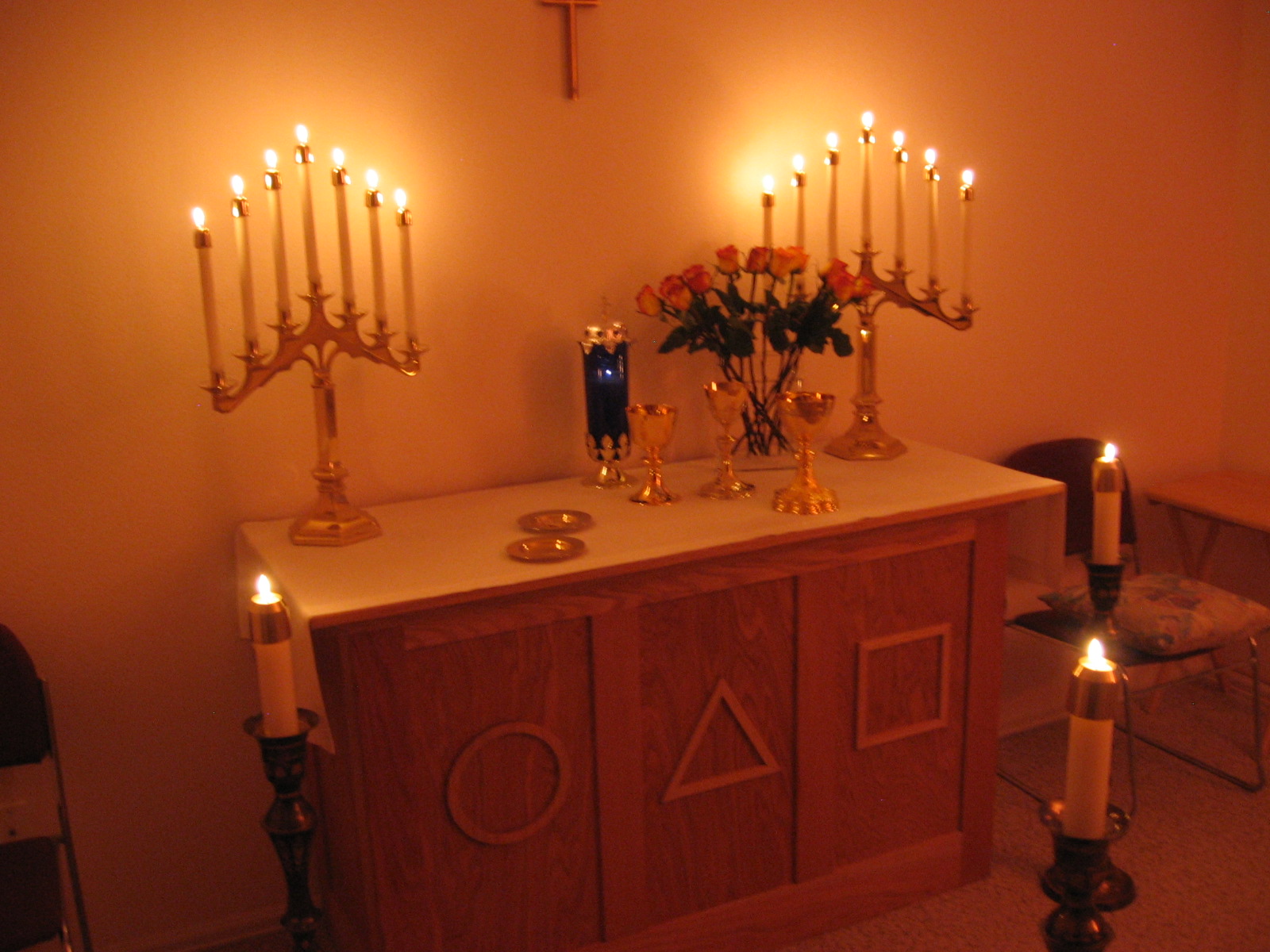
So, why ritual? Why have an altar, why have candles, why have priests? If it’s all happening in the mind, why do we “need” all these external trappings? The truth is…we don’t. But if we didn’t have a physical action, could there be a physical result? Think about it—first we pray, and then we act according to our prayer. The prayer is answered through our action. So whether we dress it up in ecclesiastical garb and do it in a church, or we visualize a desired outcome sitting in a parking lot, either way we are putting forces into action, and those forces will produce a manifestation.

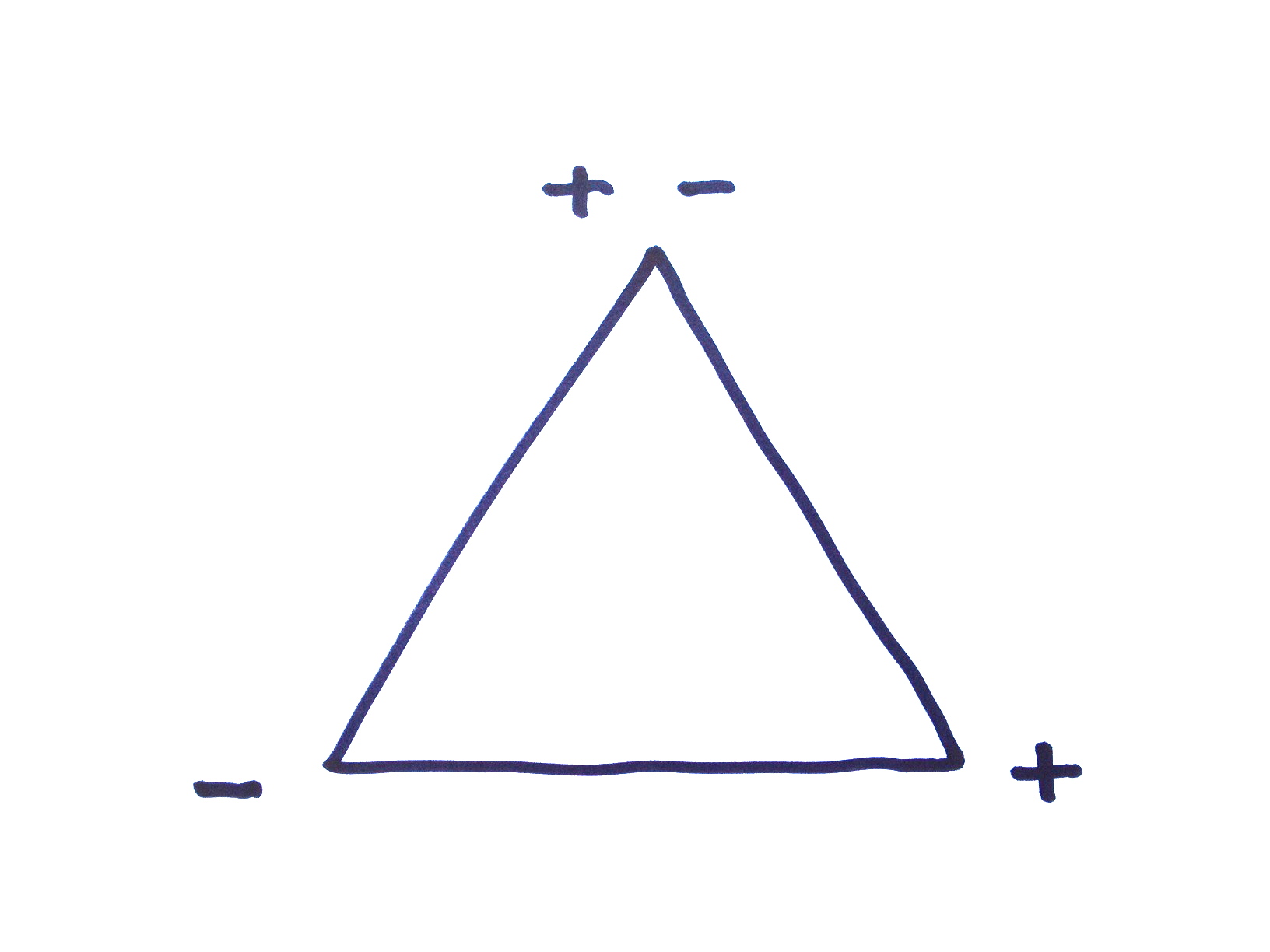
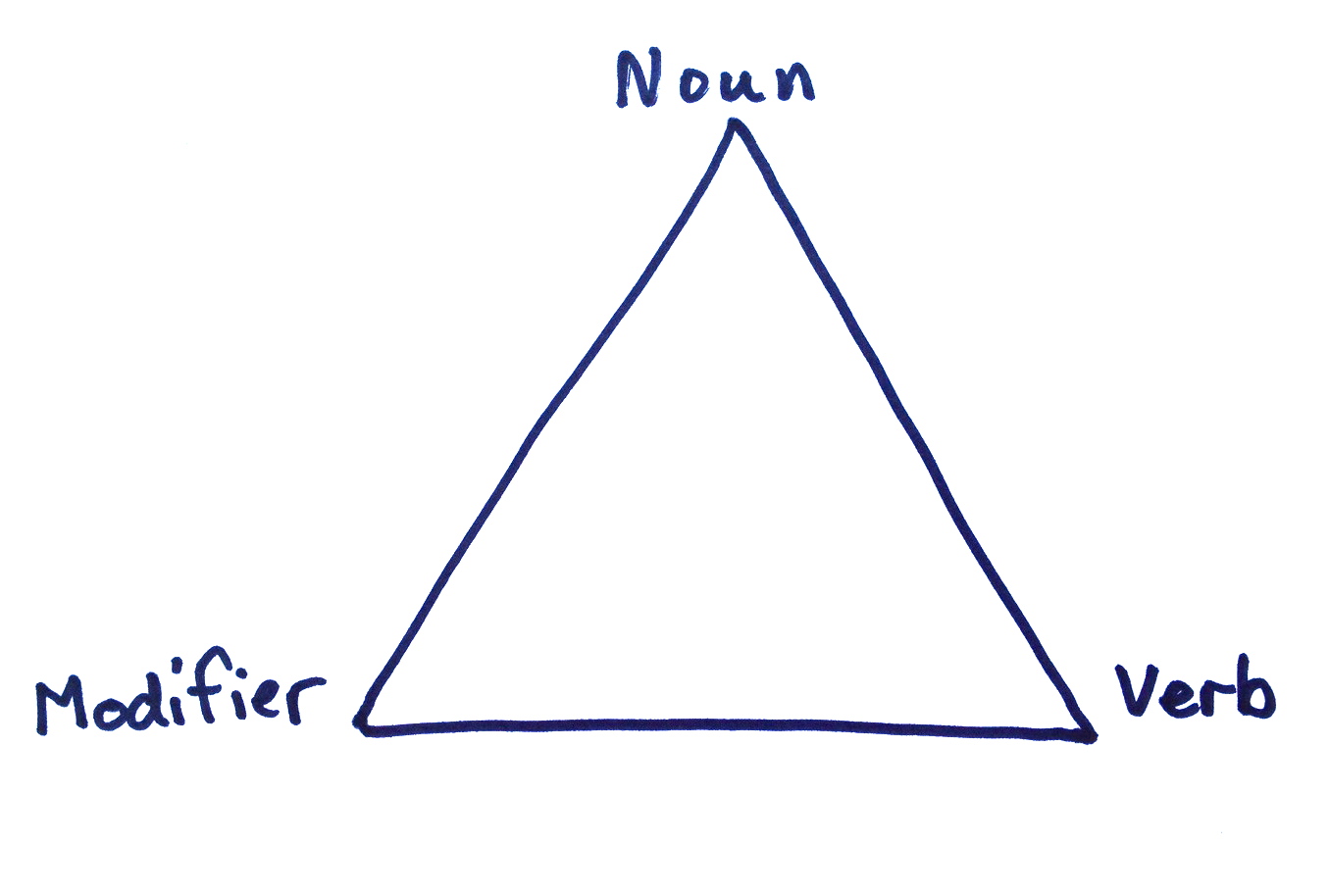
Here’s an analogy: a sentence has two principal elements – a noun (subject) and a verb (action). Once written, the story is complete. It’s a closed circuit, like the circle with a dot in the center. But, add a modifier and the energy inherent in the story can be steered. You’re not changing the elements, but you are directing them. The modifier is the third element. It is what makes it possible to adapt the energy of the narrative ……………………………………………………………….to the outcome we want.

.

It is true without untruth, certain and most true, that which is below is like that which is on high, and that which is on high is like that which is below; by these things are made the miracles of one thing. And as all things are, and come from One, by the mediation of One, so all things are born from this unique thing by adaptation. – Hermes

.

.

Whenever we contact the Mind of God, which is to say, whenever we connect with the All, power flows immediately. At that moment, we are the priest at the altar. By setting up a physical  altar and sanctuary in such a way that it symbolizes the spiritual universe, and by physically and by convention separate it from the world as a sacred space, we set the stage for a narrative—we say how it’s going to go. The power we are working with is every bit as real as electromagnetism, but the wires we are connecting are mental, not physical. The energy we are directing is spiritual, not electrical.

.

If you doubt the reality of this, consider how you use these principles every day in your life. Every time you transmute one emotion into another—e.g., anger into resolve—you are saying how it will go. By adaptation, you are re-creating the narrative. You are taking the one energy and telling it what to do, or rather how it’s going to manifest in your body. You are a priest unto yourself. The priest at the altar is taking the One energy and adapting it to a specific need. He or she is standing in for the Whole Body of God. If the priest has the consciousness, she can say, “This is My Body,” and in that moment speak as God. And because the patterns conform to universal patterns, the One energy will gladly cooperate.

.

All of this does not say that God is only energy. To read it that way is a mistake. But neither does it deny that there is energy in the Mind and Body of God. That which is above is as that which is below. We have a mind; we have a body. Our thoughts direct the energies of our body. We offer our mind and our body as a stand-in whenever we approach the altar, whether that altar is in a sanctuary or at the center of our being. Once we state our intention, we swallow it, just as we would swallow a morsel of food. And as that morsel descends into our core to become us, so does our intention become the energy that radiates outward into our world to transform it.

As long as you think of the triangle as lines on a piece of paper, you will not grasp the principle it stands for. At the same time, you cannot ignore the geometry of it. A circle is just a circle, but stand in the middle of one, and you can feel a shift in the energy. Your true north is suddenly redirected inwardly. The same applies to the triangle. Standing with one other person is different from standing with two other people. The energy is different—distinctly so. You have this, and you have that. And there you are, mediating between and adapting the two.

Posted in Lessons | Leave a comment

Your Personal Triangle

One useful way to regard the Holy Trinity is to apply it to that triune part of yourself—your head, your heart, and your will. There are certainly other parts just as real, but these seem to form the main three.

By working in threes, we gain an advantage over focusing on one aspect at a time, because in reality all activity, whether personal or cosmic, has this same tripart expression. When we look at manifestation, things take on a four-part structure. But we will go into that when we consider the third basic symbol, the square.

In working with our head, our heart, and our will, we naturally rise up out of our generative nature and begin to see ourselves as more than a body. We start to become aware of ourselves as energetic beings—spiritual, intellectual, and alive.

Whereas the number two speaks of polarity and potentiality, the number three speaks of dynamic balance.

By focusing our attention on our head, our heart, and our will simultaneously, the three get to know each other in relation to themselves.

These three currents of God find their point of expression in us, and we get to witness their outworkings in our consciousness. Whatever task we set about, we bring a complete set of spiritual tools with us.

Normally, we approach the world with only one of these aspects, or at least we find that one is predominant. This forms a distorted triangle, which symbolizes a state of imbalance.

If we are all mind, we become too analytical, and we get caught up in the many choices life has to offer, but we are unable to choose among the many alternatives.

If we are all heart, we lose the ability to discriminate, to make distinctions. The world begins to blend together, not as a unified whole but as pool of interpenetrating awarenesses. This can be wonderful, but joy can quickly turn into sorrow, and sorrow into despair. The world seems to always be happening to us and not because of us.

And if we are all willpower, we are great at getting things done, but it is usually at the expense of others. We become the hammer that sees everything as a nail. But, instead of joining things together, we break them apart. And though we are good at starting things, rarely are we able to bring them to a meaningful conclusion.

So, achieving a balance of these three aspects brings a powerful harmony into our lives. How do we do this? Simply by focusing our awareness on them and then observing how the energy moves. We do this through the three activities of concentration, meditation, and contemplation. We learn to focus our awareness, we learn to be receptive to our higher nature, and we learn how to interact with what comes. These are the tools we have in our quest for Self-realization.

Posted in Lessons | Leave a comment