How to Tell When a Story is Symbolic

Detail of the "Sight" scene of the Lady and the Unicorn  (Dame à la Licorne) tapestry, in which the unicorn looks into a mirror held by the lady. The six charming scenes, which cover the walls of an entire room, bring to life the romance of the age of chivalry. The tapestry was designed by French artists and woven in 1485-1500 in Flanders. It was discovered in 1841 by Prosper Merimee in Boussac Castle and aquired by the museum in 1882. Each of the six scenes includes a beautiful lady, a unicorn, and a lion. The animals wear heraldry that identifies the sponsor of the work as Jean Le Viste, a powerful nobleman  close to  King Charles VII (1422-61). The backgrounds are filled with woodland creatures, plants and flowers, creating an enchanted landscape. Five of the scenes illustrate the five senses: sight, touch, taste, smell and sound. The sixth scene, which may belong at the beginning or the end of the series, is especially beautiful and intriguing. It is labeled with a banner reading, "To my only desire," and shows the lady placing a necklace in a case held by a servant.

In this picture of the tapestry, The Lady and the Unicorn, the unicorn’s hooves are turning back the Lady’s dress, revealing an underlying layer. By using the image of a unicorn, the painter is letting us know right away that the scene isn’t meant to be taken literally.

The Lady is also holding a mirror capturing the image of the unicorn; we see both it and its reflection simultaneously. Which is the real? Again, the author is telling us that we are dealing with an abstraction, not concrete objects.

This is an example of how spiritual teachings have been handed down by teachers and schools for a long, long time.

In The Lady and the Unicorn, the viewer knows that since unicorns do not exist in real life that this picture is a metaphysical message, not a rendition of physical reality. The unicorn is a kind of “tag” that lets everyone know that this painting contains symbolic images.

This kind of tag shows up in sacred scripture a lot.

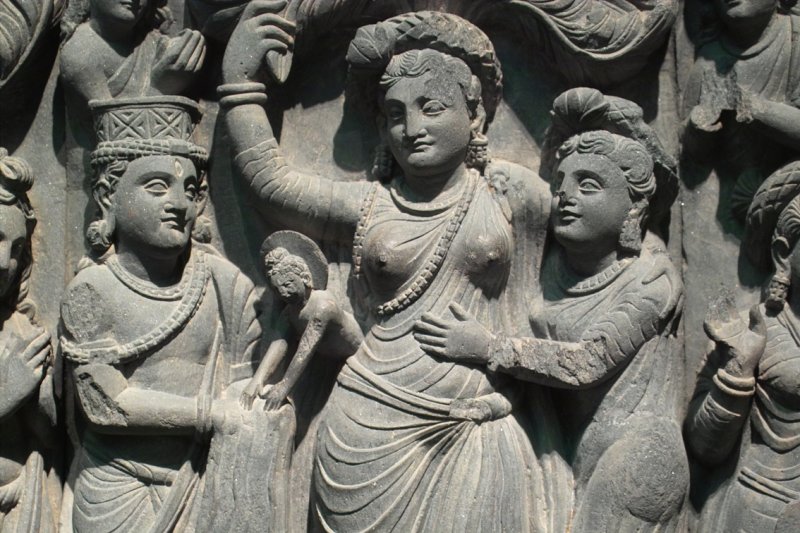
birth of buddhaIn the story of Buddha’s birth, for example, we hear that he was born out of his mother’s side. Now, everyone knows that this is impossible, so right away we are alerted that the story is symbolic.

This is what the author of the story intended.

A symbolic story can be nested within a literal account of what was happening historically, but historical accounts do not have the tags that tell us to be on the lookout for symbolic content.

red riding hoodTags are similar to the way we preface a bedtime story for children. For instance, we say, “Once upon a time…” This lets the child know that the story is made up. The parent will say, “Once upon a time, a big bad wolf lived in the woods.” The parent doesn’t say, “Hey, there’s a wolf living in the woods!”

Whenever we encounter an “impossible” event in sacred literature, we should immediately look for symbolic content. This is how sacred teachings have been passed down for millennia. After all, a story or an image is much harder to corrupt with multiple interpretations.

It will stand the test of time.

Abstract, philosophical concepts, on the other hand, are easily interpreted in ways that the author did not intend.

Posted in Lessons | 2 Comments

Meditation, Willpower, and Driving

by Michael Maciel

As a young man growing up in Reno, I was into sports driving. The Mount Rose Highway, leading up to Lake Tahoe, and the Virginia City Highway, leading (as you might guess) up to Virginia City, were my training grounds. Both were treacherous mountain roads, but they were well-paved and perfect for learning how to master the art of driving fast through turns.

912One hot summer day, I was driving a friend’s 912 Porsche. He was in the passenger seat. We were approaching a hairpin turn on the Mount Rose Highway just above Galena Creek where the road swings around a maintenance station. Anyone can drive through a hairpin turn, but not everyone can drive through one fast.

In a hairpin, you come in high, dive in at the apex, and swing wide as you exit. The object is to maintain speed throughout. Since it was a hot summer day, the tires were sticky on the asphalt, and the 912 (good at any temperature) was taking the corners like it was on rails. Coming up to the turn, I had slowed to 50 mph. My friend Kent said, “Don’t slow down.” I said, “What do I do?” He said, “Just turn the steering wheel.” To my amazement (Porsches are phenomenal in the turns), the car sailed through the hairpin with barely a screech.

curvesOne of the problems that rookie drivers have is “stiff-arming.” It’s when you’re in the middle of a scary turn and your arms stiffen up, as though pushing on the steering wheel will keep the car on the road. It’s a fear response, and it gets a lot of drivers into trouble. No matter how tight the corner, very little pressure is needed to turn the wheel—pushing on it does nothing whatsoever. Once you learn that, driving is a lot less tiring, and it’s more fun.

Meditation
It takes willpower to meditate. But willpower, as in driving, isn’t stiff-arming; it’s simply turning the steering wheel.
discipline

Basic meditation is quieting the mind, or, more specifically, not thinking. You put your attention somewhere other than in your head, you keep it there, and then you just sit. Sounds incredibly exciting, does it not? Nevertheless, that’s what it is, and the benefits of a solid meditation practice are extraordinary. Once you acquire the ability to hold your attention in one place, there are other things you can do, but not until you are able to master this simple task.

While holding your attention in one place is an act of will, it’s not effort-ing—it’s just doing it. When someone told astronaut Jim Lovell that going to the Moon was a “miracle,” he said, “No, we just decided to go.” So it is with holding your attention in one place—you just decide to do it.

When a guru gives a disciple a seemingly mundane task, he’s seeing whether the disciple has the willpower to get it done. If the disciple stiff-arms his way through it, then the guru knows that he has yet to master his will. Spending unnecessary energy doing a job means that there’s resistance going on somewhere inside the disciple’s mind. He hasn’t surrendered to the task. He’s still wondering whether he should, instead of simply turning the steering wheel. If he can’t demonstrate mastery in a mundane project, he won’t be able to meditate.

Stabilize
One of the reasons why Porsches are so good in the corners is that their weight distribution is close to 50/50, meaning that the car’s center of gravity is about halfway between the front and rear wheels. This makes the car very stable. It doesn’t understeer (plow through a turn) nor does it oversteer (spin out). When you’re driving fast, confidence, along with skill and a good vehicle, is everything.

Balance is the root of confidence. It allays fear. Drift far enough away from your center of gravity and your confidence erodes quickly.
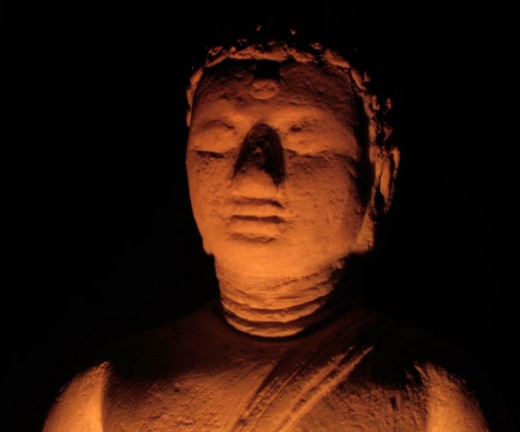
buddhaSince the first goal in meditation is to quiet your mind, place your attention on your center of gravity. Ironically, that place is in the area of your belly button. That’s right—your navel. You are going to contemplate your navel. Don’t laugh. It works. In martial arts and Chinese medicine, this area is called the hara. It is the center of your body as well as your center of gravity.

Anatomically, the navel is where the umbilical cord enters the body of the fetus. It is also the point where the aorta branches into the two femoral arteries. If you visualize the umbilicus attaching at this point where the three major arteries converge, you can see that the four blood vessels form a kind of tetrahedron, the first geometric solid. And “solid” is a good place to begin your meditation.

Quieting the mind and stabilizing yourself are essentially the same thing. And, as you will discover, placing your attention anywhere other than inside your head will bring your brain-chatter to a halt. Focusing on the hara has the added benefit of bringing you to a standstill, energetically speaking. It’s like moving to the center of the merry-go-round. It is the centripetal locus of you.

The-CorePaying attention to your breathing focuses your attention on the hara. Proper breathing is diaphragmatic breathing or “belly breathing.” While there are other areas you can focus on, using this as a starting point will teach you  how to quiet your mind. Other areas can have more of a centrifugal force and can be very energizing, so unless you have mastered the ability to hold your attention where you decide it should be, your mind will wander all over the place.

Focusing on the hara gives the term “balanced life” a whole new meaning. This is inner balance, and you want to have it before you venture into higher states of awareness, otherwise you will lose traction. Venturing into areas of higher awareness is venturing into areas of higher energy. Driving through a hairpin turn at 15 mph is a lot different than driving through it at 50. Unless you can hold your attention where you want it, going into those higher areas will send your mind careening off the road. You should see all the “skid marks” on a zendo floor.

Practice
solidMeditation is an acquired skill every bit as challenging as sports driving. There are rules. There are techniques. There are hours and hours of practice at different speeds and on different road surfaces. There’s vehicle maintenance to do, check lists to follow, deadweight to eliminate, engines to tune, tires to change—all falling under the category of “preparation.”

In a meditation practice, diet and exercise are important. Your vehicle has to be in good shape. This is why hatha yoga was developed. It prepares students for the rigors of inner work. Thinking that meditation “just happens,” that anyone can do it if they simply want to is one reason why so many people find it too difficult and give up. Meditation must become the central focus of your life before you begin, not just as a result of having done it.

So, prepare—and then begin.

Posted in Lessons | 3 Comments

Does God Know Everything?

Omnicience

Let’s examine the statement “God knows everything.” This idea is meaningless and misleading. The rules for creativity are the same for God as they are for us—we have to know nothing before we can know anything. Divine, undifferentiated potential is no-thing. It is empty and void and yet pregnant with the ability to become. In the beginning, according to Genesis, “Darkness was upon the face of the deep.” The vast, undifferentiated potential of God’s own being is where God had to start in the creative process. It is into that potentiality that God spoke the Word, and the worlds were brought into being.

face of the deep

Not-knowing creates a space within which all things are possible. Not-knowing breaks down the barriers that keep us imprisoned in the known. The known is a parched desert—nothing grows there. Once a thing is known, it ceases to live. Not-knowing is the key to life. You can’t exist in a state of not-knowing and believe that God knows everything. If God knew everything, everything would cease to be. It is God’s not-knowing that keeps the universe growing and evolving. It is the very thing that generates life.

Consider that our greatest awakening occurs in the space created by not-knowing. Why would it be different for God? We are the microcosm of the macrocosm. What is true for us is true for It. If we believe in statements like “Man, know thyself” and “We are created in God’s image and likeness,” then we have to afford God that which provides the opening within us—not-knowing.

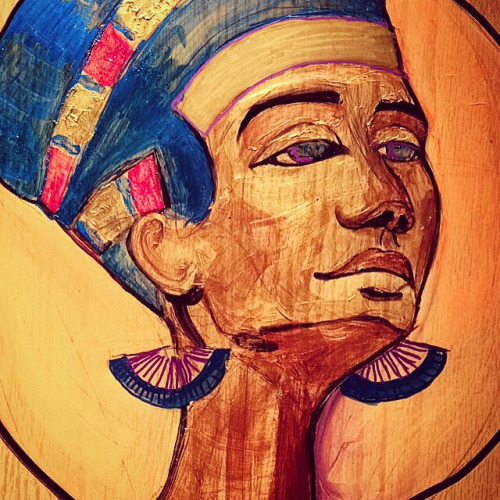
egyptianOnly in a society caught in the glamour of the intellect, a society that values knowledge and information above all else, can you find the concept that God knows everything. When knowing everything is the highest concept of good, then naturally the god of that society must epitomize that concept. But the mystic knows better. The mystic knows that in order for God to be the creator of all life, there must be that within God which creates the emptiness within which life can occur. Unless the universe holds that space within Itself, the whole thing would grind to a halt.

The one thing that is guaranteed to produce movement (life) is a vacuum. When we stand in the place of not-knowing, we effectively create a vacuum in the universal mind, the Mind of God. God then rushes in to fill the vacuum that we make ourselves to be.
But in order to understand this concept, we have to think in terms of power, energy, and force.

God is not an external entity. God is the living, sentient being in Whom we live. The only thing that keeps us from the experience of God is the belief that we exist as a separate self. This is the lie perpetrated by our own senses. When we turn away from the senses and go into the silence within ourselves, we begin to experience God as a presence. And by that I mean a living power that knows and experiences us to the degree that we know and experience It. God’s love is a two-way street—love begets love, although, “we love because He first loved us.”

Taking the phrase “first loved us” out of the context of space and time, which is what we have to do if we want to know God, “first loved us” means that we exist in a field of love, a conscious energy that is always here and now. “First loved us” means that we did not create it—it was already here when we arrived. But when we get quiet within ourselves and open up to it, we allow love to occur in the world. This is our place in the scheme of things. As Unity teacher Eric Butterworth put it, “We are an inlet and an outlet of God.”

— excerpt from The Five Vows by Michael Maciel

Posted in Lessons | 1 Comment

The Redemption Project

white eve

Premise 1:

There is only one Person, and we are that Person.

Premise 2:

Everything that people are capable of doing, we are capable of doing, from the worst atrocity to the most profound act of compassion.

Premise 3:

Each one of us can petition God as that Person. We can each individually stand in for the Whole of Humanity.

Our Prayer:

Oh, God, make me a better Person.

Where I am unconscious, make me conscious.

Where I am blind, make me see.

Where I am deaf, make me hear.

Where I am numb, make me feel.

Make me, O Lord, a better Person.

white-lotus-flower

Posted in Lessons | 2 Comments

Entering the Spiritual Path

Mary and the Baby JesusThere’s a difference between the spiritual presence that arises from within a student, as a result of his or her training, and mere mimicry. Emulating the teacher seems to be part of the spiritual path itself, at least in the beginning. Every new student will try to imitate the guru, and it’s a true teacher who knows not to be distracted by the flattery but to use it to his advantage. Both student and teacher must negotiate this turn in the path at the outset of any successful training curriculum. It’s a tacit agreement that must be approached obliquely, however, because hitting it head-on will only draw unnecessary attention to what’s really happening.

Spiritual aspirants are drawn to master teachers because they can sense in them something of themselves. After all, Moses had said that all people are created in the image and likeness of God, so it’s one’s own true self that’s the attraction. The problem lies in the tendency of the outer being to mis-identify itself with that innate divinity. The new student will look at the mystical aura surrounding the teacher and say, “Wow, this is for me!” And because the student desires to be appreciated for the spiritual nature of his being, he sees the teacher in an unrealistic light. He sees the teacher as a god to be worshipped, not as a teacher. The outer being is not interested in discovering the inner being. It’s only interested in being worshipped. So the new student will see the teacher as one to be worshipped, which is, of course, not true.

But a skilled teacher will use this intoxication of the outer being to draw the prospective student in close, much like leaving breadcrumbs to lure an animal into a trap. The inner being wants to be trapped, because it knows that it’s already snared in the body, like a chick trapped in its own shell. But just as you don’t let an animal see you lay the breadcrumbs, you don’t let the outer being see too far down the path to its own death. It already thinks that it has found the key to its exaltation. Why disabuse it of that belief? Why thwart the momentum? Besides, it will come in handy when the training starts in earnest. Everyone likes to see themselves as tough enough to take it, so let them.

Posted in Lessons | Leave a comment

What Are Your Superstitions?

boogeyman


by Michael Maciel

I owned a woodworking business for twenty years. Our employees ran dangerous machinery every day, tools that could take a finger or two in the blink of an eye. Fortunately, we never had a serious accident. There were lots of minor cuts, and one person lost the pad of one of his fingertips, requiring a skin graft, but no lost fingers or broken bones. In the world of commercial woodworking, we were fortunate.

dark_cloudI did notice, however, that accidents tended to occur cyclically. We would go for a few months, and then, seemingly out of the blue, we’d have to take someone to an urgent care facility. It got to where I could sense them coming—the accidents—like a build up of psychic pressure. I think everyone else could feel it, too. And as they became more and more aware that something was bound to happen, an invisible cloud would start to take shape in the air above the workspace. I swear, you could almost see it. The cloud was, for lack of a better term, a thought form. It was an energy potential of the mind, and it had a specific shape to it—an idea, an intention, a momentum. And it very clearly said, “Someone’s gonna get hurt.”

ten-fingersNo one was intentionally feeding this thought form, but everyone was nevertheless giving it life. After all, accidents happen, right? But after a while, my priestly training kicked in, and I decided to do something about it. I decided that I would destroy the thought form before it could come to fruition. So instead of buying into the belief that accidents happen, I realized the truth: accidents don’t have to happen. As I sensed the feeling of inevitability arise in myself (which was the thought form taking shape in my own mind), I faced it squarely and said, “No.”

It wasn’t a dramatic “no”—I didn’t yell at it—I simply knew that it wasn’t going to happen. Interestingly, when that same feeling of inevitability arose in my own mind, telling me that I was the one “scheduled” to get hurt, I would say to myself, “I don’t have to do that. I don’t need to experience that. I’m not going to experience that.” Usually, I would wind up injuring myself anyway, but it would be so minor that it required little more than a band-aid.

We’ve all been there, that moment immediately following an accident where we wish we could wind the clock back one measly minute. What I was doing, in effect, was winding it back ahead of time.

Let’s look at what actually happens when we say, “No, this isn’t going to happen.” We aren’t changing fate, we aren’t stopping karma, and we certainly aren’t going against anyone’s free will. All we’re doing is dissipating a thought form, a thing that has no life of its own, no consciousness of its own, and no will of its own. It’s not a demon, it’s not an angry god, and it’s certainly not inevitable. It’s just a thought form, as substance-less as a hologram. The only power it has is the power that those involved give to it. It’s an idea that must first take root in the collective mind before it can manifest.

crystal ballThe belief that “accidents happen” has to be instilled in people’s minds before an outward manifestation of that belief can take shape. A belief is dependent upon the thought form that contains its idea. Destroy the thought form and you interrupt its cycle of manifestation. No one is hurt, not even if they are consciously and deliberately creating the thought form, as in the case of so-called black magicians and voodoo practitioners. They simply lose the energy they have invested in the thought form. These people have to rely on pre-existing beliefs in the collective mind upon which they can build a thought form that can cause harm. Change the beliefs, and you undermine the foundation. There will simply be nowhere for the thought form to take hold.

ghostbustersNow, before you pat yourself on the back and thank your lucky stars that you live in an enlightened age and don’t have to worry about any of that voodoo crap, I urge you to take stock of the beliefs that you do carry around in your head. Can you think of any? A good place to start is by asking yourself, “What do I habitually worry about?” Right there in that list is where you will find the voodoo that’s trying to kill you, or at least trying to make your life miserable. It’s in that list that all of your “accidents” and limitations have their roots. Every person carries around with them—like the cloud in my shop—a thought form that they encountered in the collective mind and adopted as their own. It’s a nameless, faceless thing, and you are hereby authorized to engage it with extreme prejudice.

“I don’t need you. I don’t want you. I don’t have to have you in my life. You cease to exist in my awareness. You are no more!“—these are the words you use. And if at any time you feel like you’re up against a monster, a demon, or some disembodied spirit, remind yourself that a thought form is just a thing. It doesn’t have a soul, it doesn’t have a mommy, and you have every right to terminate it. It’s as impersonal as a Dixie cup. Stomp it and put it in the recycle bin. For unless you accept it as your own, unless you think it makes up part of who you are, it has no power over you. None at all. It only has the power that you think it has. So stop thinking that it does and pull the plug. It’s only an idea, and a false one at that.

cups

Posted in Lessons | Leave a comment

Karma’s Purpose

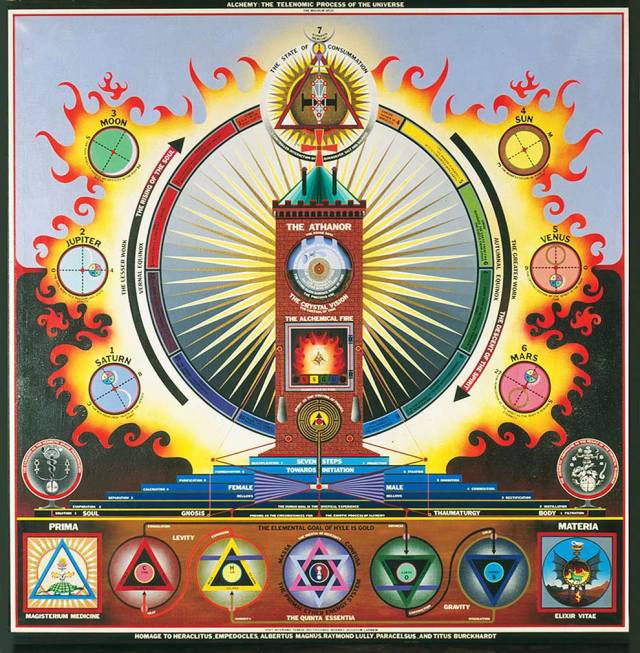
href=”https://mysticalchrist.org/wp-content/uploads/2015/06/athenor.jpg”>athenor

by Michael Maciel

What makes us unique as human beings is the ability to choose which “mind” we tap into. Will it be the mass mind or the mind of Christ? If we tap into the mind of Christ, then to the mass mind we will appear as an island unto ourselves.

heaven and earth

The mind of Christ is a wonderful blend of the mind of nature and the mind of the spiritual world. (There is only one mind, of course, but it has many subdivisions: “In my Father’s house there are many mansions.) The mind of Christ reveals the life energy as it manifests in all things, how everything is connected, especially how we are all connected with each other. The more we do this, the more we become capable of feeling compassion.

The mass mind pushes the idea that everything is separate, that different parts of the natural world exist in isolation and are not really connected to the rest of nature. Therefore, they can be exploited as “raw materials” and turned into commodities.

In the mass mind, people are seen as independent agents and thus in competition with each other. Everything that smacks of cooperation is vilified. Well-known objectivist philosopher and author, Ayn Rand, was a major contributor to this worldview.

ayn_rand

This dichotomy of unity and division is necessary, however, for soul-growth (which is karma’s purpose). Our purpose is to learn how to create, and the act of creation requires that we first take something apart and then put it back together in a new way (no one ever actually creates anything; matter can neither be created nor destroyed; it can only be reconfigured).

As an example, or proof, that competition is necessary, we can look at how it manifests in the business world (when it’s used in economically healthy ways) in the way it stimulates innovation, improves distribution, and lowers prices. The concept of “pushing the envelope” only makes sense within the context of competition. When competition is directed inwardly, our aspirations compete with former versions of ourselves.

Reconstitute

Reconstitute

In alchemy, this “taking apart and putting back together” is expressed as “solvae et coagulae,” to dissolve and coagulate. While this is the fundamental premise of the science of chemistry, it is also the fundamental premise of soul-development. We periodically endure the deconstruction of our sense of self and then reconstitute ourselves in new and better ways. When we do this consciously, we are officially on the Spiritual Path.

We have to be careful not to interpret the Law of Karma as Divine punishment. God does not punish. God is not vindictive. We are not in competition with God, but rather we are co-creators with God for the purpose of our spiritual evolution and growth—soul-development.

Note: The prepositional phrase “with God” doesn’t mean that we are separate from God but that it is God that acts “through us as us” anytime we act creatively and not merely replicate what we already are. God manifests whenever there is a change of state, alchemically (and chemically) speaking.

Karma2

Karma